Split Mung Beans
Moong Dal
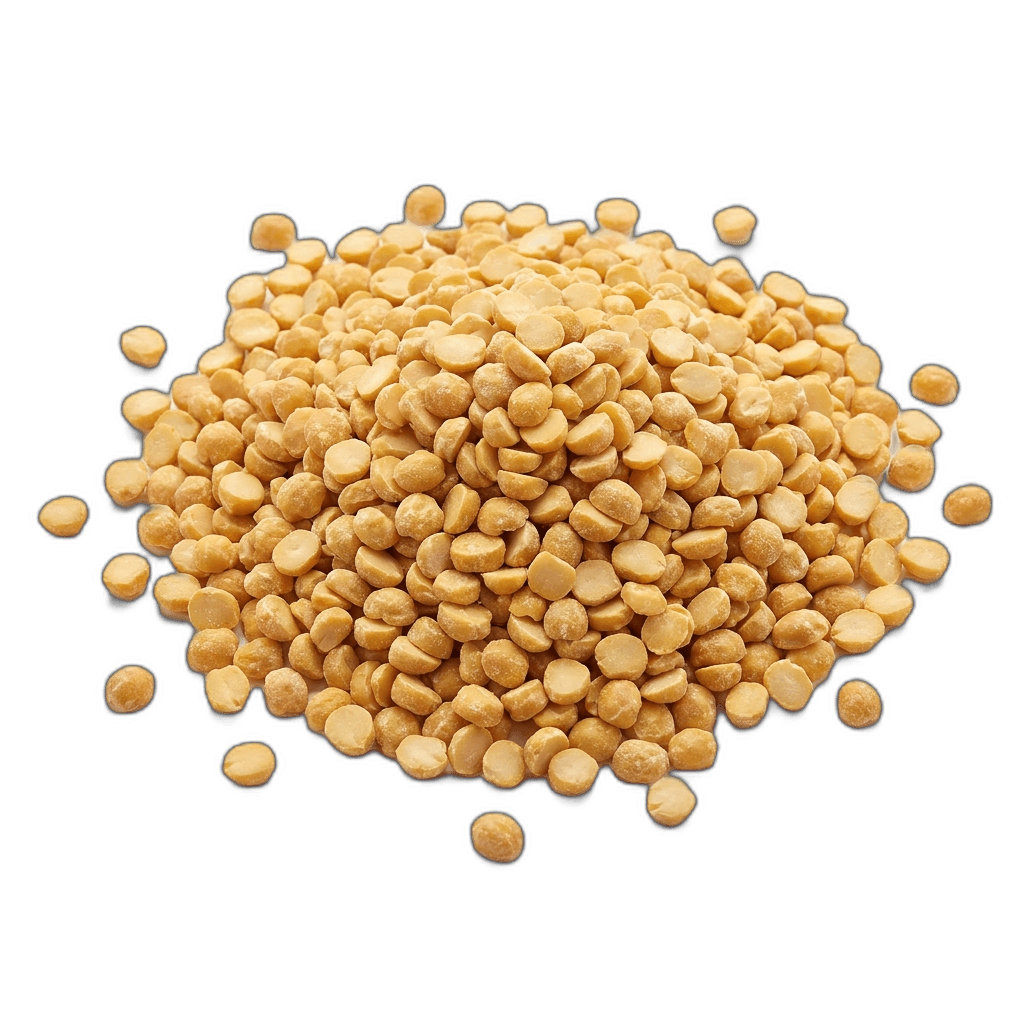
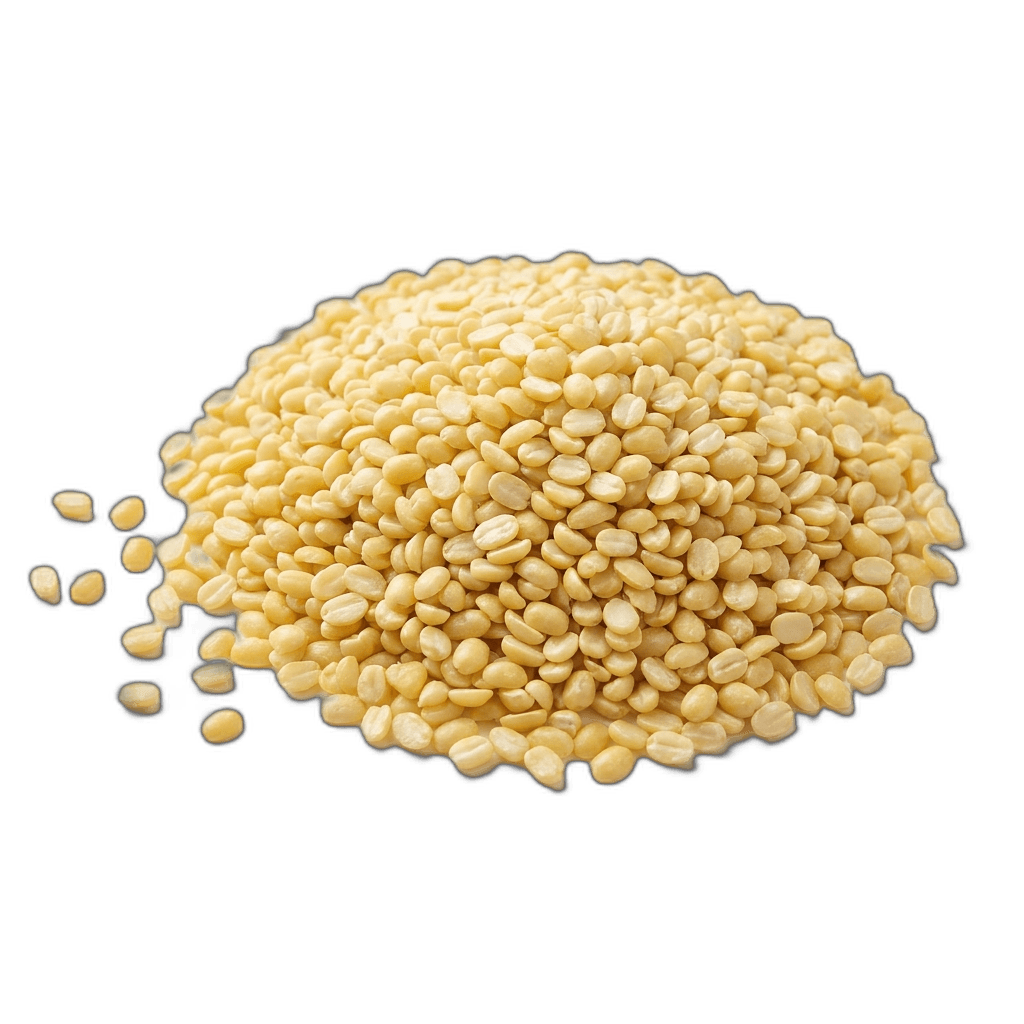
From the mung-bean belt of Rajasthan and central India, these split green gram cook quickly to a soft, creamy dal with a mild, sweet-nutty flavour and easy digestibility. Skin-on green splits add bite to salads and khichdi; the de-skinned yellow split melts into smooth comfort. A weeknight staple for dal, soups and sprouting.
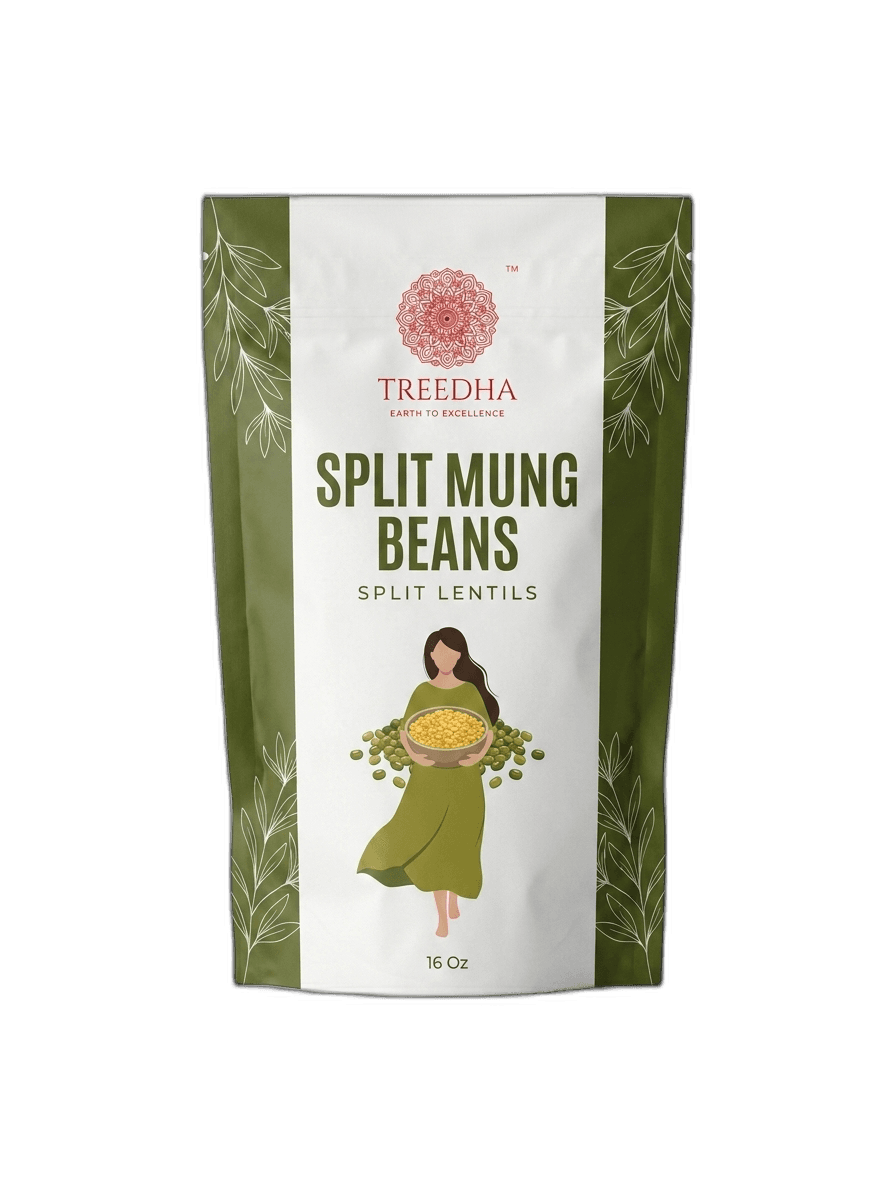
Sealed at peak, shipped with provenance.
Packed in resealable, food-grade pouches that lock in aroma and colour — each labelled with its origin, grade and taste profile.
- India
- Premium split, machine-cleaned
- Yellow split (deskinned) / green split
- 99%+ · sortex-sorted
- 20-25 min, no soak needed
- 12-24 months ambient
Also known as · Split green gram · Petite yellow lentils · Vigna radiata · Mung dal
How to use it
Quick-cooking everyday dal tadka
Khichdi and one-pot rice-and-lentil meals
Sprouting for salads and stir-fries
Light lentil soups and purees
Ground for batters, pakoras and savoury crepes
Split Mung Beans (Moong Dal) are dehulled and split green gram, prized for their rapid cooking, digestibility, and high plant-based protein. Sourced from India, this versatile pulse, also known as Petite Yellow Lentils or Vigna radiata, is a key ingredient in global food manufacturing and culinary applications.
Sourcing & Origin
Treedha's premium Split Mung Beans (Moong Dal) are exclusively sourced from the fertile regions of Rajasthan and central India. These areas are renowned for cultivating Vigna radiata with optimal soil and climatic conditions, which contribute to the bean's consistent quality and characteristic flavour profile. The seasonal harvest dictates availability, ensuring that only the freshest yields are processed for export.
Sourcing at origin is critical for bulk buyers as it guarantees direct access to authentic Indian Moong Dal, minimising intermediaries and providing full traceability. This direct procurement allows for stringent quality control from the initial harvest stage, ensuring the integrity of the product reaches our international partners.
Export Grades & Specifications
Our Split Mung Beans are offered as 'Premium split · machine-cleaned' grade, processed to meet discerning international bulk trade standards. This grade signifies a product that has undergone extensive cleaning and sorting, including destoning, aspiration, magnetic separation, sieving, and advanced optical sorting (Sortex).
Key specifications include a maximum moisture content of 10-12%, ensuring stability and shelf life. Foreign matter is minimised to less than 1%, with 99%+ purity guaranteed through our multi-stage cleaning processes. The dal is consistently sized and dehulled (for yellow split) or split with skin (for green split) to achieve a uniform appearance and cooking characteristic. A bright, consistent yellow colour for the dehulled variety is a hallmark of quality, particularly valued in markets like the GCC. Each batch undergoes polishing to enhance its clean appearance.
Quality, Safety & Compliance
Treedha ensures all Split Mung Beans (Moong Dal) adhere to rigorous international food safety standards. Our product is guaranteed ethylene-oxide-free (ETO-free), a critical compliance factor for the European Union, where the MRL for ETO and its metabolite is strictly set at 0.02 mg/kg for pulses (EU Regulation 2023/915). For the US market, while FDA limits for ETO are higher (7-50 mg/kg), our ETO-free commitment surpasses these, providing superior safety.
We rigorously test for contaminants, including aflatoxins (below the EU's regulated maximum levels and the FDA's action level of 20 ppb for human foods), heavy metals like cadmium and nickel (below EU Regulation 2023/915 limits, e.g., 4 mg/kg for nickel in pulses), and pesticide residues (adhering to EU Regulation 396/2005 and US EPA tolerances). Microbiological safety, particularly the absence of Salmonella (EU Regulation 2073/2005), is paramount. Each shipment is accompanied by a Certificate of Analysis (COA) detailing these test results, alongside essential documentation like Phytosanitary Certificates and Certificates of Origin.
Global Demand & Target Markets
Global demand for Split Mung Beans (Moong Dal, Split Green Gram) is robust, driven by several key factors. The escalating worldwide shift towards plant-based proteins positions moong dal as a sought-after ingredient for manufacturers of meat alternatives, dairy-free products, and high-protein baked goods. Its nutritional profile, including high protein content and digestibility, aligns perfectly with expanding health food trends and urban consumption patterns.
Major importing nations for Indian Moong Dal include the United States, Bangladesh, Canada, and the UAE. European countries such as the UK, Germany, and the Netherlands also represent significant consumption hubs. Consistent demand is further underpinned by the cultural significance of Moong Dal as a dietary staple, particularly within South Asian diaspora communities globally, and its increasing popularity in convenience foods and foodservice sectors.
Logistics, HS Code & Packing
The primary Harmonized System (HS) code for Split Mung Beans (Moong Dal, Petite Yellow Lentils) in international trade is 0713.90.90, which specifically covers dried leguminous vegetables other than those specified. Treedha offers flexible packing solutions to suit bulk importer and private-label requirements, including standard bulk packaging in sizes such as 500g, 1kg, and 2kg, ensuring product integrity and freshness during transit. While specific Minimum Order Quantities (MOQs) are discussed per client, our focus is on facilitating efficient bulk transactions.
We operate on standard Incoterms to provide clarity and flexibility in shipping arrangements. The product boasts a robust shelf life of 12-24 months under ambient storage conditions, reflecting its stability and quality. Our logistics are streamlined to ensure timely and secure delivery to major ports worldwide, supported by comprehensive documentation.
- tradologie.com — tradologie.com
- billionbird.com — billionbird.com
- duqus.com — duqus.com
- megagrain.com — megagrain.com
- dataintelo.com — dataintelo.com
- accio.com — accio.com
Questions
- Is moong dal the same as split mung beans or green gram?
- Yes. Moong dal is the Indian name for split mung beans, also called split green gram. The yellow version is simply mung with its green skin removed before splitting.
- Do split mung beans need soaking?
- No. Yellow split moong cooks soft in around twenty minutes without soaking, which is why it is the go-to dal for quick weeknight meals. A short rinse is all it needs.
- Are the yellow and green splits interchangeable?
- Largely yes, but the yellow deskinned split cooks faster and breaks down into a smoother, lighter dal, while the green split holds a little more texture and works well in khichdi and salads.
- What is Split Mung Beans (Moong Dal)?
- Split Mung Beans, also known as Moong Dal or Petite Yellow Lentils, are the hulled and split seeds of the green gram (*Vigna radiata*). They are highly valued for their quick cooking time, easy digestibility, and rich plant-based protein content, making them a staple in many cuisines and a versatile ingredient for food manufacturers.
- Where does Treedha source its Split Mung Beans from?
- Treedha exclusively sources its premium Split Mung Beans (Moong Dal) from the fertile agricultural regions of Rajasthan and central India, renowned for producing high-quality *Vigna radiata*. This origin ensures authentic flavour and consistent quality for our international bulk buyers.
- Are Treedha's Split Mung Beans ETO-free and compliant with EU/US regulations?
- Yes, Treedha's Split Mung Beans (Moong Dal) are certified ETO-free. We ensure compliance with stringent international regulations, including the EU's maximum residue level (MRL) of 0.02 mg/kg for ethylene oxide and its metabolite in pulses, and adhere to FDA standards for the US market. Each batch is lab-tested and accompanied by a Certificate of Analysis.
- What quality specifications can I expect for bulk orders of Moong Dal?
- Our Split Mung Beans are of 'Premium split · machine-cleaned' grade, with a maximum moisture content of 10-12% and less than 1% foreign matter, guaranteeing 99%+ purity. The dal is sortex-sorted for consistent size and uniform colour, especially for the bright yellow dehulled variety, ensuring high quality for bulk importers.
- What is the HS Code for Split Mung Beans?
- The primary Harmonized System (HS) code used for the international trade of Split Mung Beans (Moong Dal) is **0713.90.90**. This code falls under the broader category for dried leguminous vegetables.
- What documentation does Treedha provide for export shipments?
- For every export shipment of Split Mung Beans, Treedha provides comprehensive documentation, including a Commercial Invoice, Export Packing List, Certificate of Origin, Phytosanitary Certificate, and a detailed Certificate of Analysis (COA) confirming compliance with all specified MRLs and safety parameters.