Chole Masala
Chana Masala
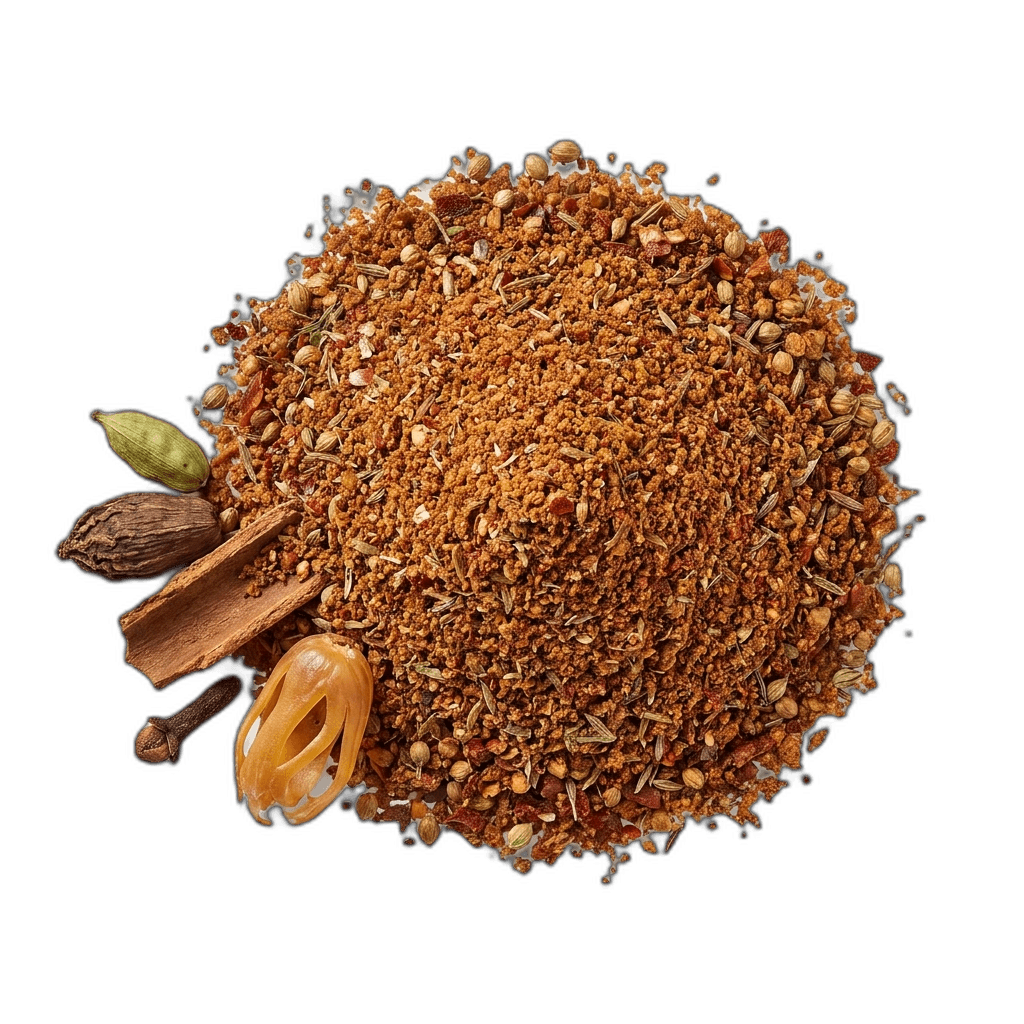
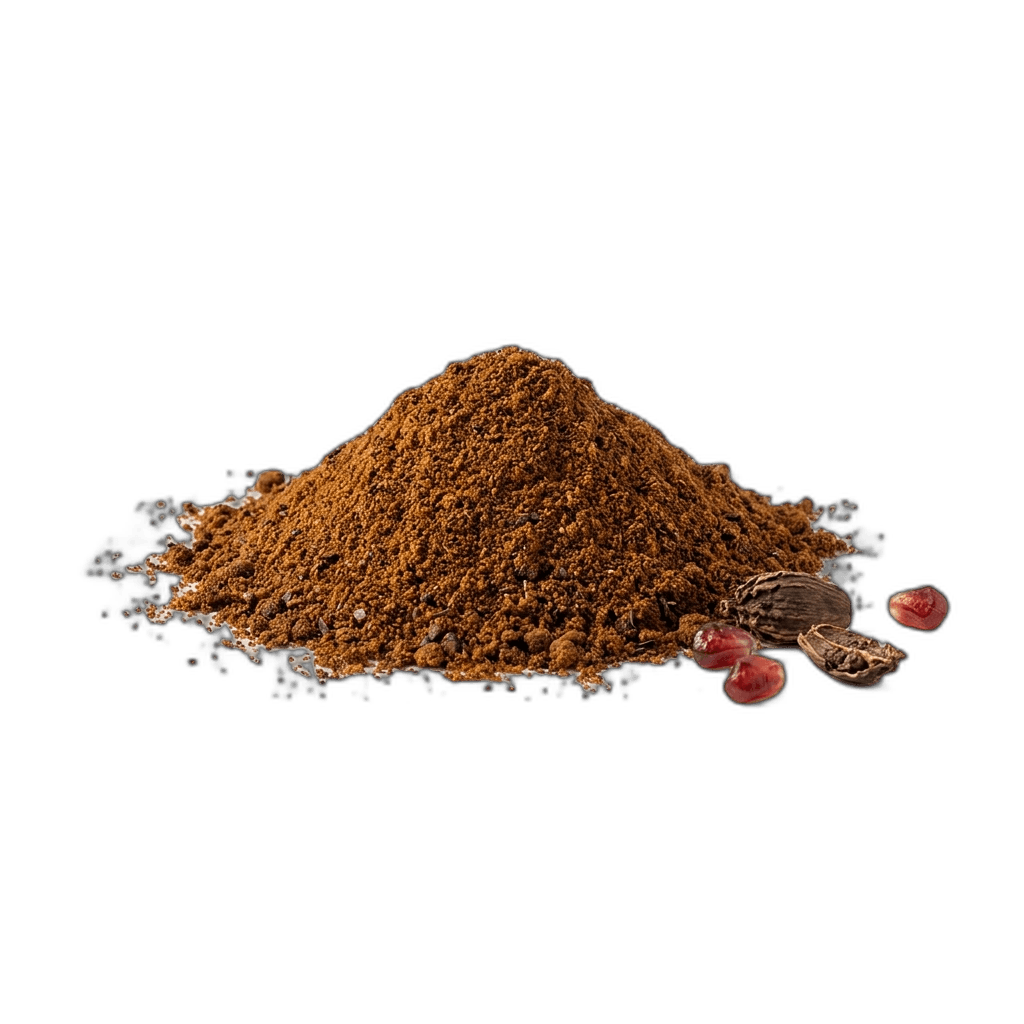
Gebouwd in de Amritsari-traditie van Punjab, leunt deze melange op amchur (gedroogde mango) en anardana (granaatappelzaad) voor zijn kenmerkende zure diepte, gelaagd over geroosterde koriander, komijn en warme zwarte kardemom. Geroerd door een kikkererwtencurry geeft het de diepe, bijna zwarte kleur en heldere zuurte die een authentieke chole kenmerken. Laat het tot bloei komen in hete olie met ui en gember, en sudder dan met chana en tomaat.
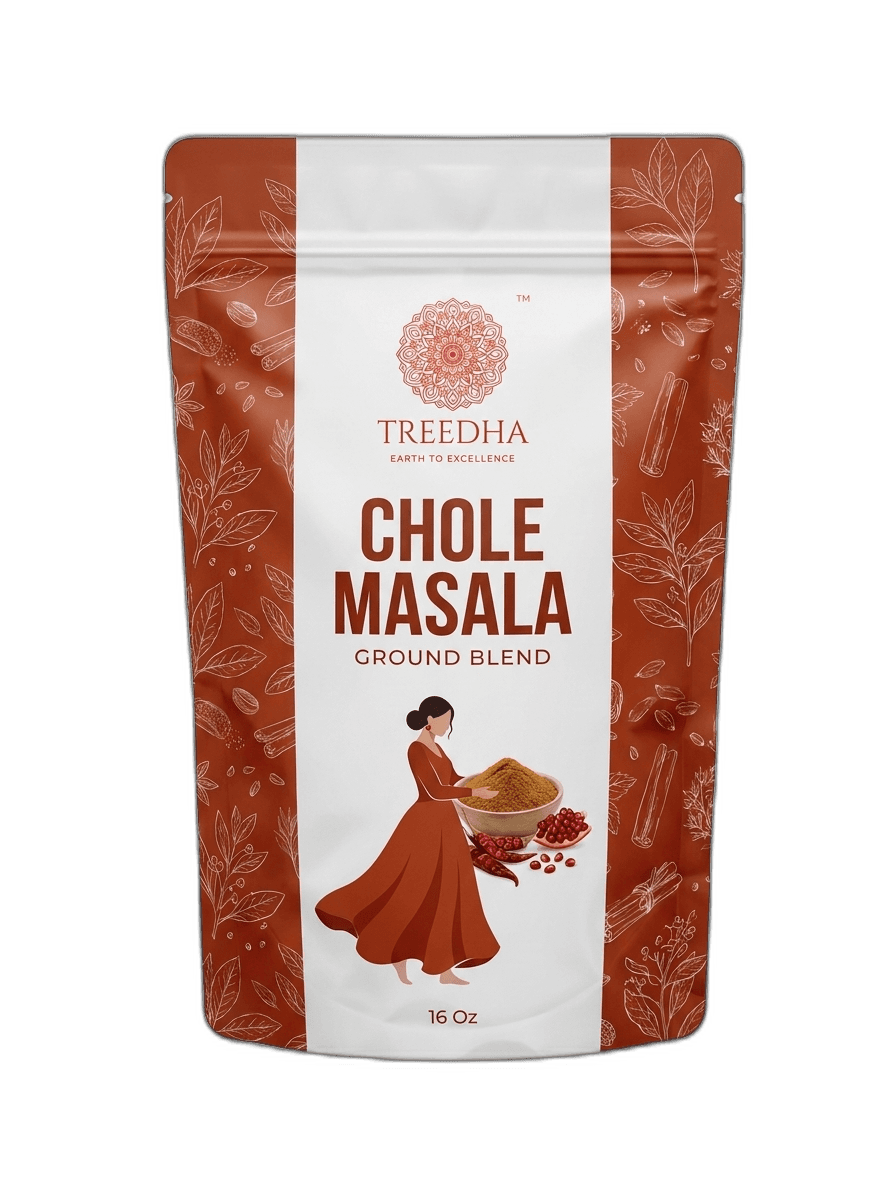
Op het hoogtepunt verzegeld, met herkomst verzonden.
Verpakt in hersluitbare zakjes van voedingskwaliteit die aroma en kleur insluiten — elk voorzien van herkomst, kwaliteitsklasse en smaakprofiel.
- Punjab, India
- Amritsari chole-melange
- Fijngemalen poeder
- Geleid door amchur + anardana
- Stoomgesteriliseerd · ETO-vrij · labgetest
- 18-24 maanden
Ook bekend als · Chana Masala · Chickpea Curry Blend · Punjabi Chole Masala
Hoe je het gebruikt
Klassieke chole / chana masala kikkererwtencurry
Kruiding voor chaat en zure snacks
Kruiden van pindi-stijl kikkererwten en rajma
Marinade voor gegrilde paneer en groenten
Afwerkend strooisel op samosa's en tikki
Chole Masala (Chana Masala) is a distinctive, dry-roasted and stone-ground spice blend from Punjab, India, essential for the classic chickpea curry. Treedha supplies this restaurant-style, freshly milled blend, steam-sterilised and lab-tested to meet stringent international food safety standards for bulk buyers.
Sourcing & Origin
Chole Masala, also known as Chana Masala, Chickpea Curry Blend, or Punjabi Chole Masala, originates from the heartland of Punjab, India, particularly the Amritsar belt. This region is renowned for its vibrant culinary traditions and the specific flavour profile it imparts to its signature dishes. The Amritsari style of Chole Masala, crafted from a blend of whole spices that are dry-roasted and stone-ground, reflects generations of expertise in flavour balance and aromatic complexity.
Sourcing from this specific origin is crucial for bulk buyers seeking authentic taste and consistent quality. The local sourcing ensures that the raw spices, prior to blending, carry the inherent characteristics that define a true Punjabi Chole Masala, characterised by its amchur (dried mango powder) and anardana (dried pomegranate seed) led notes. This regional distinction is a key selling point for importers and private-label brands aiming to offer genuine Indian flavours.
Export Grades & Specifications
Treedha's Chole Masala is offered as a restaurant-style whole-spice blend, freshly milled into a fine ground powder. Key specifications ensure suitability for diverse culinary applications and compliance with international trade standards. Our blend features the authentic Amritsari chole profile, distinctly led by amchur and anardana, providing a tangy and robust flavour.
Stringent quality parameters for our export-grade Chole Masala include controlled moisture content, typically below 8-10%, critical for preventing microbial growth and preserving shelf stability. Purity is paramount, with a nil tolerance for foreign matter such as dust, stems, or stones, ensuring a clean and unadulterated product. Volatile oil content, while specific to the individual spices within the blend, contributes to the overall aromatic intensity, a key quality indicator for bulk purchasers. Furthermore, granulation is precisely controlled to a fine powder, ensuring consistency for end-user applications. For reference, typical specifications are outlined below:
| Specification | Description |
|---|---|
| Origin | Punjab (Amritsar belt), India |
| Style | Amritsari Chole Blend |
| Form | Fine Ground Powder |
| Key Notes | Amchur + Anardana Led |
| Purity | Steam-sterilised, ETO-free, lab-tested |
| Moisture | < 8-10% (max.) |
| Foreign Matter | < 0.5% (nil tolerance for dust/stems/stones) |
| Granulation | Uniform fine powder (e.g., 60-80 mesh) |
Quality, Safety & Compliance
Treedha prioritises food safety and strict adherence to international regulatory standards for Chole Masala (Chana Masala) exports. Our product is steam-sterilised, a crucial process that effectively reduces microbial load without using Ethylene Oxide (ETO). ETO is strictly prohibited in the EU, and its presence leads to immediate rejection of spice shipments. While permitted under certain conditions in the US, our ETO-free commitment provides universal assurance of clean processing.
Compliance with Maximum Residue Limits (MRLs) for pesticides, aflatoxin limits, and heavy metals is meticulously managed. For the EU, our Chole Masala meets uniform aflatoxin B1 limits of 5.0 µg/kg and total aflatoxin limits of 10.0 µg/kg, along with stringent MRLs often set at 0.01 ppm for many pesticide residues, as per EU Regulation (EC) No 396/2005. For the US, we adhere to FDA guidelines ensuring freedom from contaminants and adulteration. There is effectively a zero-tolerance policy for Salmonella in spices for both the EU and US markets, which our steam-sterilisation process addresses, confirmed by NABL-accredited laboratory testing. Crucially, Treedha ensures that no Sudan dyes or other industrial colourants, considered genotoxic carcinogens and prohibited in both EU and US food regulations, are present in our Chole Masala blend. Each shipment is accompanied by a comprehensive Certificate of Analysis (COA) and a Phytosanitary Certificate, confirming compliance.
Global Demand & Target Markets
Global demand for Indian spice blends, including Chole Masala (Chana Masala, Chickpea Curry Blend, Punjabi Chole Masala), is consistently strong and expanding. This growth is driven by several factors, including the increasing international appreciation for diverse culinary experiences and the significant global Indian and South Asian diaspora.
Major importing regions for Indian spice blends include North America (USA, Canada), which is a leading destination for Chana Masala specifically, with the United States accounting for over 30% of exports. The Middle East (UAE, Saudi Arabia, Oman, Qatar) also represents a substantial market, driven by its large expatriate population and a booming HORECA sector. Other significant markets include Singapore, the Philippines, Vietnam, Malaysia, and the United Kingdom, all showing consistent demand. These markets seek authentic, high-quality Indian spice blends for retail, food service, and private-label applications, valuing convenience, consistent flavour, and adherence to food safety standards.
Logistics, HS Code & Packing
For international trade, Chole Masala (Chana Masala) is typically classified under Harmonized System (HS) code 09109100, specifically for "mixtures of two or more of the spices products referred to in Note 1(b) of Chapter 9 – Curry powder." Occasionally, broader codes like 0910 (other spices) or 21069099 (food preparations) might apply depending on specific market interpretations, though 09109100 is most common for this spice blend.
Treedha offers flexible bulk packing solutions designed to protect product integrity and meet diverse importer needs. Our standard pack sizes include 100g, 250g, and 500g, suitable for private labelling. For wholesale and industrial buyers, we provide larger, food-grade, multi-ply, moisture-proof bags to ensure product freshness and extend shelf life during transit and storage. Minimum Order Quantity (MOQ) is discussed on a case-by-case basis to accommodate specific buyer requirements, balancing logistics and economies of scale. We facilitate shipments under standard Incoterms, providing all necessary documentation including Commercial Invoice, Packing List, Bill of Lading, Certificate of Origin, and comprehensive Certificates of Analysis. Our Chole Masala has a typical shelf life of 18-24 months when stored in cool, dry conditions away from direct sunlight.
- zauba.com — zauba.com
- volza.com — volza.com
- tirraorigins.com — tirraorigins.com
- aaryadi.com — aaryadi.com
- credenceresearch.com — credenceresearch.com
- overseaexim.com — overseaexim.com
Vragen
- Is chana masala hetzelfde als chole masala?
- Ze benoemen dezelfde kikkererwtencurry-melange. Chana verwijst naar de kikkererwt en chole naar het afgewerkte gerecht; beide beschrijven een zure, door amchur en anardana geleide masala voor een Indiase kikkererwtencurry.
- Wat geeft chole zijn donkere kleur?
- Traditioneel komt de diepte van anardana, geroosterde hele kruiden en een lange suddertijd; veel koks voegen ook thee of amla toe. Onze melange is gebouwd om dat karakteristieke donkere, zure resultaat te leveren zonder kunstmatige kleurstof.
- Hoeveel moet ik gebruiken?
- Ongeveer één tot anderhalve theelepel per blik kikkererwten van 400 g. Laat het kort tot bloei komen in hete olie met aromaten voordat je de chana toevoegt voor het volste aroma.
- What is Chole Masala?
- Chole Masala, also known as Chana Masala, is an authentic Indian dry-roasted and stone-ground spice blend from Punjab, India, specifically formulated for preparing the classic chickpea curry (Chole or Chana).
- Is Treedha's Chole Masala steam-sterilised and ETO-free?
- Yes, Treedha's Chole Masala is steam-sterilised to reduce microbial load and ensure safety, and it is certified ETO (Ethylene Oxide)-free, meeting stringent international regulatory requirements for global markets.
- What quality grades of Chole Masala does Treedha offer for export?
- Treedha offers a premium, restaurant-style whole-spice blend, freshly milled into a fine ground powder, representing the authentic Amritsari chole flavour profile for bulk export.
- Which HS Code is used for exporting Chole Masala?
- Chole Masala is commonly classified under Harmonized System (HS) code 09109100 for "mixtures of two or more of the spices products... Curry powder" in international trade.
- What are the key export markets for Indian Chole Masala?
- Leading export markets for Indian Chole Masala include the United States, Canada, the Middle East (UAE, Saudi Arabia), Singapore, the United Kingdom, and various Southeast Asian countries, driven by culinary demand and diaspora populations.
- What documentation does Treedha provide for bulk Chole Masala exports?
- Treedha provides a comprehensive set of documents, including a Certificate of Analysis (COA), Phytosanitary Certificate, Certificate of Origin, Commercial Invoice, Packing List, and Bill of Lading, to ensure smooth customs clearance and compliance.