Popped Lotus Seed
Makhana / Phool Makhana
Zbierane ręcznie ze spokojnych stawów pasa Mithila w stanie Bihar, nasiono Euryale ferox jest suszone na słońcu, prażone i prażone do lekkiej jak piórko, kruchej kulki. Chronione oznaczeniem GI makhana z Mithili cenione jest za duże, mlecznobiałe rozprężenie i czysty, neutralny smak, który na życzenie staje się wytrawny lub słodki. Praż je z ghee i przyprawami na wysokobiałkową przekąskę, gotuj na kremowe kheer lub dodawaj do curry w stylu restauracyjnym.

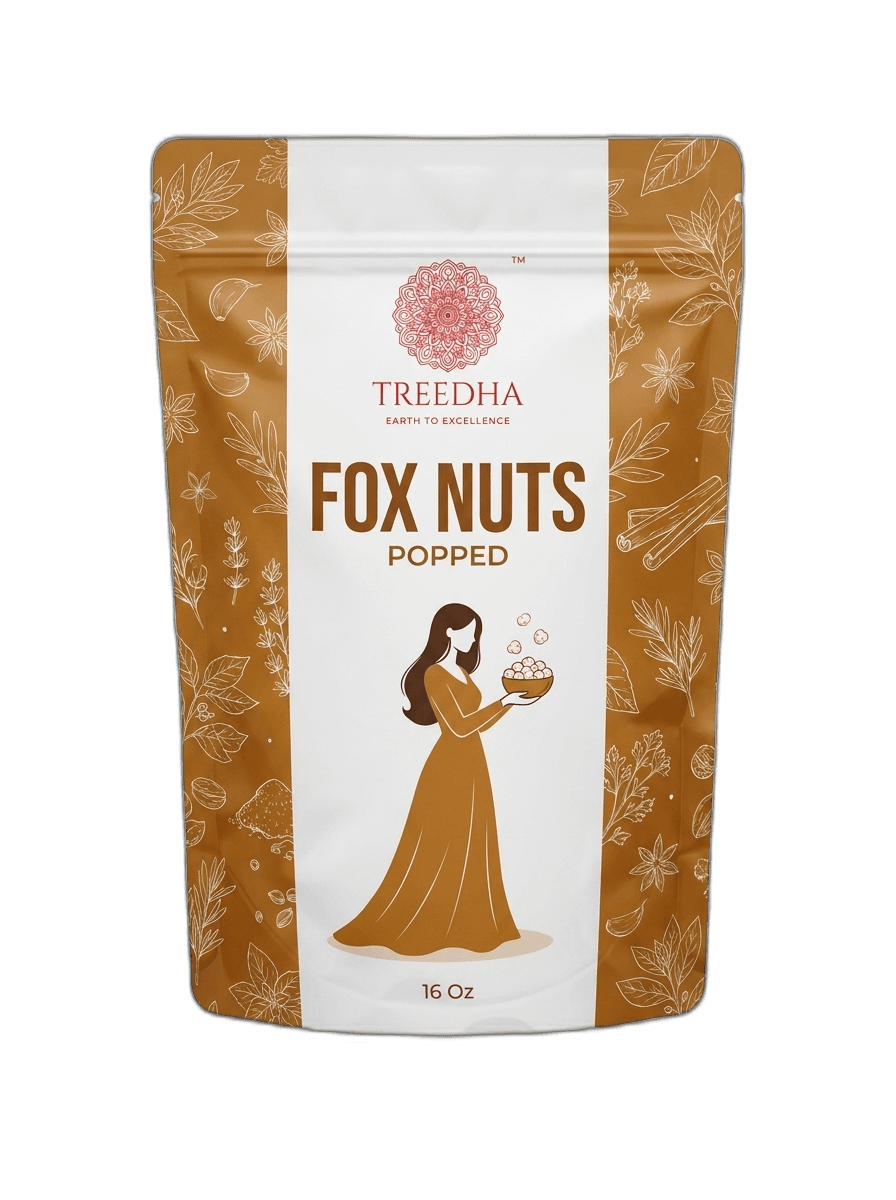
Pakowane w szczycie świeżości, wysyłane z pełnym pochodzeniem.
Pakowane w zamykane saszetki klasy spożywczej, które zatrzymują aromat i kolor — każda z oznaczeniem pochodzenia, klasy i profilu smakowego.
- Indie
- Mithila, Bihar (chronione GI)
- Suta 5/6 · duże, intensywne rozprężenie
- Zbierane ze stawów · prażone · rozprężane
- Jednoskładnikowe · bez dodatków · badane laboratoryjnie
- 9-12 miesięcy w temperaturze pokojowej, w szczelnym suchym zamknięciu
Znane również jako · Foxnut · Fox Nut · Gorgon Nut · Euryale ferox
Jak je stosować
Prażone z ghee, solą i przyprawami jako wysokobiałkowa przekąska
Gotowane na makhana kheer z mlekiem i kardamonem
Dodawane do gęstych curry pomidorowych lub w stylu korma
Po uprażeniu blendowane do koktajli i mieszanek energetycznych
Mieszane z karmelem lub peri-peri na aromatyzowaną przekąskę
Popped Lotus Seed (Makhana / Phool Makhana), also known as Foxnut, Gorgon Nut, or Euryale ferox, is a naturally gluten-free and nutrient-rich wholefood snack. Sourced from the Mithila region of India, it is valued globally as a healthy alternative to popcorn and nuts.
Sourcing & Origin
Treedha's Popped Lotus Seed is exclusively sourced from the historical Mithila region of Bihar, India, specifically the districts of Darbhanga and Madhubani. This area holds a Geographical Indication (GI) tag for Makhana, underscoring its unique provenance and traditional cultivation methods. The aquatic conditions of the ponds in Mithila are ideal for the Euryale ferox plant, yielding seeds of superior quality and flavour.
The cultivation and harvesting process in Mithila is largely manual, reflecting generations of expertise. Seeds are pond-harvested, sun-dried, tempered, and then meticulously hand-roasted and popped, preserving their delicate texture and nutritional integrity. This traditional approach ensures the distinct character and premium quality that bulk buyers expect from this region's renowned Popped Lotus Seed.
Export Grades & Specifications
For the bulk trade, Popped Lotus Seed, or Makhana, is primarily graded by size, with 'Suta' being the key descriptor. Treedha specialises in the premium 'Suta 5 / 6 sutta' grade, characterised by its large, bold pop and uniform size.
Our Popped Lotus Seed exhibits high puff quality and crispness, with a clean, white, and round appearance. We ensure minimal foreign matter, upholding a single-ingredient purity with no additives. The moisture content is carefully controlled, typically maintained below 12% to guarantee optimal crispness and extended shelf life for our bulk consignments. These specifications are consistently verified through lab testing to meet international buyer expectations.
Quality, Safety & Compliance
Treedha is committed to stringent quality and safety protocols, ensuring our Popped Lotus Seed (Makhana / Foxnut) meets international import standards for markets such as the EU and US. Our products are steam-sterilised and guaranteed ethylene-oxide-free (ETO-free), aligning with strict EU regulations where ETO is prohibited and MRLs are set at the limit of quantification (e.g., 0.02 to 0.1 mg/kg for ethylene oxide and 2-chloroethanol sum, as per EU Commission guidance).
We rigorously test for contaminants, including aflatoxins, ensuring levels are well within EU maximums (e.g., 2-8 µg/kg for B1 and 4-15 µg/kg for total aflatoxins for products subject to treatment, with stricter limits for ready-to-eat products, as per Commission Regulation (EU) 2023/915) and US FDA limits. Our comprehensive Certificate of Analysis (COA) for each batch details results for pesticide residues (meeting EU MRLs, often at detection limits, and US EPA tolerances), heavy metals (lead, cadmium, mercury, arsenic, conforming to EU Regulation 2023/915 and US FDA limits), and microbiological contaminants like Salmonella (ensuring absence in 25-gram samples as per EU expectations and FDA guidance for dry foods). We guarantee our Popped Lotus Seed is free from Sudan dyes, which are strictly prohibited in both EU and US food products.
Global Demand & Target Markets
Global demand for Popped Lotus Seed (Makhana / Foxnut) is experiencing robust growth, driven by evolving consumer preferences for healthy and functional foods. Key importing regions include the United States, United Arab Emirates (UAE), United Kingdom, Canada, Australia, Japan, and Thailand. This surge is propelled by its classification as a 'superfood,' rich in protein, fibre, magnesium, and antioxidants, appealing to health-conscious consumers.
The naturally gluten-free and plant-based attributes of Popped Lotus Seed make it highly attractive for vegan and plant-forward diets. It is increasingly repositioned as a healthier snack alternative to popcorn and roasted nuts, fitting well within low-calorie and low-fat trends. The growth of private-label and packaged Makhana further underscores the professionalisation and expansion of its market, making it a strategic commodity for global food brands and distributors.
Logistics, HS Code & Packing
The primary Harmonized System (HS) code for Popped Lotus Seed in international trade is 20081921 – Popped Makhana. For bulk consignments, Treedha offers flexible packing options, including 100g, 250g, and 500g pouches suitable for private-label branding, as well as larger bulk bags for industrial applications. All packaging is designed to maintain product integrity, crispness, and a shelf life of 9-12 months under ambient, sealed dry conditions.
While we operate on a Minimum Order Quantity (MOQ) basis, our approach is designed to accommodate the scale requirements of international importers and distributors. We work with standard Incoterms to facilitate smooth and predictable shipping processes. Treedha handles all necessary export documentation, including phytosanitary certificates and comprehensive Certificates of Analysis (COAs), to ensure seamless customs clearance at destination ports globally.
- gba-group.com — gba-group.com
- bfspices.com — bfspices.com
- foodsafetynews.com — foodsafetynews.com
- volza.com — volza.com
- epa.gov — epa.gov
- eximdatahub.com — eximdatahub.com
Pytania
- Czy makhana to to samo co foxnut?
- Tak. Makhana, phool makhana, foxnut, fox nut i gorgon nut odnoszą się do prażonego nasiona lilii wodnej Euryale ferox. Makhana to po prostu indyjska nazwa tego samego lekkiego, biało rozprężonego nasiona sprzedawanego na Zachodzie jako foxnut.
- Co czyni makhanę z Mithili wyjątkową?
- Makhana z Mithili nosi oznaczenie Chronionego Oznaczenia Geograficznego, uznające pas stawów w stanie Bihar, gdzie uprawa prowadzona jest od pokoleń. Warunki uprawy regionu i tradycyjne prażenie dają większe, bielsze rozprężenie o wyraźnie czystym smaku i kruchym kęsie.
- Czy jest już prażona, czy trzeba ją najpierw przygotować?
- Nasiona są rozprężone, ale najlepiej smakują lekko podprażone ponownie. Kilka minut na ghee lub na suchej patelni czyni je kruchymi i pogłębia smak, zanim je doprawisz, ugotujesz na kheer lub dodasz do curry.
- What is Popped Lotus Seed (Makhana)?
- Popped Lotus Seed, also known as Makhana or Foxnut, is the puffed kernel derived from the seeds of the Euryale ferox plant. It's a naturally gluten-free, low-calorie, and nutrient-dense wholefood snack, popular in India and gaining global recognition for its health benefits.
- Where does Treedha source its Popped Lotus Seed?
- Treedha sources its Popped Lotus Seed exclusively from the Mithila region of Bihar, India, specifically from Darbhanga and Madhubani districts. This region holds a Geographical Indication (GI) tag, signifying its authentic origin and traditional processing methods.
- What quality grade of Popped Lotus Seed does Treedha supply?
- Treedha supplies premium 'Suta 5 / 6 sutta' grade Popped Lotus Seed. This grade is characterised by large, bold pops and uniform size, ensuring high puff quality and crispness for bulk buyers.
- How does Treedha ensure compliance with international food safety standards?
- Treedha ensures compliance through steam sterilisation, guaranteeing ETO-free products. We conduct rigorous lab testing for aflatoxins, pesticide residues (MRLs), heavy metals, and microbiological contaminants like Salmonella, providing comprehensive Certificates of Analysis (COAs) for each batch to meet EU and US import regulations.
- What is the HS Code for Popped Lotus Seed?
- The primary Harmonized System (HS) code for Popped Lotus Seed in international trade is 20081921, specifically designated for 'Popped Makhana'.
- What are the typical packaging options for bulk orders?
- Treedha offers bulk Popped Lotus Seed in various pack sizes, including 100g, 250g, and 500g pouches suitable for private-label branding, as well as larger bulk bags designed for industrial applications and extended shelf life.