Roasted Makhana
Makhana
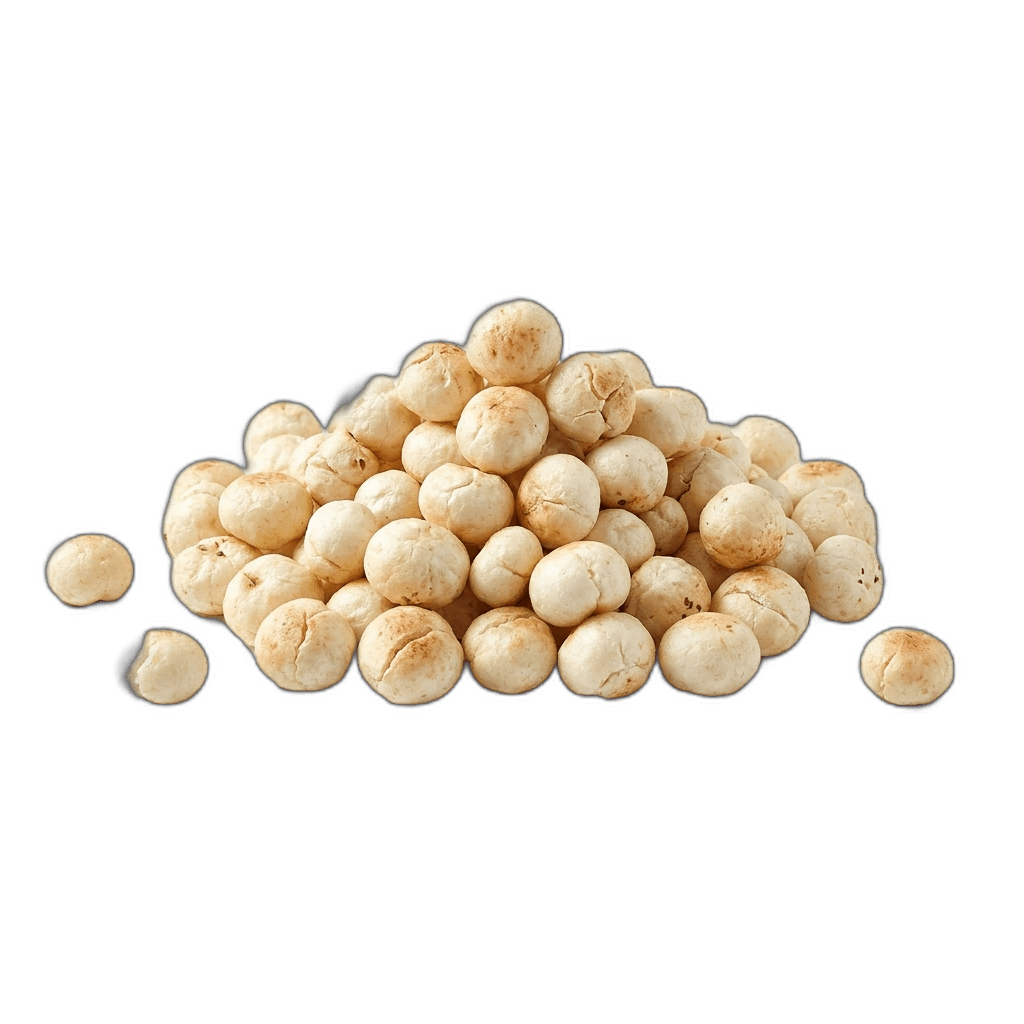
Zbierane ręcznie z bogatych w minerały stawów regionu Mithila w Biharze, w okolicach Darbhangi i Madhubani, te objęte oznaczeniem GI nasiona lotosu są popowane i delikatnie prażone do powietrznej chrupkości. Naturalnie bogate w białko i ubogie w tłuszcz, stanowią czystą, ketogeniczną i bezglutenową przekąskę o delikatnym, prażonym charakterze. Jedz je tak, jak są, wymieszaj z ghee i przyprawami lub dodaj do kheer i curry.
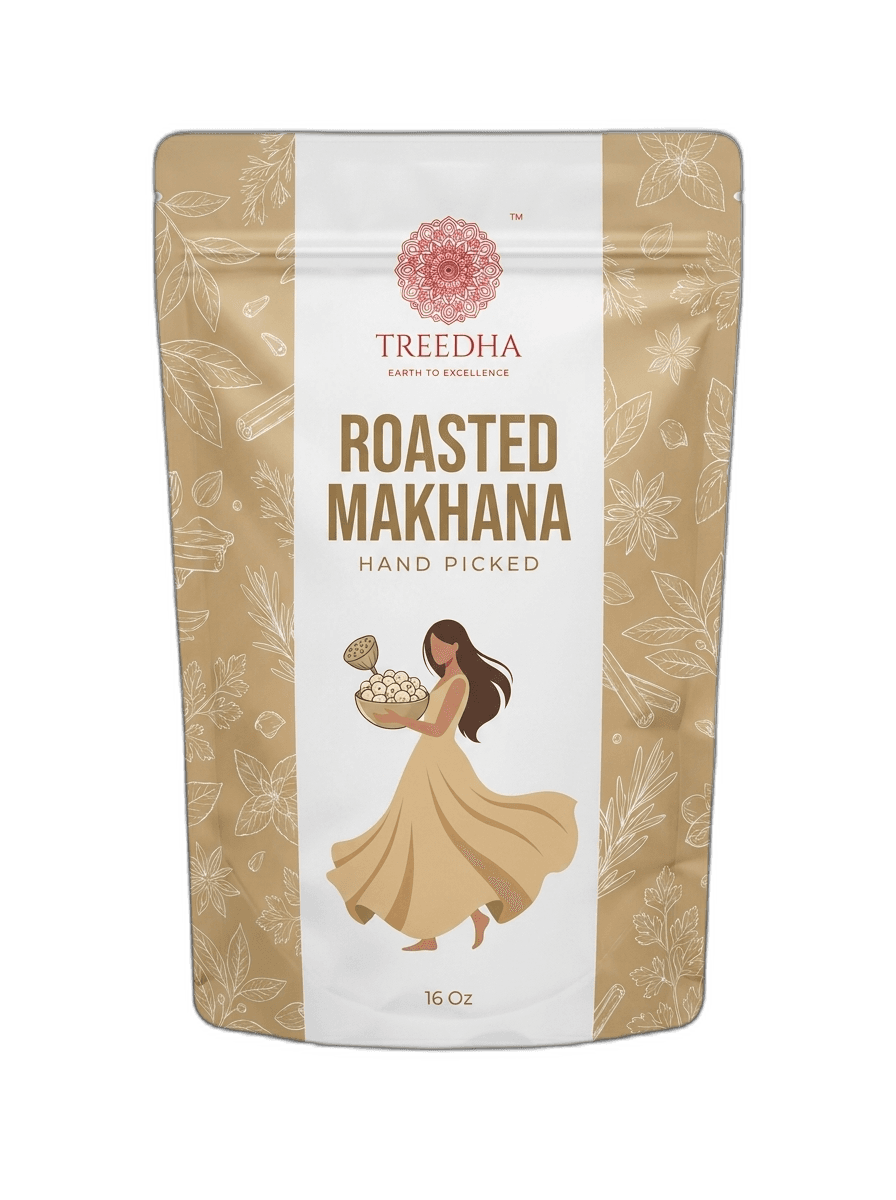
Pakowane w szczycie świeżości, wysyłane z pełnym pochodzeniem.
Pakowane w zamykane saszetki klasy spożywczej, które zatrzymują aromat i kolor — każda z oznaczeniem pochodzenia, klasy i profilu smakowego.
- Mithila, Bihar, Indie
- Objęte oznaczeniem GI o dużym popie
- Popowane, prażone orzeszki lotosu
- Dużo białka · mało tłuszczu
- Sterylizowane parą · wolne od ETO · badane laboratoryjnie
- 9-12 miesięcy w temperaturze otoczenia
Znane również jako · Fox Nuts · Popped Lotus Seeds · Phool Makhana · Gorgon Nut
Jak je stosować
Gotowe do spożycia zdrowe przekąski
Prażone na ghee z solą i przyprawami
Makhana kheer i desery
Zagęszczanie i dekorowanie curry
Mieszanki studenckie i miski bogate w białko
Roasted Makhana (Makhana) are nutrient-rich, popped lotus seeds, a versatile wholefood snack. Sourced from India's Mithila region, Treedha's ETO-free, GI-tagged, large-puff Phool Makhana meets stringent international food safety standards for bulk and private-label buyers.
Sourcing & Origin
Treedha's Roasted Makhana (Fox Nuts) originates exclusively from the Mithila region of Bihar, India, specifically the districts of Darbhanga and Madhubani. This area is globally recognised as the primary hub for Makhana cultivation and processing, accounting for over 90% of the world's supply.
The unique climatic and hydrological conditions of the Mithila wetlands create an ideal environment for the Euryale ferox plant. This distinct provenance is so significant that Mithila Makhana was granted a Geographical Indication (GI) tag in 2022 by the Government of India, affirming its unique quality and regional identity. For bulk buyers, this GI status ensures authentic origin and a consistently high-quality product, particularly the sought-after large-puff variety.
Export Grades & Specifications
Consistent quality is critical in the bulk trade of Roasted Makhana (Popped Lotus Seeds). Treedha specialises in the premium Mithila GI large-puff phool makhana, which is hand-popped and roasted. Key specifications for export focus on purity, size uniformity, and moisture content.
Our Roasted Makhana adheres to strict parameters, typically exhibiting a moisture content of ≤10% to ensure stability and prevent microbial growth. Purity levels are consistently high, exceeding 96%, signifying minimal foreign matter, husks, or hard kernels. Size is a primary grading criterion, with our large-puff variety typically ranging from 15-20 mm (5-6+ suta), ensuring an appealing, uniform product for global markets. The desired colour is white, indicating freshness, with a light, airy, crisp texture and a mild, nutty taste free from bitterness. For precise requirements, a detailed Certificate of Analysis (COA) is provided with each shipment.
| Specification | Premium Grade (Treedha) | Standard Grade |
|---|---|---|
| Origin | Mithila, Bihar, India (GI) | Various, often un-GI |
| Form | Popped, Roasted | Popped, sometimes unroasted |
| Kernel Size | Large-puff (15-20 mm / 5-6+ suta) | Mixed sizes (4-6 suta) |
| Moisture | ≤10% | ≤12% |
| Purity | ≥96% | ≥90% |
| Colour | White | Off-white to yellowish |
| Texture | Crisp, Airy, Crunchy | Softer, Chewier |
| Foreign Matter | Nil | Trace amounts |
Quality, Safety & Compliance
Treedha prioritises stringent food safety and quality compliance for all Roasted Makhana (Fox Nuts exports), adhering to EU and US import regulations. Our processing includes steam-sterilisation to ensure microbial safety without chemical intervention. Critically, our products are certified Ethylene Oxide (ETO) free, a paramount requirement given ETO's classification as a carcinogen and its strict prohibition in food products by the EU, with severe restrictions in the US.
We conduct comprehensive lab testing for critical contaminants. Aflatoxin levels are maintained well within international limits: B1 ≤ 2.0 μg/kg and Total Aflatoxins (B1, B2, G1, G2) ≤ 4.0 μg/kg for the EU, and Total Aflatoxins ≤ 20 μg/kg for the US, with moisture content controlled to mitigate risk. Pesticide Maximum Residue Levels (MRLs) comply with EC 396/2005 for the EU and FDA standards for the US, with default MRLs of 0.01 mg/kg applied where specific limits are not defined. We also guarantee absence of pathogenic bacteria like Salmonella and prohibited Sudan dyes. All shipments are accompanied by a Certificate of Analysis (COA), Phytosanitary Certificate, and full documentation to facilitate smooth customs clearance and demonstrate compliance with FDA (US) and EU regulations, including FSMA for the US market.
Global Demand & Target Markets
The global demand for Roasted Makhana (Popped Lotus Seeds) is experiencing substantial growth, driven by evolving consumer preferences for healthy, plant-based, and gluten-free snacking options. India is the largest exporter, supplying over 90% of the international market.
Key importing countries include the United States, United Arab Emirates, Canada, Australia, and the United Kingdom. European nations like Germany and the Netherlands (a strategic re-distribution hub) also represent significant markets. The rising health consciousness worldwide positions Makhana as a 'superfood' alternative to conventional snacks, appealing to consumers seeking low-calorie, high-protein options. Furthermore, its versatility extends beyond snacking, finding use as an ingredient in various culinary applications, fostering broader market adoption. Government support in India, including the GI tag for Mithila Makhana and promotional efforts by APEDA, further underpins its export potential.
Logistics, HS Code & Packing
Accurate Harmonised System (HS) code classification is essential for efficient international trade. While historically classified under codes like 19041090 or 21069099, the Government of India has introduced a dedicated HSN code for popped makhana. For Treedha's Roasted Makhana (Phool Makhana), the most precise Indian HSN code going forward is 20081921 ('Popped Makhana'). Globally, 19041090 remains a widely recognised and used classification for prepared cereal products.
For bulk shipments, Treedha offers robust and food-grade packaging solutions, including multi-ply sacks and vacuum-sealed bags designed to maintain freshness and product integrity during transit. Standard pack sizes available include 100 g, 250 g, and 500 g, with custom and private-label packaging options available upon request. Our minimum order quantity (MOQ) approach is flexible, designed to accommodate the varied needs of importers, distributors, and private-label clients. We operate on standard Incoterms as agreed with our partners. Roasted Makhana typically boasts a shelf life of 9-12 months when stored in a cool, dry, ambient environment, ensuring product viability for extended distribution cycles.
- pocketful.in — pocketful.in
- volza.com — volza.com
- hoysalainternational.com — hoysalainternational.com
- jagranjosh.com — jagranjosh.com
- investindia.gov.in — investindia.gov.in
- hybitefoods.com — hybitefoods.com
Pytania
- Czy makhana to to samo co orzeszki lotosu lub nasiona lotosu?
- Tak. Makhana, orzeszki lotosu i popowane nasiona lotosu odnoszą się do tego samego napęczniałego nasienia Euryale ferox; phool makhana to większa, klasa premium.
- Co sprawia, że makhana z Mithili jest lepsza?
- Płytkie, bogate w minerały stawy regionu Mithila dają nasiona, które popują na większe, gęstsze i bardziej chrupiące kuleczki, dlatego Mithila Makhana posiada oznaczenie geograficzne (Geographical Indication).
- Czy prażona makhana to zdrowa przekąska?
- Jest naturalnie bezglutenowa, bogata w białko roślinne i uboga w tłuszcz, co czyni ją popularną przekąską przyjazną diecie keto. Wybieraj lekko prażoną, z przyprawą sterylizowaną parą, by zachować jej czystość.
- What is Roasted Makhana, and where does Treedha's product originate?
- Roasted Makhana, also known as Fox Nuts or Popped Lotus Seeds, are light, edible puffs derived from the seeds of the *Euryale ferox* plant. Treedha's Roasted Makhana originates exclusively from the Mithila region of Bihar, India, specifically from GI-tagged areas like Darbhanga and Madhubani, known for producing premium large-puff varieties.
- What quality specifications does Treedha guarantee for its bulk Roasted Makhana?
- Treedha guarantees premium Mithila GI large-puff Roasted Makhana with a moisture content of ≤10%, purity levels exceeding 96%, and kernel sizes typically ranging from 15-20 mm. Our product is white in colour, crisp in texture, and offers a mild, nutty taste, free from foreign matter or off-notes.
- How does Treedha ensure compliance with EU and US import regulations for Fox Nuts?
- Treedha ensures compliance by steam-sterilising our Fox Nuts (Makhana) and conducting rigorous lab testing to confirm they are ETO-free. We verify that aflatoxin levels, pesticide residues, heavy metals, and pathogenic bacteria such as Salmonella are well within the strict limits set by EU (e.g., EC 396/2005) and US FDA regulations (e.g., FSMA). All shipments include comprehensive documentation, including a Certificate of Analysis (COA) and Phytosanitary Certificate.
- What are the primary demand drivers for Popped Lotus Seeds in global markets?
- Global demand for Popped Lotus Seeds (Makhana) is primarily driven by rising health consciousness, the superfood trend, and the search for healthy snacking alternatives. Their appeal as a natural, gluten-free, low-calorie, and high-protein food makes them highly desirable to consumers in key importing regions like the US, EU, and Middle East.
- Which HS code is most relevant for Treedha's Roasted Makhana exports from India?
- As per recent Indian government revisions (Finance Bill 2025), the most relevant and precise Indian HSN code for Treedha's Roasted Makhana (Popped Makhana) is 20081921. Globally, the code 19041090 ('Prepared foods obtained by the swelling or roasting of cereals or cereal products') remains a widely recognised classification.
- Can Treedha provide private-label or custom packaging for bulk orders of Phool Makhana?
- Yes, Treedha offers custom and private-label packaging solutions for bulk orders of Phool Makhana (Roasted Makhana). Our packaging options include multi-ply sacks and vacuum-sealed bags in various weights, designed to meet specific client requirements and ensure product integrity during shipping and distribution.