Monsooned Malabar Coffee
Monsooned Malabar
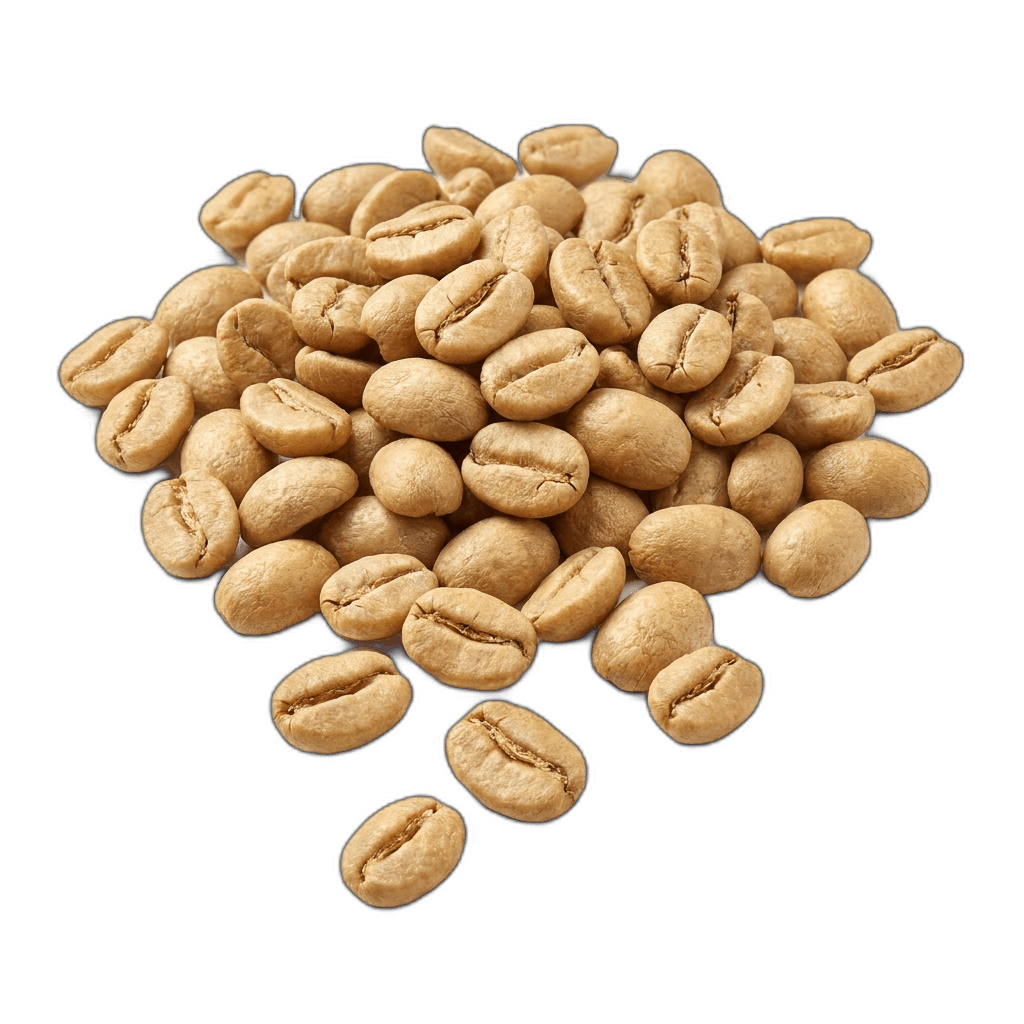
Una specialità protetta da IG nata sulla costa del Malabar in India, dove l'Arabica verde delle alte tenute del Karnataka e del Kerala viene esposta al monsone di sud-ovest per tre o quattro mesi. I venti gonfiano i chicchi fino a un oro pallido e ne eliminano l'acidità, lasciando una tazza dal corpo pieno e quasi neutra, con profondità di cioccolato, spezie e frutta secca tostata. Tostalo scuro per un espresso dal corpo travolgente, oppure preparalo come un filtro morbido e delicato che non aggredisce mai.
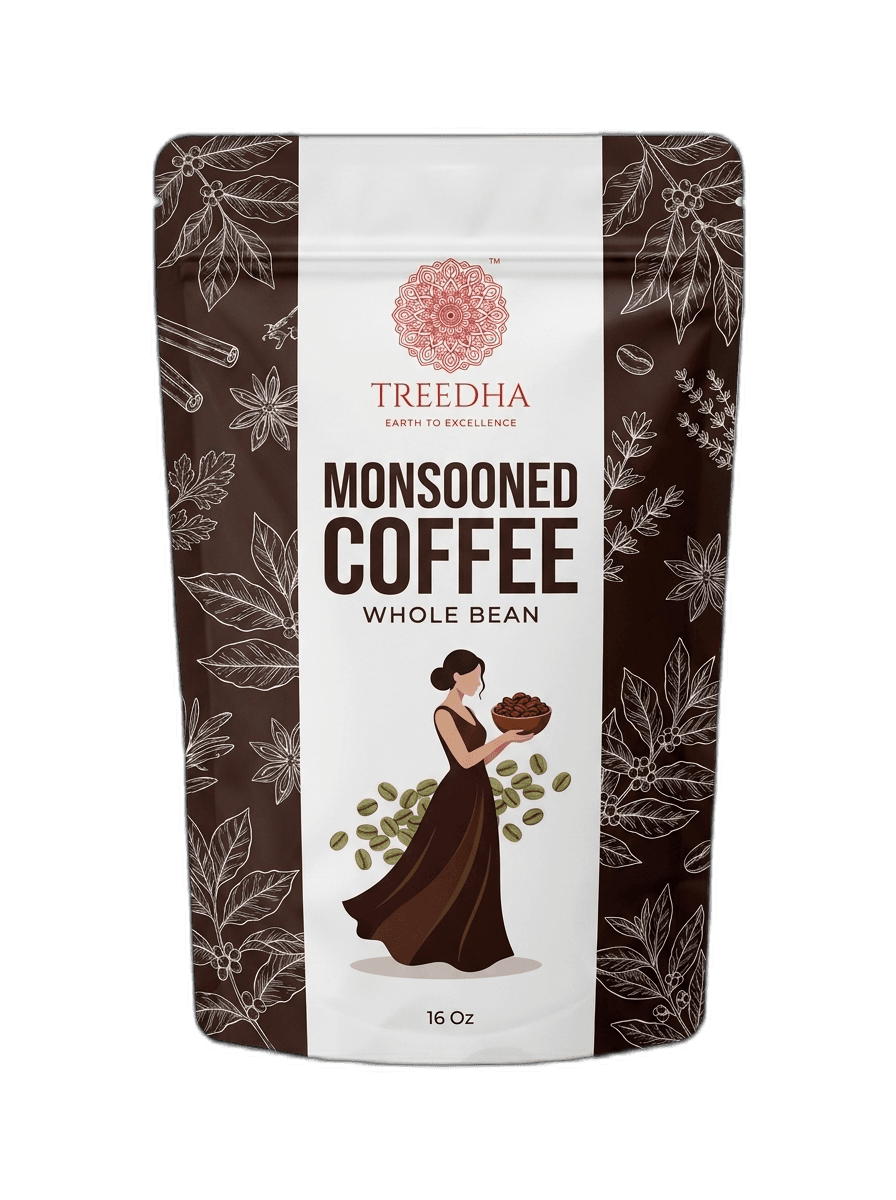
Sigillato al massimo della freschezza, spedito con la sua provenienza.
Confezionato in buste richiudibili per uso alimentare che trattengono aroma e colore — ciascuna etichettata con origine, qualità e profilo aromatico.
- Costa del Malabar, India
- Monsooned Malabar Arabica AA (protetto da IG)
- Arabica verde invecchiata al monsone, in grani interi
- Molto bassa; tazza dal pH quasi neutro
- Monorigine, 100% Arabica, senza miscele
- 12-18 mesi da verde; al meglio entro 3-6 mesi dalla tostatura
Conosciuto anche come · Monsoon Coffee · Monsooned Arabica · Malabar Monsoon AA
Come utilizzarlo
Espresso a tostatura scura con una crema densa e persistente
Filtro e pour-over a bassa acidità per palati sensibili
Caffè al latte e cold brew in stile dell'India del Sud
Miscele mocha e a base di cioccolato
Moka sul fornello per una tazza decisa al mattino
Monsooned Malabar Coffee (Monsooned Malabar) is a unique green Arabica coffee from India's Malabar Coast, distinguished by its 12-16 week monsoon-aging process. This treatment transforms its acidity and flavour profile, yielding a distinctively mellow, full-bodied cup sought by specialty roasters.
Sourcing & Origin
Monsooned Malabar Coffee, also known as Monsoon Coffee or Monsooned Arabica, originates from the Malabar Coast of India, specifically from estates in Karnataka and Kerala at elevations of 900-1,200 meters. The unique characteristic of this coffee is not its initial growth, but its post-harvest processing.
After natural sun-drying, the green coffee beans are subjected to the monsoon winds and humidity in open coastal warehouses for 12-16 weeks. This traditional 'monsooning' process, historically a serendipitous effect of long sea voyages to Europe, dramatically reduces the coffee's original acidity and develops its distinct flavour profile. This geographical indication (GI) protected coffee guarantees authenticity and a specific processing method that is highly valued by bulk buyers seeking unique specialty offerings.
Export Grades & Specifications
The predominant grade traded for this specialty coffee is Monsooned Malabar Arabica AA, reflecting its premium quality. The 'AA' designation indicates a larger, more uniform bean size, which is critical for consistent roasting performance in commercial operations. These beans are typically retained on screens of size 17 (6.75mm) or 18 (7.14mm) and above, ensuring a high degree of physical consistency.
Key specifications also include a distinct colour value: Monsooned Malabar beans are uniquely pale gold or aged pale yellow, contrasting sharply with the bright green of unmonsooned coffee. While standard green coffee moisture content is 10-12.5%, monsooned beans traditionally range higher, around 13-14.5%, due to moisture absorption during processing. Purity specifications for this premium grade require a very low defect tolerance, with a maximum of 5 full secondary defects per 350g sample, adhering to Specialty Coffee Association (SCA) standards. Treedha ensures each batch meets these stringent physical and sensory benchmarks. The varieties primarily used are Arabica types like Kents, S.795, Catimor, and Selection 9.
Quality, Safety & Compliance
Ensuring compliance with international food safety standards is paramount for Monsooned Malabar Coffee. Treedha guarantees that our Monsooned Malabar Arabica AA is ethylene-oxide-free, a critical requirement for EU markets where the maximum residue limit (MRL) is generally at the limit of quantification (LOQ), often 0.02 mg/kg. Any detection can lead to immediate rejection by EU customs.
For aflatoxins, the EU mandates maximum levels for Aflatoxin B1 at 5.0 μg/kg and total aflatoxins at 10.0 μg/kg for raw coffee. The US FDA also has action levels of 20 ppb for human food. Our coffee is rigorously lab-tested to ensure all mycotoxin levels are well within these global limits. We also ensure compliance with MRLs for pesticides as per both EU and US regulations; imported green coffee to the US can have a maximum glyphosate level of 1 part per million (1PPM). Furthermore, all batches are tested to be free from Salmonella and prohibited Sudan dyes. Comprehensive documentation, including a Certificate of Analysis (COA), Phytosanitary Certificate, and Certificate of Origin (COO), accompanies every shipment, verifying purity, safety, and provenance.
Global Demand & Target Markets
Monsooned Malabar, including Monsooned Arabica and Malabar Monsoon AA, commands a distinct niche in the global specialty coffee market due to its singular attributes. Demand is primarily driven by its unique flavour profile: a heavy body, exceptionally low acidity (often a near-neutral pH), pungent taste, and notes of spice, nuts, and chocolate, sometimes described as earthy or smoky. This profile appeals to roasters and food brands seeking to offer a unique, smooth coffee experience.
Historically, European markets developed a strong preference for this style of coffee, and this demand persists. Key importing regions include Belgium, which has consistently been a significant destination, accounting for a substantial share of total exports. Germany follows as another major importer, with the United States also representing a key market. Importers and private-label buyers leverage the unique characteristics and GI-protected status of Monsooned Malabar to differentiate their product lines and cater to discerning consumers globally.
Logistics, HS Code & Packing
For international trade, Monsooned Malabar Coffee (green, unroasted, non-decaffeinated) falls under the global Harmonized System (HS) code 0901.11. Specifically for exports from India, it is often identified by the 8-digit HS code 0901.11.29.
Treedha offers flexible bulk packing options, including standard jute bags, as well as GrainPro bags for enhanced preservation during transit and storage. While we avoid specific order quantities here, our approach to Minimum Order Quantity (MOQ) is tailored to meet the varied needs of our B2B partners, ensuring efficient and scalable supply. We facilitate global shipments through major Indian ports, offering various Incoterms such as FOB and CIF to suit buyer preferences. Monsooned Malabar Arabica AA typically has a green shelf life of 12-18 months, with optimal freshness for roasting within 3-6 months of arrival, ensuring product quality upon delivery.
- indonesia-coffee.com — indonesia-coffee.com
- hs-codes.com — hs-codes.com
- tradeatlas.com — tradeatlas.com
- freightamigo.com — freightamigo.com
- helenacoffee.vn — helenacoffee.vn
- specialtycoffee.id — specialtycoffee.id
Domande
- Cosa rende il caffè Monsooned Malabar diverso dall'Arabica comune?
- Dopo il raccolto i chicchi verdi vengono esposti ai venti monsonici per diversi mesi. Si gonfiano, sbiadiscono verso l'oro e perdono quasi tutta la loro acidità, dando una tazza piena, morbida e a bassa acidità, ben diversa da un'Arabica lavata e brillante.
- Monsooned Malabar è lo stesso del Monsoon Coffee?
- Sì. 'Monsoon Coffee' è l'abbreviazione di uso comune per Monsooned Malabar, il caffè protetto da IG invecchiato al monsone sulla costa del Malabar in India.
- È adatto a chi trova il caffè troppo acido?
- Senza dubbio. Il processo di monsonatura conferisce un pH quasi neutro, rendendolo uno dei caffè più delicati e a più bassa acidità che si possano preparare.
- What makes Monsooned Malabar Coffee unique?
- Monsooned Malabar Coffee's uniqueness stems from its post-harvest processing. After drying, green beans are exposed to monsoon winds and humidity for 12-16 weeks, developing a distinctive flavour profile with very low acidity and a heavy body, differentiating it from other coffees.
- What is the primary export grade for Monsooned Malabar?
- The primary export grade is Monsooned Malabar Arabica AA. The 'AA' designation indicates larger, uniform bean sizes, which are preferred for consistent roasting in bulk operations.
- Is Treedha's Monsooned Malabar Coffee compliant with EU and US import regulations?
- Yes, Treedha ensures full compliance. Our Monsooned Malabar is steam-sterilised, ethylene-oxide-free, and rigorously lab-tested to meet EU (e.g., Aflatoxin B1 at 5.0 μg/kg) and US (e.g., Aflatoxin 20 ppb, Glyphosate 1 PPM) MRLs for mycotoxins and pesticides. Comprehensive COAs are provided.
- What is the HS code for Monsooned Malabar Coffee?
- The general Harmonized System (HS) code for unroasted, non-decaffeinated coffee beans is 0901.11. Specifically for exports from India, Monsooned Malabar Arabica AA is often traded under HS code 0901.11.29.
- Which countries are the main importers of Monsooned Malabar Coffee?
- The largest importing countries for Monsooned Malabar Coffee (Monsoon Coffee) include Belgium, Germany, and the United States, driven by demand for its unique flavour profile in the specialty coffee market.
- What is the typical moisture content of Monsooned Malabar Arabica AA?
- Due to its unique monsooning process, Monsooned Malabar Arabica AA typically has a moisture content of around 13-14.5% by the end of processing, a traditionally accepted higher range for this specialty coffee, compared to the 10-12.5% for standard green coffee.