Cracked Wheat
Dalia / Lapsi
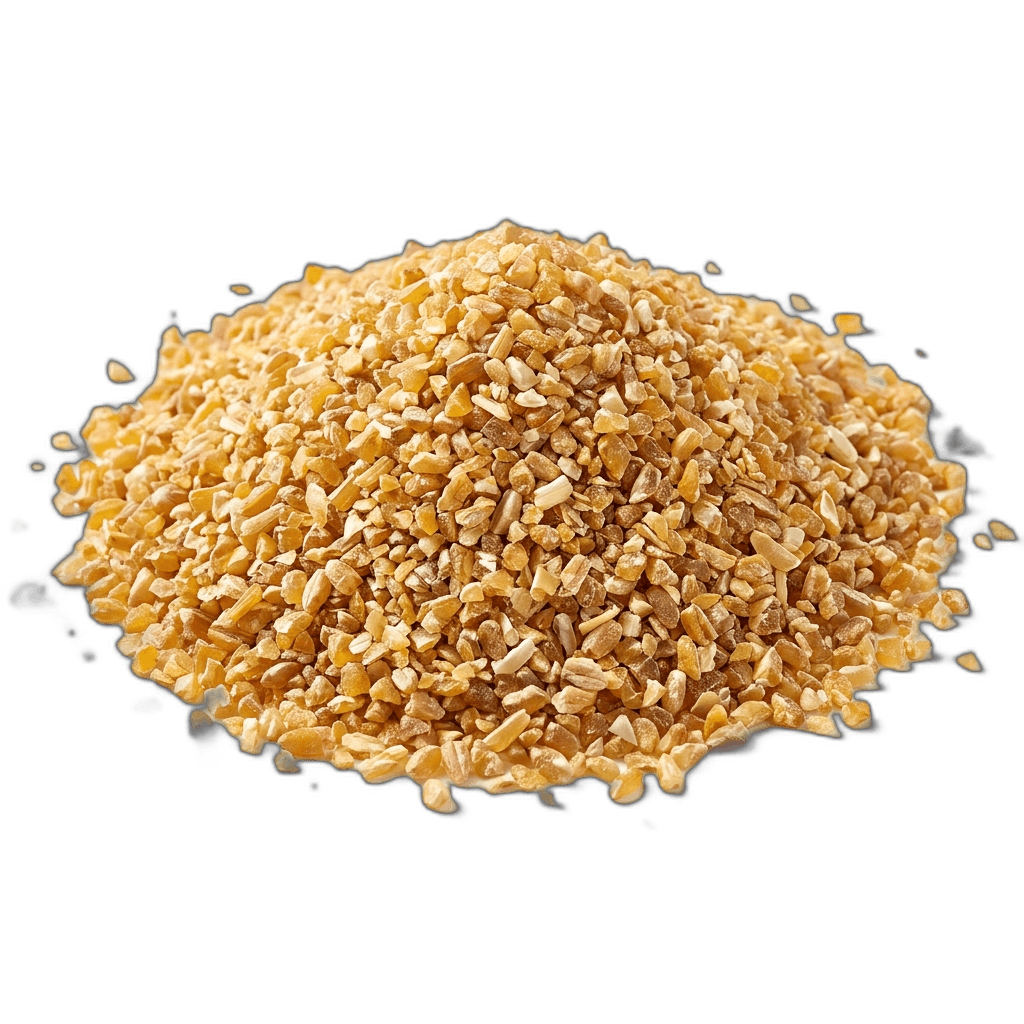
Mielona z twardej pszenicy uprawianej na płaskowyżu Malwa w środkowych Indiach, nasza łamana pszenica jest obgotowywana, suszona i łamana na czysty, równy grys. Obgotowanie zamyka otręby i zarodek, jednocześnie skracając czas gotowania o połowę, dając orzechowe, lekko słodkie ziarno o satysfakcjonującym gryzie. Paruj je na wytrawne upma, gotuj z jaggery i ghee na lapsi lub wymieszaj na zimno w ziołowo-jasne tabbouleh.
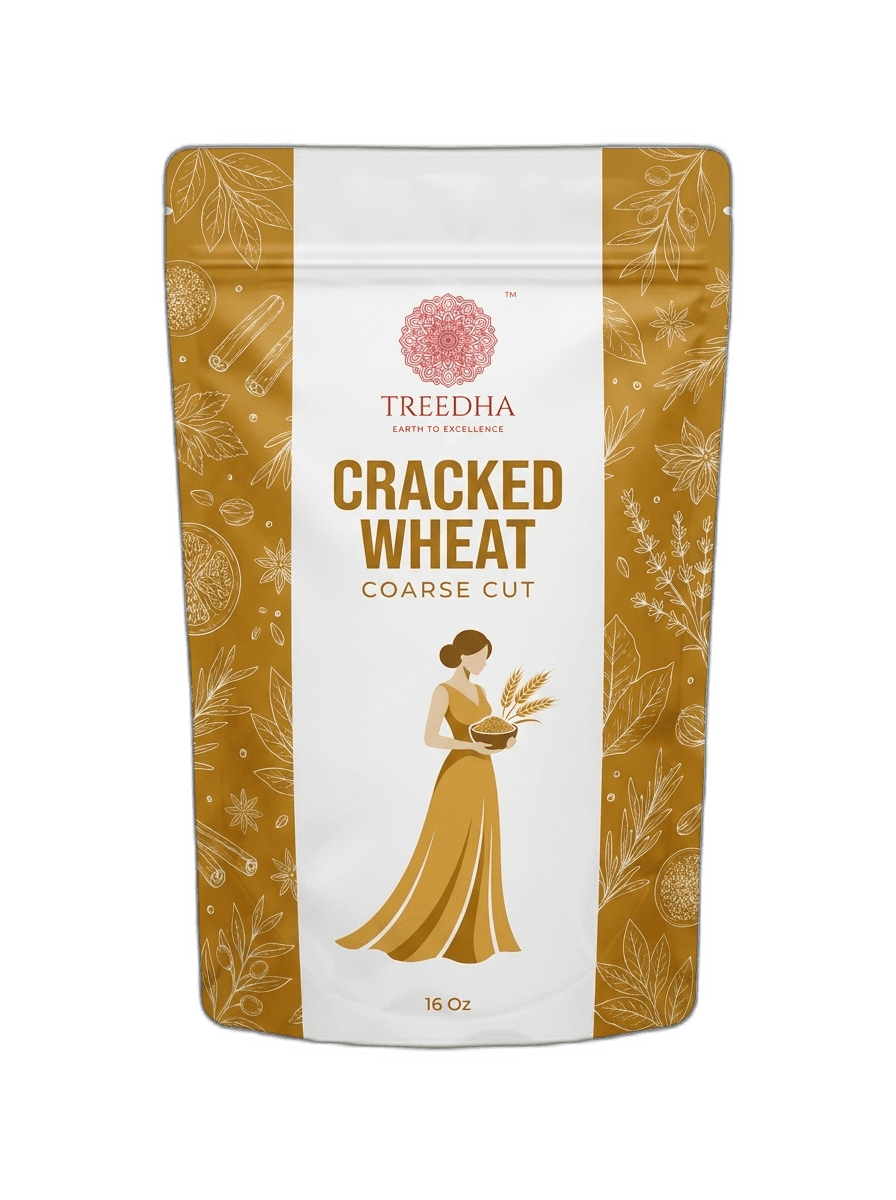
Pakowane w szczycie świeżości, wysyłane z pełnym pochodzeniem.
Pakowane w zamykane saszetki klasy spożywczej, które zatrzymują aromat i kolor — każda z oznaczeniem pochodzenia, klasy i profilu smakowego.
- Indie
- Płaskowyż Malwa, Madhya Pradesh
- Gruby krój #3
- Obgotowana · suszona piecowo · łamana
- Pełne ziarno · czyszczone sortexem · bez dodatków
- 12-18 miesięcy w temperaturze pokojowej, zamknięte
Znane również jako · Bulgur · Fada · Burghul · Tabbouleh Wheat
Jak je stosować
Parowana na upma z temperowanymi przyprawami i warzywami
Gotowana z jaggery, ghee i kardamonem na lapsi
Namaczana na zimno na tabbouleh i sałatki zbożowe
Dodawana do kibbeh i nadzień do faszerowanych warzyw
Gotowana na wytrawną lub słodką owsiankę śniadaniową
Cracked Wheat (Dalia / Lapsi) is a versatile, parboiled whole grain sourced from India's Malwa Plateau. Valued for its nutritional profile and quick-cooking nature, it serves as a culinary staple in various global cuisines, offered by Treedha to bulk importers and private-label buyers worldwide.
Sourcing & Origin
Treedha's Cracked Wheat, also known as Dalia or Lapsi in India, and globally as Bulgur, Fada, Burghul, or Tabbouleh Wheat, originates from the fertile Malwa Plateau in Madhya Pradesh, India. Situated at an elevation of 450-550 metres, this region is renowned for producing high-quality durum wheat, which is ideal for parboiling and cracking.
The distinct terroir of the Malwa Plateau, combined with optimal climatic conditions, contributes to the superior characteristics of the wheat. For bulk buyers, sourcing from this specific Indian origin ensures a consistent supply of grain with desirable texture and nutritional integrity, critical for culinary applications from traditional South Asian dishes to Mediterranean tabbouleh.
Export Grades & Specifications
Treedha specialises in Coarse #3 cut, parboiled Cracked Wheat, a grade distinguished by its particle size and convenient preparation. This specific cut typically exhibits a granulation of 1.5–2.2 mm, offering a hearty texture suitable for a wide array of recipes.
Our Cracked Wheat undergoes a meticulous process: it is cleaned, parboiled, kiln-dried, and then precisely cracked. Further sortex-cleaning ensures uniform grit and exceptional purity, free from foreign matter. The parboiling step gelatinises the starch, making the grain quicker to cook and more resistant to pests, enhancing its appeal for bulk trade.
| Specification | Coarse #3 Cut (Treedha) | Fine #1 Cut (Typical) | Medium #2 Cut (Typical) |
|---|---|---|---|
| Particle Size | 1.5–2.2 mm | <1 mm | 1–1.5 mm |
| Process | Parboiled, kiln-dried | Raw or Parboiled | Raw or Parboiled |
| Moisture Content | ≤ 12% | ≤ 12% | ≤ 12% |
| Protein Content | 11-14% | 11-14% | 11-14% |
| Purity | Whole grain, sortex-cleaned | Good | Good |
| Whole Grains | ≤ 2% | ≤ 2% | ≤ 2% |
Quality, Safety & Compliance
Treedha adheres to rigorous international food safety standards, ensuring our Cracked Wheat (Dalia / Lapsi) meets the stringent requirements of global markets like the EU and US. Our product is steam-sterilised, confirming it is ethylene-oxide-free (ETO-free), a critical compliance point for EU imports where ETO is banned and subject to MRLs of 0.1 mg/kg (sum of ETO and 2-chloro-ethanol, expressed as ETO), as per EU regulations.
Each batch is lab-tested for contaminants, including aflatoxins and mycotoxins. For EU markets, our products meet limits such as 2.0 µg/kg for Aflatoxin B1 and 4.0 µg/kg for total Aflatoxins (B1+B2+G1+G2) in cereals, as set by the European Commission. We also ensure compliance with pesticide MRLs (default EU MRL of 0.01 mg/kg if no specific level exists) and strict microbiological criteria, including Salmonella (0 cfu/25g), a common specified maximum for coarse bulgur. Heavy metals such as arsenic, cadmium, and lead are also monitored per Regulation (EU) 2023/915 and FDA guidance.
Comprehensive documentation accompanies every shipment, including a Phytosanitary Certificate and a detailed Certificate of Analysis (COA). This COA verifies quality parameters like moisture content, protein levels, and screening results for ETO, aflatoxins, MRLs, and Salmonella, providing full provenance and transparency for our bulk buyers.
Global Demand & Target Markets
Cracked Wheat (Bulgur / Dalia) is a globally sought-after whole grain, driven by its culinary versatility and recognised nutritional benefits. It is a fundamental ingredient in Middle Eastern, Mediterranean, and South Asian cuisines, featuring prominently in dishes such as Tabbouleh, Kibbeh, pilafs, and as a healthy alternative to rice or couscous.
The global demand for bulgur wheat saw Iraq (US$34.3M), Syria (US$22.5M), and Germany (US$19.2M) as primary importing nations in 2022, according to ITC Trade Map data. The European Union is a growing market, with increasing imports. Other significant destinations include the United States, Dominican Republic, Namibia, Spain, Belgium, Switzerland, Canada, Reunion, and Haiti, indicating widespread appeal.
Growth in demand is underpinned by increasing consumer preference for healthy foods, with bulgur recognised as a USDA whole grain offering high fibre (up to 8 grams per cup) and substantial protein (11-14%). Its parboiled nature also makes it a quick-cooking, convenient option for both home cooks and food manufacturers, aligning with modern dietary trends and busy lifestyles. Demographic shifts, particularly of Middle Eastern populations in EU member states, further fuel consumption.
Logistics, HS Code & Packing
For international trade, Treedha's parboiled Cracked Wheat (Bulgur) is classified under the Harmonised System (HS) code 1904.30 globally and the HSN code 19043000 for exports from India. This code specifically covers "Bulgur wheat, parboiled, dried, and cracked," ensuring clarity in customs procedures.
Treedha offers flexible bulk packaging solutions to meet diverse importer needs. While we can provide smaller formats, our primary focus for bulk export is larger quantities tailored for distributors and manufacturers. Our standard approach accommodates various Incoterms such as FOB or CIF, ensuring smooth logistics from our facility to your designated port. The recommended storage for Cracked Wheat is ambient and sealed, ensuring an optimal shelf life of 12-18 months. Treedha partners with clients to define a Minimum Order Quantity (MOQ) that aligns with container load efficiencies and specific client requirements, supporting full container load (FCL) shipments for cost-effective bulk procurement.
- ykgglobal.com — ykgglobal.com
- szpi.gov.cz — szpi.gov.cz
- solocorp.org — solocorp.org
- intracen.org — intracen.org
- reddit.com — reddit.com
- merieuxnutrisciences.com — merieuxnutrisciences.com
Pytania
- Czy dalia to to samo co bulgur?
- Oba to łamana pszenica, ale różnią się jednym krokiem. Zwykła dalia to po prostu łamana surowa pszenica, podczas gdy bulgur jest obgotowywany przed łamaniem. Nasze ziarno jest w stylu obgotowanym, więc niesie orzechowy charakter bulguru i krótszy czas gotowania, i równie dobrze sprawdza się w indyjskich potrawach dalia, jak i śródziemnomorskim tabbouleh.
- Jak je gotować i jak długo to trwa?
- Ponieważ jest obgotowana, gotuje się szybko. Gotuj jedną część ziarna na dwie części wody przez około 12-15 minut dla puszystej wytrawnej tekstury lub namocz drobny krój w gorącej wodzie do zimnych sałatek. Uprażenie jej najpierw na odrobinie ghee pogłębia orzechowy aromat.
- Czy zawiera gluten?
- Tak. Łamana pszenica to produkt pszenny i naturalnie zawiera gluten, więc nie nadaje się do diet dla osób z celiakią ani diet bezglutenowych. Jest jednak pełnym ziarnem, które zachowuje otręby i zarodek dla wyższej zawartości błonnika.
- What is Cracked Wheat (Dalia/Lapsi), and how is Treedha's product processed?
- Cracked Wheat, also known as Dalia or Lapsi (India), or Bulgur, Fada, Burghul, Tabbouleh Wheat (globally), is a whole grain product made from wheat kernels. Treedha's Cracked Wheat is specifically a Coarse #3 cut, parboiled, kiln-dried, and cracked, followed by sortex-cleaning for uniform grit and purity.
- Where does Treedha's Cracked Wheat originate, and why is this significant?
- Treedha's Cracked Wheat is sourced from the Malwa Plateau in Madhya Pradesh, India. This origin is significant because the region's climate and soil are ideal for cultivating high-quality durum wheat, which yields a superior-grade cracked wheat, ensuring consistent texture and flavour for bulk buyers.
- What are the key quality and safety compliance points for Cracked Wheat exports?
- Key compliance points include being ETO-free, meeting strict MRLs for aflatoxins (e.g., EU limits of 2.0 µg/kg B1, 4.0 µg/kg total), pesticide residues (e.g., EU default 0.01 mg/kg), and pathogenic bacteria like Salmonella (0 cfu/25g). Treedha's products are lab-tested to meet these EU and US standards.
- What is the HS Code for Treedha's parboiled Cracked Wheat, and what documentation is provided?
- The primary HS Code for Treedha's parboiled Cracked Wheat (Bulgur) is 1904.30 globally and 19043000 for exports from India. Each shipment includes essential documentation such as a Phytosanitary Certificate, a comprehensive Certificate of Analysis (COA), and a Bill of Lading.
- Which global markets have the highest demand for Cracked Wheat/Bulgur?
- Globally, Iraq, Syria, Germany, the European Union, the United States, Dominican Republic, Namibia, Spain, Belgium, Switzerland, Canada, Reunion, and Haiti are among the largest importing countries for Cracked Wheat and Bulgur, driven by culinary tradition, nutritional value, and convenience.
- Does Treedha offer private-label options for Cracked Wheat?
- Yes, Treedha offers private-label services for bulk Cracked Wheat. We work with importers and distributors to provide customised packaging and labelling solutions, ensuring compliance with market-specific nutritional information and language requirements.