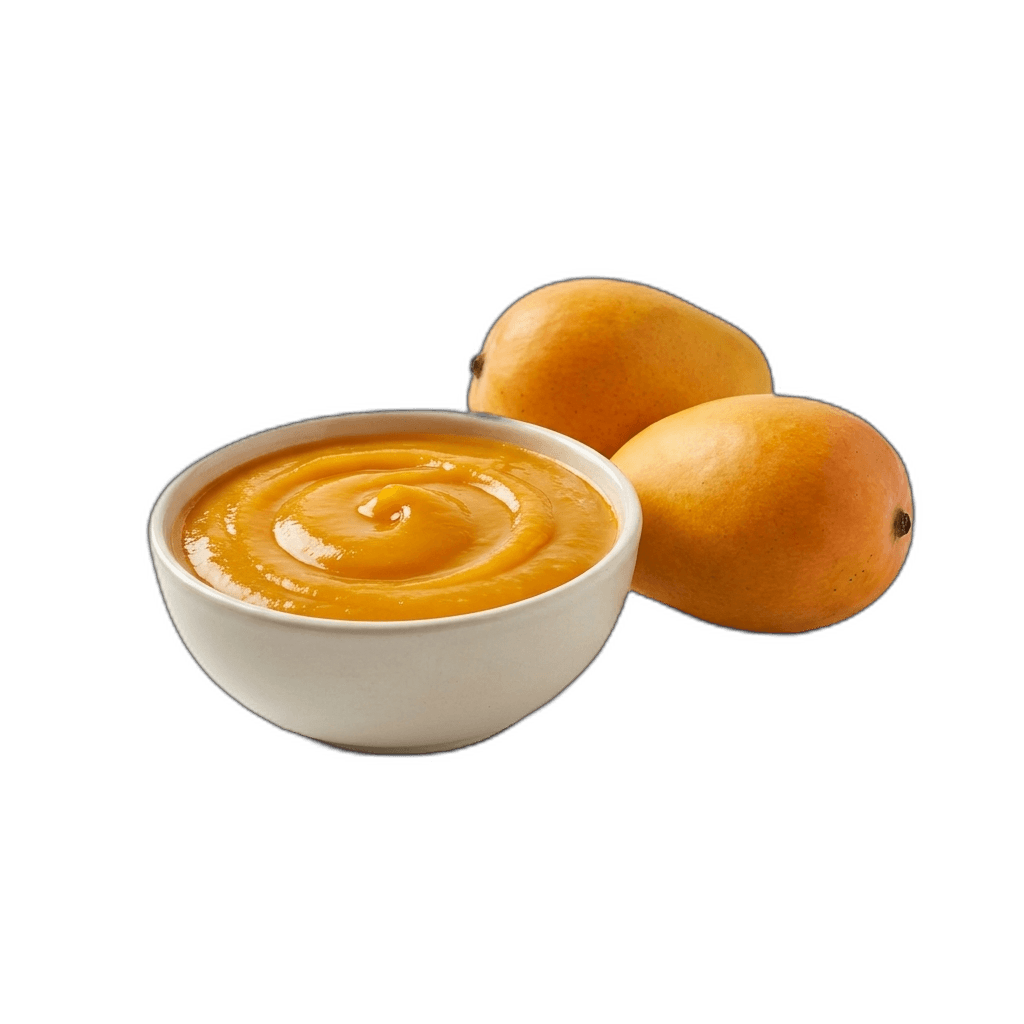
Alphonso Mango Pulp
Aam Ras
Samtig glattes Fruchtmark, gepresst aus vollreifen GI-Alphonso (Hapus) von der Konkan-Küste von Ratnagiri und Devgad sowie aus goldener Kesar aus der Region Gir in Gujarat. Die Frucht wird gewaschen, püriert, schonend wärmebehandelt und in Dosen verschlossen, um den duftenden, honigsüßen Geschmack der Hochsaison zu bewahren. In Lassi und Aamras gießen, in Eis und Mousse einarbeiten oder das ganze Jahr über in Kuchen und Käsekuchen backen.
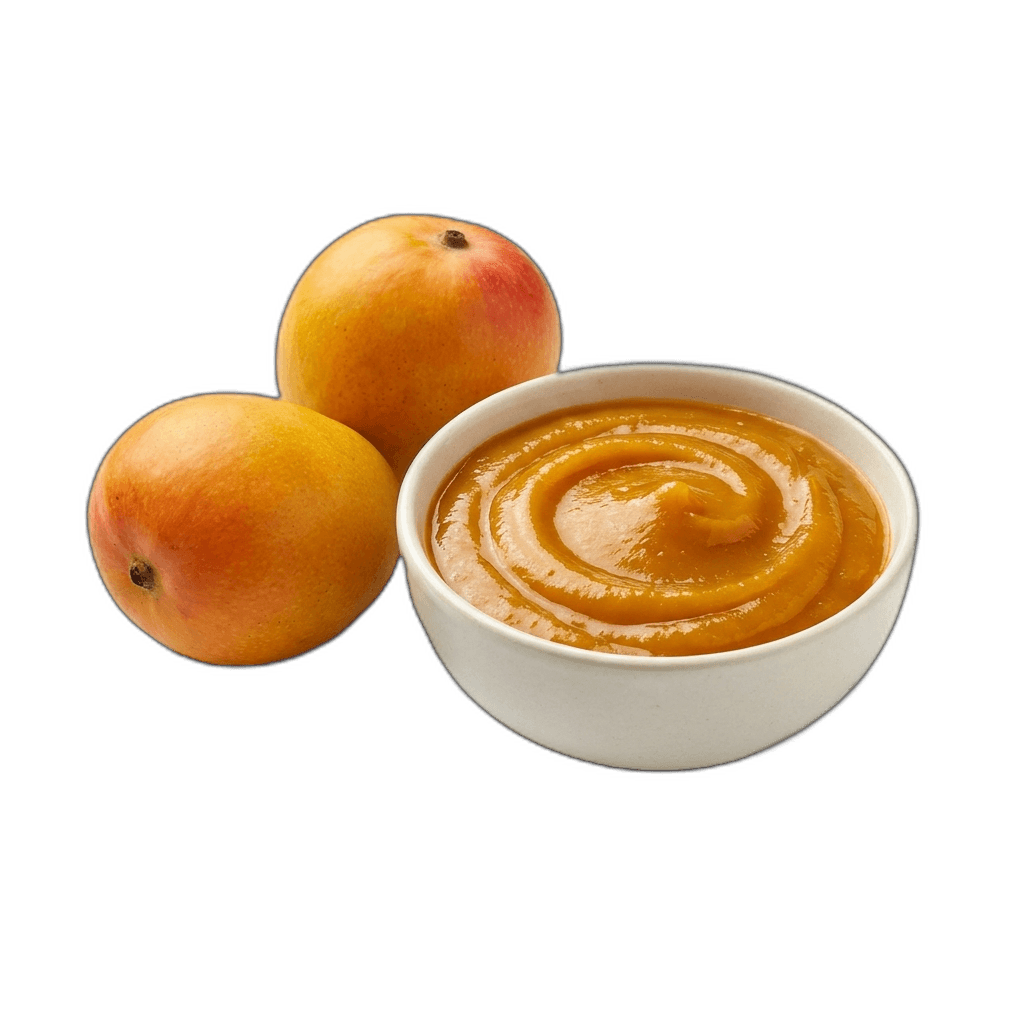
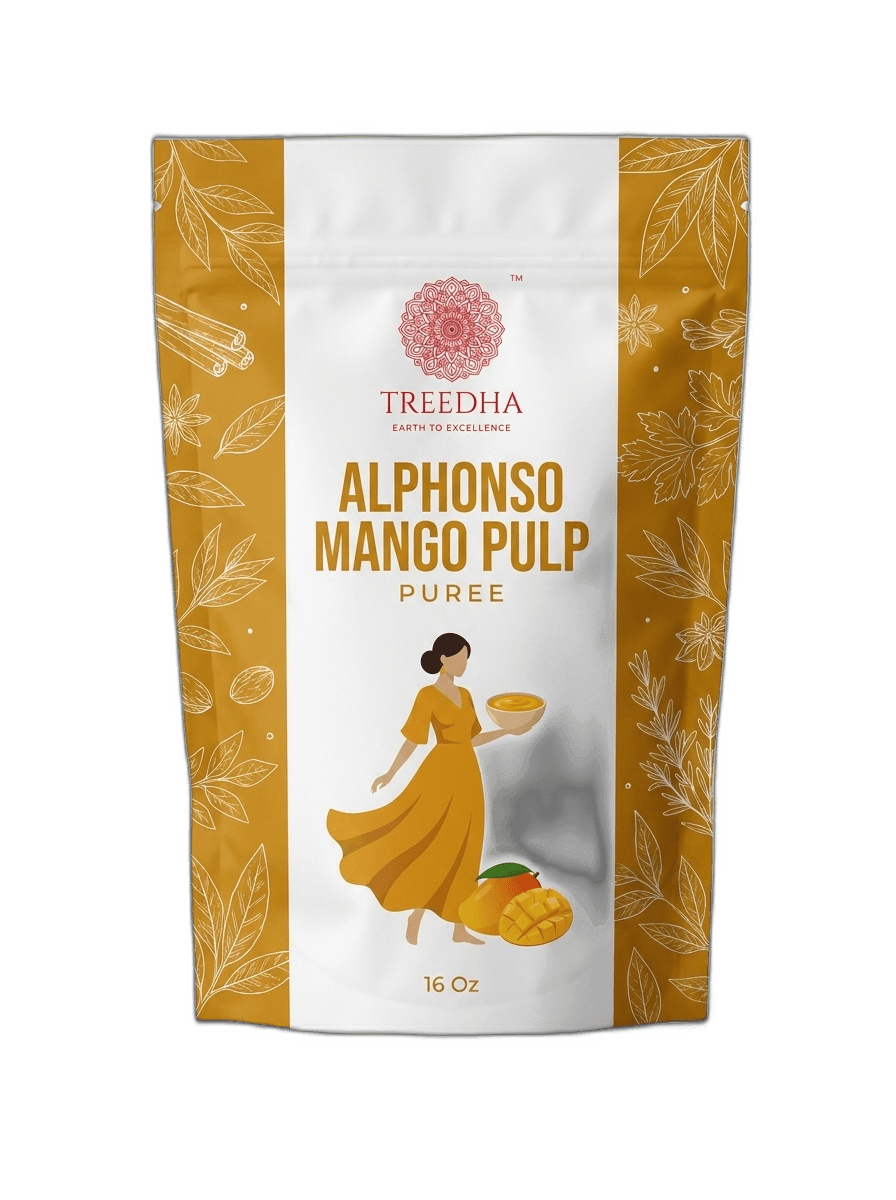
Auf dem Höhepunkt versiegelt, mit Herkunftsnachweis versandt.
Verpackt in wiederverschließbaren, lebensmittelechten Beuteln, die Aroma und Farbe bewahren – jeder mit Herkunft, Güteklasse und Geschmacksprofil gekennzeichnet.
- Indien
- Ratnagiri & Devgad (GI Alphonso); Gir (Kesar)
- Sortenreines Alphonso- oder Kesar-Fruchtmark
- Thermisch verarbeitet, in Dosen verschlossen
- Natürlich oder leicht gesüßt · ohne künstliche Farb- oder Aromastoffe
- 18-24 Monate, bei Raumtemperatur (ungeöffnet)
Auch bekannt als · Hapus Mango Pulp · Kesar Mango Pulp · Mango Puree · Pulpe de Mangue
Verwendung
In Mango-Lassi und Aamras gegossen
In Eis, Kulfi und Mousse eingearbeitet
In Mangokuchen und Käsekuchen gebacken
In Smoothies und Milchshakes gemixt
Über Desserts und Frühstücksschalen gelöffelt
Alphonso Mango Pulp (Aam Ras) is a thermally processed, can-sealed puree of ripe Alphonso or Kesar mangoes, predominantly sourced from India's Ratnagiri, Devgad, and Gir regions. It is valued in bulk trade for its distinctive sweet flavour, vibrant colour, and consistent quality, serving diverse food and beverage applications globally.
Sourcing & Origin
Treedha's Alphonso Mango Pulp, also known as Hapus Mango Pulp or Aam Ras, originates from the prime mango-growing regions of India: Ratnagiri and Devgad in Maharashtra, and Gir in Gujarat. These areas are globally renowned for cultivating the Alphonso and Kesar mango varieties, which are prized for their exceptional sweetness, vibrant colour, and distinct aroma.
The seasonal harvest ensures that only perfectly ripe, hand-picked fruit is selected for pulping. This focus on specific geographical indications (GI) like Ratnagiri Alphonso and Gir Kesar is critical for bulk buyers, as it guarantees a consistent flavour profile and quality that stands apart from generic mango purees, delivering authentic taste directly tied to its rich Indian provenance.
Export Grades & Specifications
Alphonso Mango Pulp for bulk export is typically graded based on its Total Soluble Solids (°Brix), acidity, and sensory characteristics. Treedha offers single-variety Alphonso or Kesar pulp, available as natural or lightly sweetened. Our pulp maintains a bright golden-yellow appearance, a smooth consistency, and the characteristic prominent aroma and sweet, rich flavour of ripe Alphonso mangoes.
Key specifications for our natural Alphonso Mango Pulp include a °Brix range of 16–20 at 20°C, with acidity between 0.50–0.80% as anhydrous citric acid. The pH typically falls between 3.5 to 4.0, and the Brix/acid ratio is maintained from 18 to 32, ensuring a balanced taste profile. Consistency is measured at 8–12 cm/30 sec (at 20°C), verifying appropriate flow. Strict microbiological limits ensure safety, with Total Plate Count, Yeast & Mould, E-Coli, and Coliform Count all targeted as absent, and Salmonella confirmed as absent per 25ml, meeting stringent international trade requirements.
| Specification | Alphonso Mango Pulp (Natural) |
|---|---|
| °Brix (at 20°C) | 16-20° |
| Acidity (% as Anhydrous Citric Acid) | 0.50 - 0.80% |
| pH | 3.5 - 4.0 |
| Brix/Acid Ratio | 18 - 32 |
| Consistency (Bostwick, cm/30 sec at 20°C) | 8 - 12 |
| Appearance | Bright golden-yellow, smooth |
| Flavour & Aroma | Characteristic, sweet, ripe Alphonso |
| Microbiological | Absent for TPC, Yeast & Mould, E-Coli, Coliform, Salmonella (per 25ml) |
Quality, Safety & Compliance
Ensuring the highest standards of quality and compliance is paramount for Treedha's Alphonso Mango Pulp (Pulpe de Mangue) destined for international markets. Our processing includes steam sterilisation to guarantee product safety and purity. We adhere to a strict ethylene-oxide-free (ETO-free) policy, although ETO is less commonly associated with fruit pulps, it underscores our commitment to clean processing.
All batches are lab-tested to meet stringent EU and US import limits, with a focus on Maximum Residue Limits (MRLs) for pesticides, heavy metals, and microbiological contaminants like Salmonella, which must be absent per 25ml. While specific aflatoxin limits for mango pulp are not universally established, our general food safety protocols ensure harmful contaminants are excluded. We also guarantee the absence of banned Sudan dyes, critical for EU compliance. Comprehensive documentation, including Phytosanitary Certificates, Certificates of Analysis (COA) from NABL or FSSAI-approved labs, and evidence of HACCP/ISO 22000 certifications, accompanies every shipment, fulfilling both EU and US FDA (Food Safety Modernization Act - FSMA) requirements for Foreign Supplier Verification Programs (FSVP).
Global Demand & Target Markets
Alphonso Mango Pulp (Hapus Mango Pulp) experiences robust global demand, driven by consumer preferences for natural, clean-label, and fruit-flavoured ingredients. India is a leading exporter, supplying a significant portion of the world's bulk mango pulp. The United States is a primary import market, with strong demand from beverage, infant food, and tropical juice brands requiring year-round, aseptic supply.
Other major importing regions include Saudi Arabia and the UAE, crucial for juice and nectar manufacturers. European markets, such as the UK, Netherlands, and Germany, show increasing interest in organic mango puree for private label programs and use in dairy and ready-to-drink beverages. Emerging markets like Uzbekistan, Malaysia, China, and Vietnam are also demonstrating accelerated growth in demand for packaged and aseptic mango pulp, fuelled by the expansion of the foodservice sector and diverse applications in smoothies, ice creams, yoghurts, and confections.
Logistics, HS Code & Packing
The Harmonised System (HS) codes for Alphonso Mango Pulp (Mango Puree) can vary, with common classifications including 2007.99 (for fruit purees obtained by cooking, whether or not sweetened), 2008 (for aseptic single-strength pulp and other prepared fruits), and occasionally 0804.50.40. Treedha recommends confirming the precise HS code with an importing country's customs broker prior to shipment to ensure seamless clearance.
Our Alphonso Mango Pulp is thermally processed and typically supplied in can-sealed formats (450g, 850g) with a shelf life of 18-24 months at ambient temperature (unopened). For bulk buyers, Treedha provides a transparent minimum order quantity (MOQ) approach, tailored to meet specific importer and distributor requirements without disclosing specific numbers here. We offer flexible incoterms (e.g., FOB, CIF) to suit varying logistics needs, ensuring efficient and reliable delivery from India to global destinations.
- freightamigo.com — freightamigo.com
- tridge.com — tridge.com
- volza.com — volza.com
- mmafarms.com — mmafarms.com
- clearcust.com — clearcust.com
- zauba.com — zauba.com
Fragen
- Ist Aam Ras dasselbe wie Mangomark?
- Ja. Aam Ras ist der indische Name für Mangomark, das dicke, glatte Püree aus reifer Mango. Unseres wird aus GI-Alphonso (Hapus) und Gir-Kesar-Frucht gepresst.
- Worin besteht der Unterschied zwischen Alphonso- und Kesar-Fruchtmark?
- Alphonso von der Konkan-Küste ist intensiv duftend mit einem reichen, safranfarbenen Fruchtfleisch, während Gir Kesar heller und weicher ist, mit einer leicht säuerlichen Süße, die sich wunderbar für Getränke pürieren lässt.
- Ist das Fruchtmark gesüßt?
- Wir bieten sowohl natürliches als auch leicht gesüßtes Fruchtmark an; der Zuckerzusatz ist stets auf dem Etikett angegeben, damit Sie die passende Variante für Ihr Rezept wählen können.
- What is Alphonso Mango Pulp?
- Alphonso Mango Pulp, also known as Aam Ras or Hapus Mango Pulp, is a puree made from ripe Alphonso or Kesar mangoes, typically from India. It is thermally processed and can-sealed, offering a consistent, sweet, and aromatic mango product for bulk use.
- Where does Treedha source its Alphonso Mango Pulp?
- Treedha sources its Alphonso Mango Pulp from the renowned growing regions of Ratnagiri and Devgad in Maharashtra, and Gir in Gujarat, India, ensuring authentic single-variety Alphonso or Kesar mango pulp.
- Is Treedha's Alphonso Mango Pulp compliant with EU and US import standards?
- Yes, Treedha's Alphonso Mango Pulp is steam-sterilised, ETO-free, and rigorously lab-tested to meet strict EU and US import limits for MRLs, heavy metals, and microbiological contaminants like Salmonella, with comprehensive COAs provided.
- What are the typical specifications for bulk Alphonso Mango Pulp?
- Typical specifications for natural Alphonso Mango Pulp include 16-20° Brix, 0.50-0.80% acidity (as anhydrous citric acid), a pH of 3.5-4.0, and a smooth consistency, all meeting stringent quality and safety parameters.
- What export documentation does Treedha provide for Alphonso Mango Pulp?
- Treedha provides essential export documentation including Phytosanitary Certificates, Certificates of Analysis (COA) from NABL/FSSAI-approved labs, Certificate of Origin, Commercial Invoice, Packing List, and Bill of Lading, supporting compliance for global markets.
- What are the common packaging and shelf-life details for this product?
- Alphonso Mango Pulp is supplied in can-sealed formats (450g, 850g) with an unopened shelf life of 18-24 months at ambient temperatures. Bulk packaging options are available, tailored to specific importer requirements.