Chickpeas
Kabuli Chana
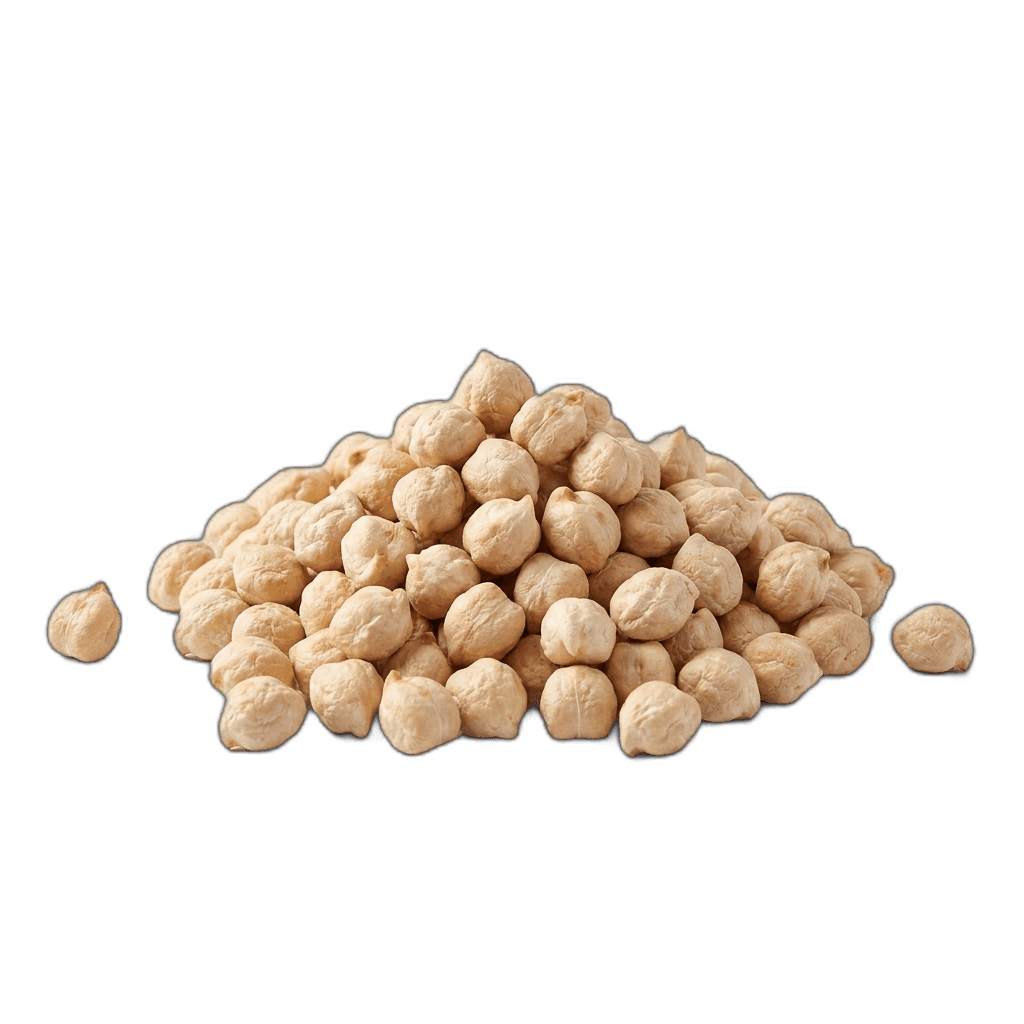
Angebaut in den Schwarzbaumwollböden Zentralindiens, quellen diese großen cremefarbenen Kabuli-Kichererbsen großzügig auf und garen zu einem buttrigen, glatten Inneren. Auf Größe für den Tisch gezüchtet, behalten sie in Salaten und Currys ihre Form, mixen sich aber seidig für Hummus. Die Vorratshülsenfrucht hinter Chhole, Falafel, Eintöpfen und gerösteten Snacks.
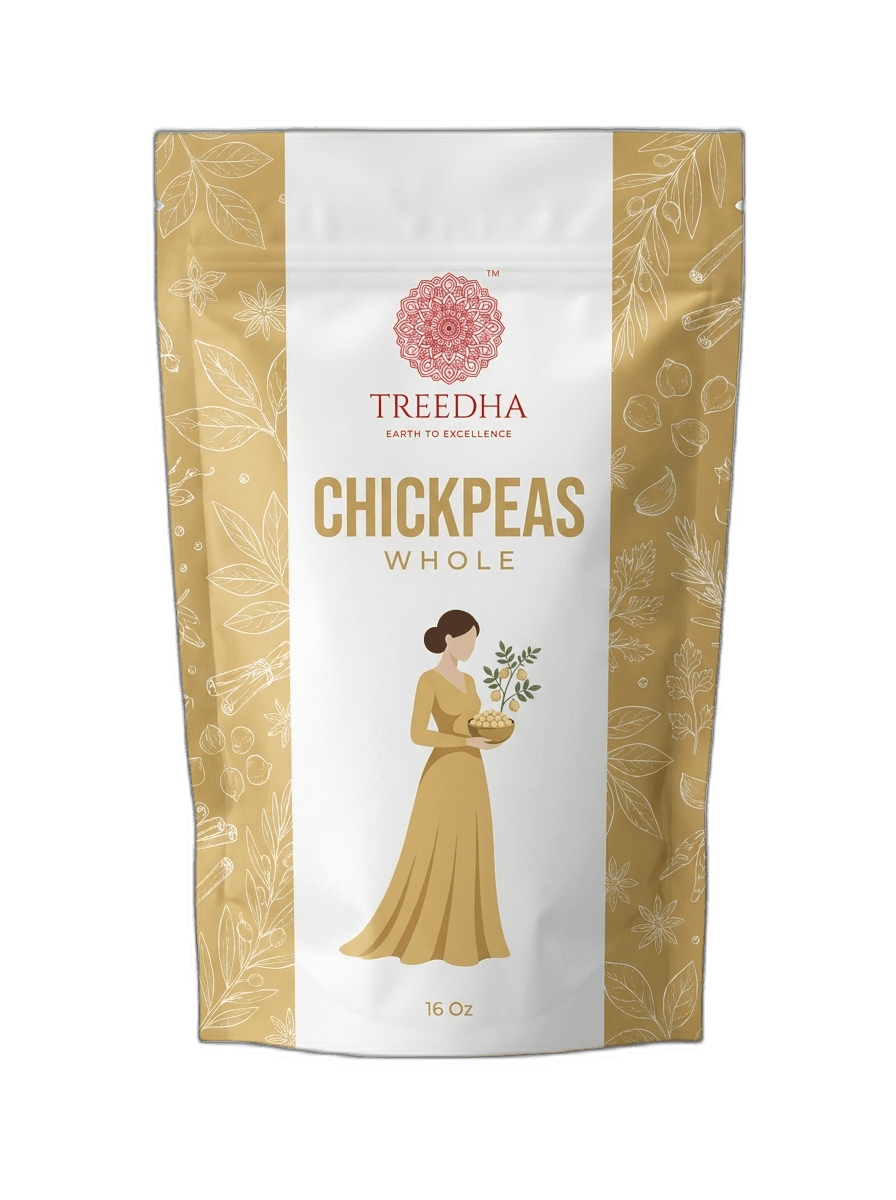
Auf dem Höhepunkt versiegelt, mit Herkunftsnachweis versandt.
Verpackt in wiederverschließbaren, lebensmittelechten Beuteln, die Aroma und Farbe bewahren – jeder mit Herkunft, Güteklasse und Geschmacksprofil gekennzeichnet.
- Indien
- Bold 11-13 mm groß cremefarben
- Ganz getrocknet, sortex-sortiert
- 99%+ · max. 0,5% Beimischung
- Max. 10%
- 24+ Monate bei Raumtemperatur
Auch bekannt als · Garbanzo beans · Ceci · Pois chiches · Chhole
Verwendung
Eingeweicht und geköchelt für Chhole und Kichererbsen-Currys
Zu cremigem Hummus gemixt
Falafel, Krapfen und Bratlinge
Herzhafte Salate, Eintöpfe und Minestrone
Geröstet und gewürzt zum Snacken
Chickpeas (Kabuli Chana) are a versatile and nutritious pulse, widely traded globally for their creamy texture and high protein content. Treedha supplies premium, sortex-sorted Kabuli chickpeas, meeting stringent international quality and safety standards for bulk importers and private-label brands.
Sourcing & Origin
Treedha's premium Kabuli Chana, also known as Garbanzo beans, Ceci, or Pois chiches, is sourced directly from the fertile plains of Madhya Pradesh and central India. These regions are renowned for producing robust chickpea varieties, benefiting from specific soil compositions and climatic conditions ideal for their cultivation.
The distinct characteristics of these Indian-origin chickpeas, particularly their bold size and creamy texture, are highly prized in the global market. Sourcing from this specific origin ensures a consistent supply of high-quality raw material, which is critical for bulk buyers seeking reliability and uniformity in their product lines.
Export Grades & Specifications
Treedha specialises in 'Bold 11-13 mm count · large cream Kabuli' chickpeas, which are cleaned, graded, and polished whole, then sortex colour-sorted for superior uniformity. This specific grade signifies chickpeas with a diameter typically between 11-13 millimetres, indicating a larger, more desirable bean size for many culinary applications.
Our stringent specifications ensure high purity and minimal defects, critical for importers and food manufacturers. Here is a comparison of key specifications for our Bold 11-13 mm Kabuli Chana:
Quality, Safety & Compliance
Compliance with international food safety standards is paramount for Treedha. Our Chickpeas (Kabuli Chana) undergo rigorous processing to ensure they are Ethylene Oxide (ETO)-free, a critical requirement for import into the European Union and the United States, where ETO residues are heavily restricted or prohibited. Each batch is lab-tested to confirm the absence of ETO, ensuring full adherence to EU's zero-tolerance policy and US FDA guidelines.
We also meticulously test for aflatoxins, heavy metals, and pesticide Maximum Residue Limits (MRLs) as per EU and US regulations. Salmonella and other pathogenic bacteria are screened for, ensuring products are safe for human consumption. Every shipment is accompanied by a comprehensive Certificate of Analysis (COA) and a Phytosanitary Certificate, providing full transparency and assurance of quality and safety for our global partners.
Global Demand & Target Markets
Global demand for dried chickpeas (HS 0713.20), particularly the versatile Kabuli Chana, continues to rise. This surge is primarily driven by the expanding plant-based protein market, as chickpeas offer an excellent vegetarian and vegan protein source. Additionally, their rich fibre content and nutritional profile appeal to health-conscious consumers worldwide.
Key importing regions include countries with strong culinary traditions featuring Garbanzo beans, such as parts of Europe and the Middle East, as well as North America, where their use in hummus, falafel, and various processed foods is prevalent. The snack food industry and the production of chickpea flour (besan) further fuel this sustained global demand.
Logistics, HS Code & Packing
The primary Harmonised System (HS) code for dried chickpeas, including Kabuli Chana, is 0713.20. For more specific exports from India, the 8-digit HS code 0713.20.10 is commonly used, while the US requires a 10-digit HTS code such as 0713.20.1040 for shelled dried chickpeas.
Treedha offers flexible bulk packaging solutions to meet diverse importer requirements, including 500 g, 1 kg, and 2 kg options in sturdy, food-grade bags, suitable for private-label branding. We work with standard Incoterms like FOB, CIF, and CFR, and our minimum order quantity approach is designed to accommodate various bulk purchasing needs. Our chickpeas are stored in optimal ambient conditions, ensuring a shelf life of 24+ months, guaranteeing product integrity from our facility to your destination.
- freightamigo.com — freightamigo.com
- tridge.com — tridge.com
- datamyne.com — datamyne.com
- flexport.com — flexport.com
- a1overseas.com — a1overseas.com
- cybex.in — cybex.in
Fragen
- Ist Kabuli Chana dasselbe wie Garbanzo-Bohnen oder Kichererbsen?
- Ja. Kabuli Chana ist der indische Name für die große cremefarbene Kichererbse, die anderswo als Garbanzo-Bohne, Ceci oder Pois Chiche verkauft wird. Sie ist die größere, hellere Verwandte der kleinen braunen Desi Chana.
- Muss ich sie einweichen?
- Für die beste Konsistenz über Nacht oder mindestens acht Stunden einweichen, dann weich köcheln. Eine Prise Natron im Einweichwasser beschleunigt das Weichwerden und hilft, die Schalen abzulösen für glatteren Hummus.
- Wie viele Kichererbsen ergeben eine Portion Hummus?
- Etwa 250 g getrocknete Kichererbsen verdoppeln sich beim Einweichen und Kochen ungefähr und ergeben genug für eine großzügige Schale Hummus für vier bis sechs Personen.
- What is the primary origin of Treedha's Kabuli Chana?
- Treedha's Kabuli Chana (Chickpeas) is primarily sourced from Madhya Pradesh and central India, regions renowned for cultivating high-quality, bold varieties of chickpeas.
- Are Treedha's chickpeas ETO-free and compliant with EU/US import regulations?
- Yes, our chickpeas are steam-sterilised and rigorously lab-tested to ensure they are Ethylene Oxide (ETO)-free, fully complying with stringent EU and US import regulations for food safety.
- What are the key quality specifications for Treedha's bulk chickpeas?
- We supply Bold 11-13 mm large cream Kabuli chickpeas with a purity of 99%+ (max 0.5% admixture) and a maximum moisture content of 10%, ensuring premium quality and consistency.
- What documentation is provided with each shipment?
- Each shipment is accompanied by a detailed Certificate of Analysis (COA), a Phytosanitary Certificate, commercial invoice, packing list, and bill of lading/airway bill to ensure smooth customs clearance.
- What is the HS code for exporting dried chickpeas from India?
- The primary Harmonised System (HS) code for dried chickpeas, including Kabuli Chana, is 0713.20. For exports from India, the 8-digit code 0713.20.10 is commonly used.
- What is the shelf life of Treedha's dried chickpeas?
- Our dried chickpeas have a shelf life of 24+ months when stored under recommended ambient conditions, making them ideal for long-term storage and distribution.