Tulsi Holy Basil Tea
Tulsi
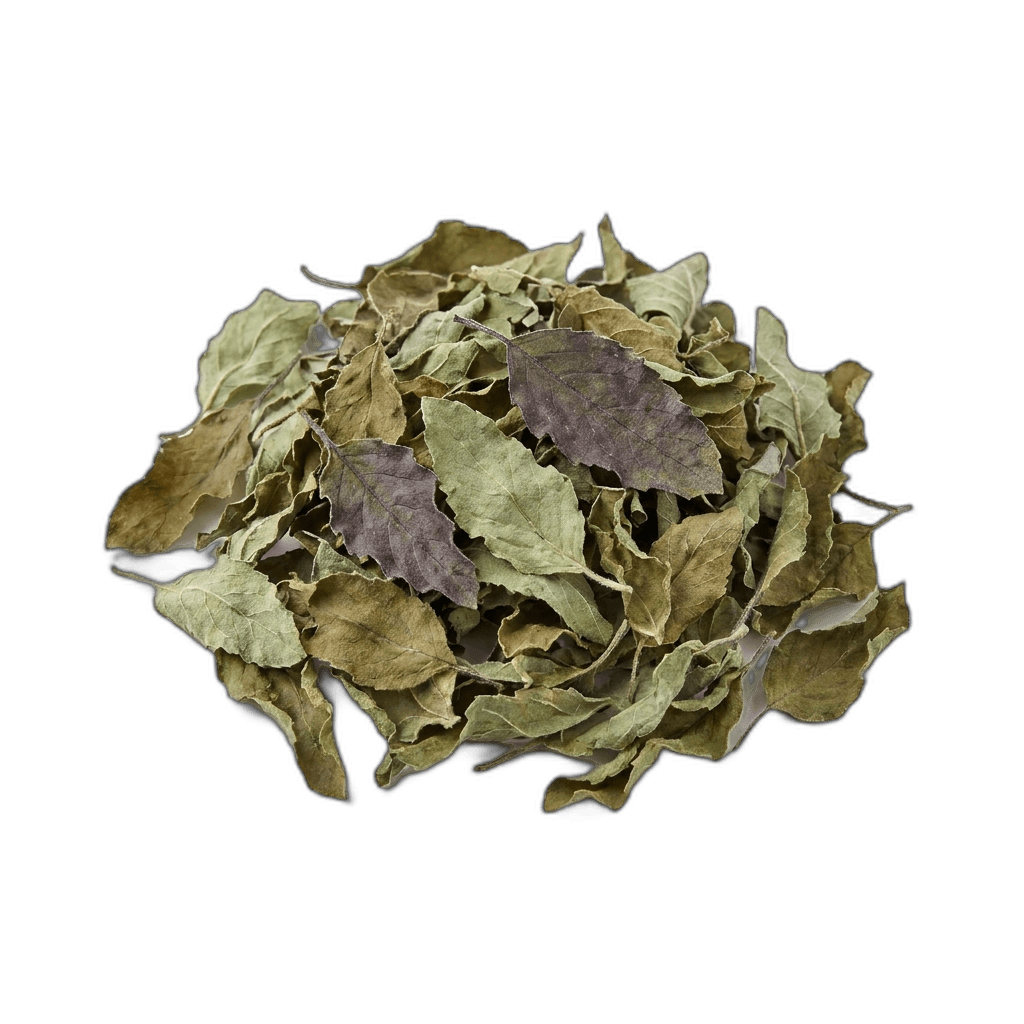
Angebaut in den zentralindischen Ebenen und den Himalaya-Vorgebirgen, wird Tulsi als ganzes Blatt geerntet und im Schatten getrocknet, um sein warmes, nelkenartiges Aroma zu bewahren. Der Aufguss ist sanft pfeffrig und krautig mit einer weichen Eugenol-Süße, und Tulsi wird im Ayurveda seit langem als Adaptogen für die alltägliche Ruhe geschätzt. Ziehen Sie es allein für eine koffeinfreie Tasse auf oder mischen Sie es mit Grüntee, Ingwer oder Zitronengras.
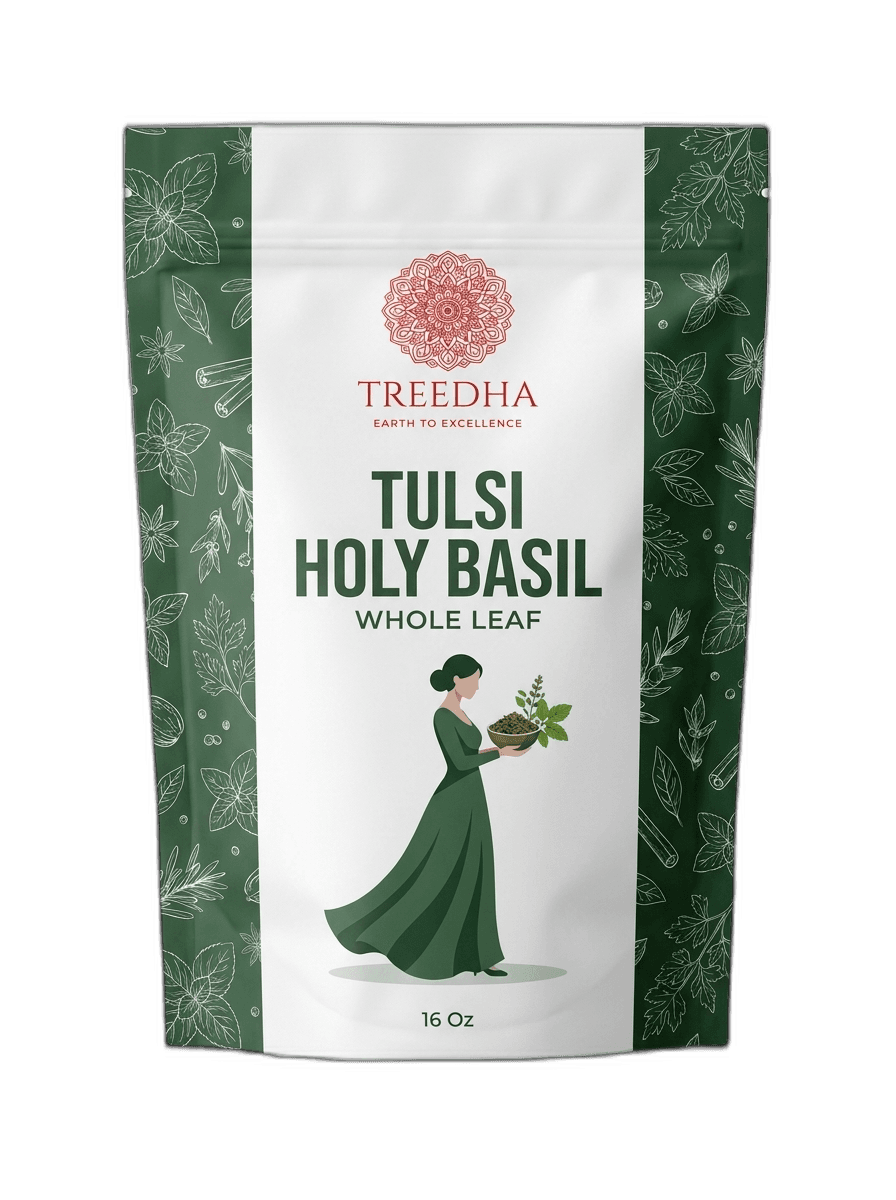
Auf dem Höhepunkt versiegelt, mit Herkunftsnachweis versandt.
Verpackt in wiederverschließbaren, lebensmittelechten Beuteln, die Aroma und Farbe bewahren – jeder mit Herkunft, Güteklasse und Geschmacksprofil gekennzeichnet.
- Indien · zentrale Ebenen & Himalaya-Vorgebirge
- Ganzblatt-Kräutergüteklasse (Rama & Krishna)
- Von Hand geerntetes · schattengetrocknetes loses Blatt
- Von Natur aus koffeinfrei
- Dampfsterilisiert · ETO-frei · laborgeprüft
- 18-24 Monate getrocknet, versiegelt und trocken
Auch bekannt als · Holy Basil · Sacred Basil · Ocimum sanctum
Verwendung
Koffeinfreier Einzelkräuteraufguss
Gemischt mit Grüntee für eine Adaptogen-Tasse
Kombiniert mit Ingwer, Zitronengras oder Honig
Eisgekühlter Wellness-Tee und Tisanen
Warmer Abendtonikum
Tulsi Holy Basil Tea (Tulsi), also known as Ocimum sanctum or Sacred Basil, is a naturally caffeine-free herbal infusion renowned for its adaptogenic properties. Sourced from the Central Indian plains and Himalayan foothills, it is prized in the bulk trade for its distinctive aroma and traditional wellness applications.
Sourcing & Origin
Treedha's Tulsi Holy Basil Tea, known by its botanical name Ocimum sanctum, originates from the fertile Central Indian plains and the lower hill belts of the Himalayan foothills. These regions offer optimal climatic conditions for cultivating the Rama and Krishna varieties, known for their distinct phytochemical profiles.
Our whole-leaf herbal grade Holy Basil is hand-harvested, ensuring minimal damage to the delicate leaves. It is then carefully shade-dried to preserve its volatile oils and natural vibrant colour. This meticulous processing at the source is crucial for maintaining the herb's integrity and delivering consistent quality for bulk buyers.
Export Grades & Specifications
In the bulk trade, the quality of Tulsi Holy Basil Tea is defined by several key specifications. Treedha supplies whole-leaf herbal grade Ocimum sanctum, specifically the Rama and Krishna varieties. These grades are chosen for their higher volatile oil content and preferred leaf cut for herbal infusions.
We ensure our Tulsi Holy Basil leaves maintain optimal purity and moisture content, critical for extended shelf life and preventing degradation. The bright, balanced green colour signifies careful post-harvest handling and proper drying, a hallmark of premium export quality. Our specifications are designed to meet the rigorous demands of international importers seeking unadulterated herbal ingredients.
| Specification | Whole-leaf Herbal Grade (Rama & Krishna) |
|---|---|
| Form | Hand-harvested, shade-dried loose leaf |
| Purity | 100% pure herb, ETO-free, foreign matter < 1% |
| Volatile Oil | 0.7-1.2% (Rama ~45% eugenol; Krishna ~55% eugenol) |
| Moisture | Below 8% (typical for dried herbs) |
| Caffeine | Naturally caffeine-free |
Quality, Safety & Compliance
Treedha prioritises stringent quality and safety protocols for all bulk exports of Tulsi Holy Basil Tea. Our product is steam-sterilised and guaranteed ethylene-oxide (ETO)-free, aligning with the strict zero-tolerance policies or extremely low maximum residue levels (MRLs) observed in key import markets like the European Union.
All consignments undergo comprehensive lab testing to meet international regulatory limits. This includes screening for aflatoxins, heavy metals (such as lead below 2.0 mg/kg, cadmium below 0.3 mg/kg, and absence of mercury as per EU standards), and pesticide residues. For the EU, a default MRL of 0.01 mg/kg applies where no specific MRL is set. Microbiological safety, including the absence of pathogenic bacteria like Salmonella, is verified through thorough testing. Essential documentation, including Certificates of Analysis (COA) and Phytosanitary Certificates, accompanies every shipment, ensuring full compliance with destination country regulations.
Global Demand & Target Markets
The global demand for Tulsi Holy Basil Tea (Ocimum sanctum) is robust and expanding, primarily driven by growing consumer awareness of its adaptogenic and wellness properties. Importers and food brands are increasingly seeking natural, clean-label ingredients for functional beverages and health-focused food products. The rise of preventive healthcare and interest in traditional botanicals further fuels this market.
Key export destinations for Indian herbal teas, including Sacred Basil, include the United States, United Arab Emirates, United Kingdom, Germany, and Russia. Specifically for Ocimum sanctum under HS Code 12119094, Bangladesh and the United States are significant importers. The market's growth is also supported by the increasing accessibility through e-commerce and a broader consumer shift towards organic and specialty teas globally.
Logistics, HS Code & Packing
For bulk shipments of Tulsi Holy Basil Tea, the most appropriate Harmonised System (HS) code is generally 0902, specifically subheadings such as 09021090, classifying it as a prepared herbal tea. For raw dried leaves, HS code 12119094 (for Ocimum sanctum Tulsi) is also relevant. Our team ensures accurate classification to facilitate smooth international customs clearance.
Treedha offers flexible bulk packing formats to suit diverse importer requirements, typically in multi-ply Kraft paper bags or food-grade HDPE bags, ranging from 5 kg to 25 kg. Our minimum order quantity (MOQ) is designed to accommodate wholesale and private-label buyers, reflecting efficient container utilisation. We manage logistics under standard Incoterms, providing clear lead times and shipping schedules. Our dried, sealed Holy Basil Tea maintains a shelf life of 18-24 months when stored correctly in cool, dry conditions, ensuring product freshness upon arrival.
- globallinker.com — globallinker.com
- indiamart.com — indiamart.com
- zauba.com — zauba.com
- volza.com — volza.com
- cybex.in — cybex.in
- oec.world — oec.world
Fragen
- Ist Tulsi dasselbe wie Heiliges Basilikum?
- Ja. Tulsi ist der indische Name für Heiliges Basilikum (Ocimum sanctum). Es ist botanisch verschieden vom süßen Basilikum, das in der italienischen Küche verwendet wird, und wird gezielt als heiliges und Heilkraut angebaut.
- Warum wird Tulsi als Adaptogen bezeichnet?
- In der ayurvedischen Tradition wird Tulsi dafür geschätzt, dass es dem Körper hilft, mit alltäglichem körperlichem und seelischem Stress umzugehen, was es zu den Kräutern zählt, die häufig als Adaptogene beschrieben werden. Wir liefern es als Blatt und Tee, nicht als konzentriertes Extrakt.
- Enthält Tulsi-Tee Koffein?
- Nein. Tulsi ist ein Kräuterblatt ohne natürliches Koffein, was es zu jeder Tageszeit geeignet macht, auch am Abend.
- What varieties of Tulsi Holy Basil Tea does Treedha supply?
- Treedha supplies whole-leaf herbal grade Tulsi Holy Basil Tea from the Rama and Krishna varieties of *Ocimum sanctum*, sourced from specific regions in India.
- How is Treedha's Tulsi Holy Basil Tea processed to ensure quality?
- Our Tulsi Holy Basil Tea is hand-harvested, shade-dried, and then sieved to ensure optimal leaf integrity and volatile oil retention. It is also steam-sterilised and lab-tested to meet international purity standards.
- What certifications and safety assurances does Treedha provide for bulk Tulsi exports?
- Treedha's Tulsi Holy Basil Tea is ETO-free and lab-tested for MRLs (pesticides), aflatoxins, heavy metals (e.g., lead, cadmium), and microbial safety (e.g., *Salmonella*) to comply with EU and US regulations. We provide Certificates of Analysis and Phytosanitary Certificates.
- What is the typical shelf life of Treedha's bulk Tulsi Holy Basil Tea?
- When stored in a cool, dry, and sealed environment, our dried, whole-leaf Tulsi Holy Basil Tea has a typical shelf life of 18-24 months, ensuring long-term quality for importers.
- What are the primary applications for imported Holy Basil (Ocimum sanctum) tea?
- Bulk Holy Basil (Sacred Basil) is primarily used by herbal tea brands, functional beverage manufacturers, and nutraceutical companies seeking adaptogenic ingredients for infusions, blends, and health-focused products due to its recognised wellness properties.
- What HS Code is used for exporting Tulsi Holy Basil Tea from India?
- For prepared herbal teas like Tulsi Holy Basil Tea, the commonly used HS Code is 0902, with specific subheadings such as 09021090. For raw dried leaves, 12119094 may apply.