Cassava & Tapioca Flour
Kappa / Sabudana (Mogo)
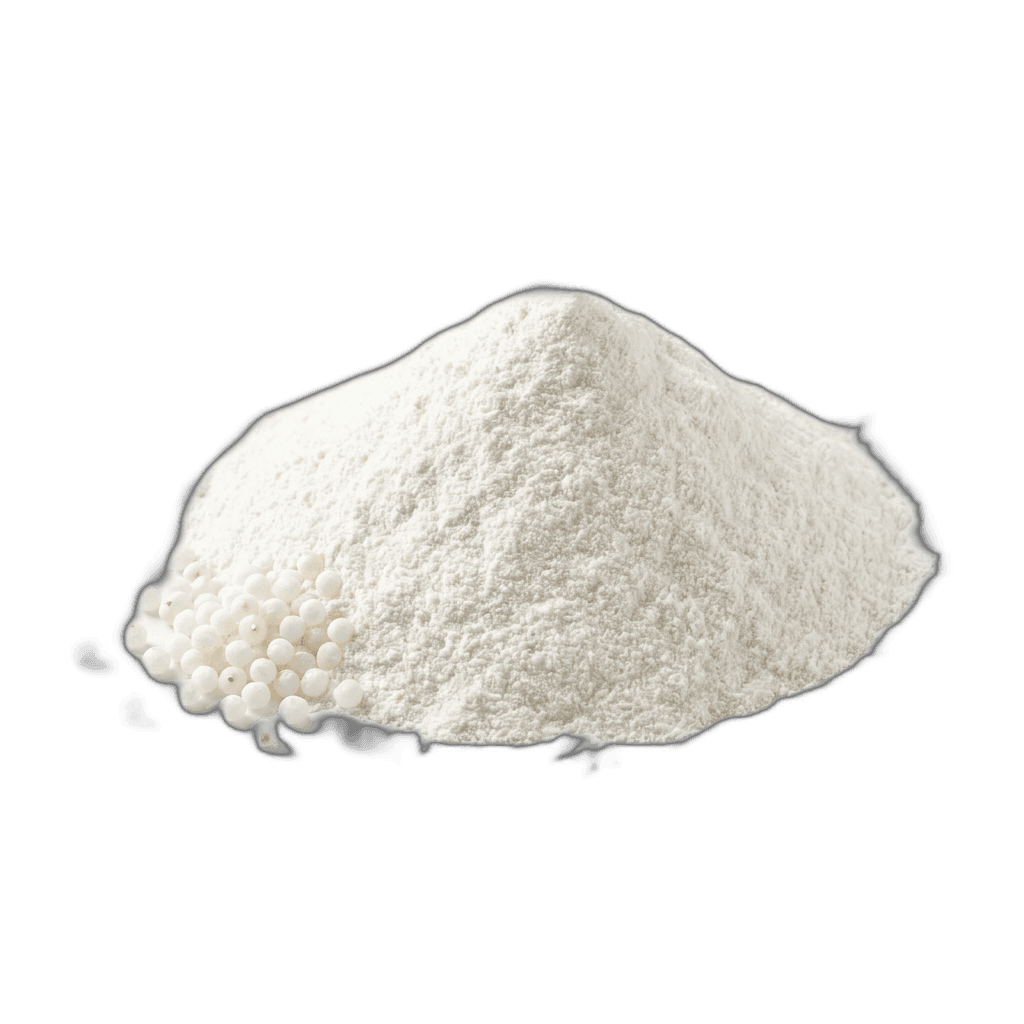
Milled from cassava tubers grown across Kerala and Tamil Nadu's lush wet belt, where Salem has been India's sabudana capital since the 1940s. Naturally gluten- and grain-free, this neutral, fine flour gives a soft crumb and light bite to flatbreads, batters and bakes, while tapioca pearls (sabudana) swell into translucent beads for khichdi, kheer and puddings. A versatile paleo and grain-free staple.
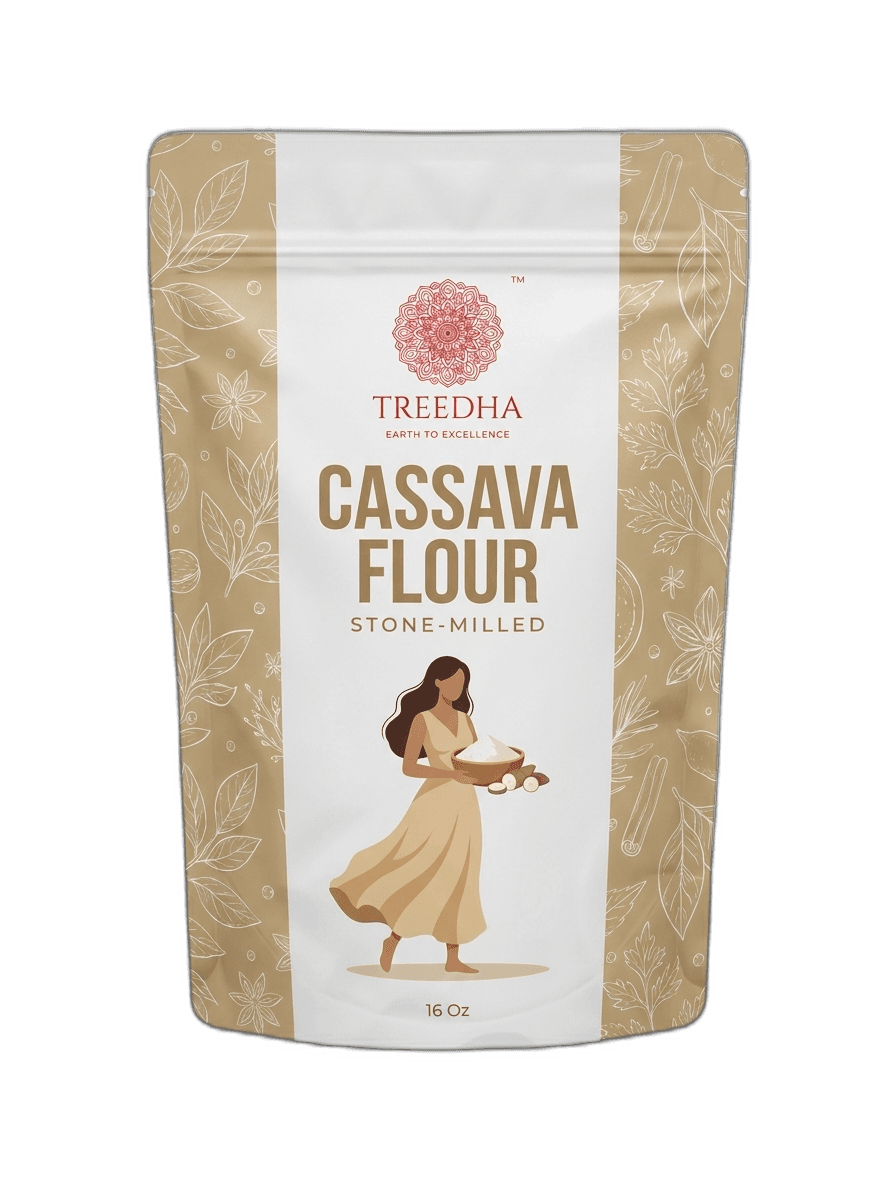
Sealed at peak, shipped with provenance.
Packed in resealable, food-grade pouches that lock in aroma and colour — each labelled with its origin, grade and taste profile.
- India
- Kerala / Tamil Nadu (Salem)
- Fine flour or tapioca pearls (sabudana)
- Naturally gluten-free, grain-free, vegan
- Food-grade · lab-tested
- 12–24 months, stored cool and dry
Also known as · yuca flour · manioc flour · tapioca starch · sabudana pearls
How to use it
Grain-free and paleo baking, breads and pancakes
Gluten-free flatbreads, tortillas and batters
Thickening soups, sauces, curries and gravies
Sabudana khichdi and vada for fasting dishes
Tapioca pearl puddings, kheer and bubble-tea pearls
Cassava & Tapioca Flour (Kappa / Sabudana (Mogo)) is a versatile, naturally gluten-free ingredient derived from cassava tubers, processed into fine flour or graded pearls (sabudana). Sourced from prime Indian growing regions, it serves as a crucial raw material for the gluten-free, bakery, and food processing industries globally.
Sourcing & Origin
Treedha's Cassava & Tapioca Flour, including Kappa / Sabudana (Mogo), yuca flour, and manioc flour, originates from the tropical lowlands of Kerala and Tamil Nadu, specifically the Salem belt in India. These regions offer ideal climatic conditions for cultivating high-quality cassava tubers.
Our sourcing ensures full traceability, connecting buyers directly to the origin. This regional specialisation allows us to provide a consistent supply of tubers, which are then meticulously processed into fine food-grade flour or into the distinctive sabudana pearls (tapioca pearls or sago). This direct origin connection is vital for bulk buyers seeking reliability and consistent product characteristics.
Export Grades & Specifications
In the bulk trade, Cassava & Tapioca Flour is primarily offered as food-grade fine flour or as graded tapioca pearls (sabudana). Key specifications focus on purity, moisture, and particle consistency to meet diverse industrial applications.
Our fine flour is milled to precise granulation standards, ensuring suitability for bakery and thickening applications. Sabudana pearls are categorised by size uniformity, a critical factor for traditional and ethnic culinary uses. All products are naturally gluten-free, grain-free, and vegan, verified through lab testing to confirm purity and compliance with food-grade standards.
| Specification | Fine Flour (Yuca / Manioc) | Tapioca Pearls (Sabudana) |
|---|---|---|
| Form | Fine powder | Spherical pearls |
| Colour | White to off-white | White to translucent |
| Moisture Content | < 13% | < 14% |
| Purity | > 99% starch, free from foreign matter | > 98% starch, uniform size |
| Particle Size | Passes 100 mesh | Graded (e.g., small, medium) |
| Dietary | Naturally gluten-free, vegan | Naturally gluten-free, vegan |
Quality, Safety & Compliance
Treedha prioritises stringent quality control and international compliance for all exports. Our Cassava & Tapioca products are guaranteed Ethylene Oxide (ETO)-free, aligning with the European Union's zero-tolerance policy. We rigorously test for mycotoxins, including Aflatoxins, ensuring levels are well within the strict limits set by both the EU and the US FDA.
Furthermore, products are tested for Maximum Residue Limits (MRLs) for pesticides and heavy metals, adhering to global food safety standards. Our processes include meticulous hygiene protocols to ensure freedom from pathogenic bacteria such as Salmonella. Each bulk shipment is accompanied by a comprehensive Certificate of Analysis (COA) from accredited laboratories and a Phytosanitary Certificate, verifying product integrity and regulatory conformity.
Global Demand & Target Markets
The global demand for Cassava & Tapioca Flour, yuca flour, manioc flour, tapioca starch, and sabudana pearls is robust, driven by their versatility and gluten-free attributes. Tapioca starch and flour are highly sought after as thickening agents and as key ingredients in the growing gluten-free bakery and food processing sectors. Major importers for tapioca starch (HS 110814) include the United States, Australia, and Canada.
Sabudana (tapioca pearls) sees significant demand, particularly from the United States and Australia, primarily due to its importance in traditional and ethnic cuisines, especially among the Indian diaspora, and its use in fasting foods and desserts. The expanding market for clean-label, natural ingredients further fuels the demand for these commodities.
Logistics, HS Code & Packing
For Cassava Flour / Manioc Flour, the primary HS code is 1106.20.20 (Manioc flour). For Tapioca Starch, the code is 1108.14.00. Sabudana (Tapioca Pearls, Flakes, Grains) typically falls under 1903.00.00. These codes facilitate smooth international trade and customs clearance.
We offer bulk packaging solutions tailored to importer needs, including multi-ply paper bags or PP bags, typically in 25kg or 50kg configurations, palletised for efficient handling. Our minimum order quantities (MOQ) are designed to support wholesale and industrial buyers, typically a full container load (FCL), but can be discussed based on specific requirements. We facilitate various Incoterms, including FOB and CIF, providing flexibility in logistics. The shelf life for our Cassava & Tapioca Flour and pearls is 12–24 months when stored in cool, dry conditions.
Further Information
Treedha stands as a reliable partner for bulk sourcing of Cassava & Tapioca Flour from India. Our commitment to single-origin sourcing, meticulous processing, and strict adherence to international food safety standards ensures that importers, distributors, and private-label brands receive a premium product. We provide comprehensive documentation and support to ensure a seamless export experience.
- deepbeez.com — deepbeez.com
- busy.in — busy.in
- taxguru.in — taxguru.in
- trademo.com — trademo.com
- howtoexportimport.com — howtoexportimport.com
- credlix.com — credlix.com
Questions
- Is sabudana the same as tapioca pearls?
- Yes. Sabudana is the Indian name for tapioca pearls, the small translucent beads made from cassava starch. They are the same product used in khichdi, kheer and puddings worldwide.
- Is cassava flour the same as tapioca flour?
- They are closely related but not identical. Cassava flour is the whole dried, milled root, while tapioca flour or starch is the extracted starch only. Cassava flour is denser and better for breads; tapioca starch is best for thickening and chew.
- Is it gluten-free?
- Yes. Both the flour and the pearls are naturally gluten-free and grain-free, making them a popular choice for paleo, coeliac and fasting diets.
- What is the primary origin of Treedha's Cassava & Tapioca Flour products?
- Treedha's Cassava & Tapioca Flour, including yuca flour, manioc flour, and sabudana pearls, originates from the prime tropical lowland cultivation areas of Kerala and the Salem belt of Tamil Nadu, India.
- Are your Cassava & Tapioca products certified gluten-free?
- Yes, our Cassava & Tapioca Flour (Kappa / Sabudana (Mogo)) and tapioca pearls are naturally gluten-free and grain-free, making them suitable for gluten-sensitive diets and verified through lab testing.
- What quality assurance measures do you have in place for exports to the EU and US?
- Our products are steam-sterilised, guaranteed Ethylene Oxide (ETO)-free, and rigorously lab-tested to meet stringent EU and US limits for aflatoxins, pesticide MRLs, heavy metals, and microbial purity, including Salmonella.
- What is the typical HS Code for bulk Tapioca Starch and Sabudana pearls?
- For Tapioca Starch, the widely used HS Code is 1108.14.00. For Sabudana (tapioca pearls, flakes, grains), the common HS Code is 1903.00.00, reflecting its form as a starch substitute.
- What kind of documentation do you provide for international shipments?
- For international shipments, Treedha provides a comprehensive Certificate of Analysis (COA) from accredited labs, a Phytosanitary Certificate, and all other necessary export documentation to ensure regulatory compliance and smooth customs clearance.
- What packaging options are available for bulk orders?
- We offer bulk Cassava & Tapioca products in durable multi-ply paper bags or PP bags, commonly in 25kg or 50kg sizes, which are then palletised for secure and efficient shipping to meet bulk importer requirements.