Rose Syrup
Gulab Sharbat
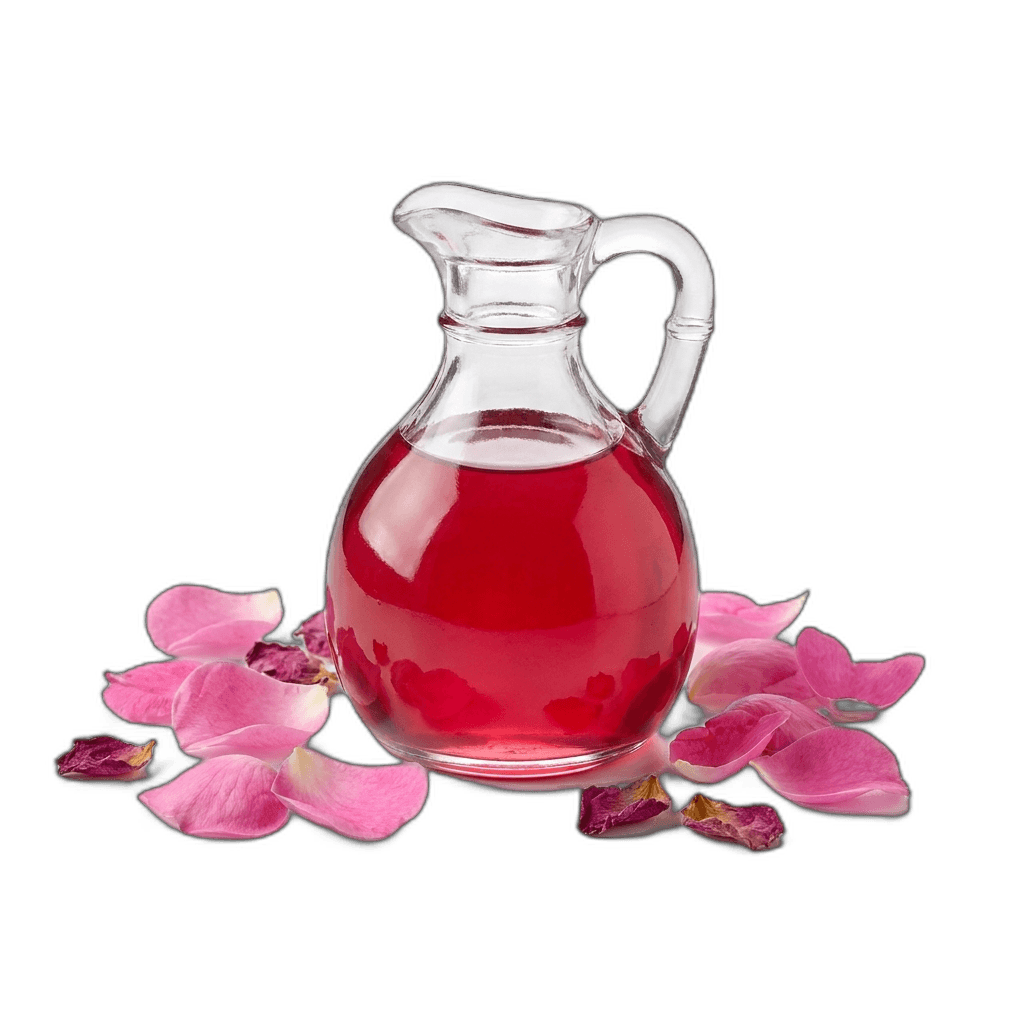
Un concentrado clásico de sharbat de rosa indio elaborado en torno al destilado de Rosa damascena del cinturón rosalero de Kannauj, en Uttar Pradesh, el centro histórico del attar y el agua de rosas de India. Dulce, floral y profundamente aromático, es el corazón del falooda, la leche de rosa y las bebidas refrescantes de verano del subcontinente. Añade un chorrito a leche fría o soda, incorpóralo a helados y kulfi, o realza cócteles y lattes con su inconfundible perfume de rosa.

Envasado en su punto óptimo, enviado con su procedencia.
Envasado en bolsas resellables de grado alimentario que conservan el aroma y el color, cada una etiquetada con su origen, grado y perfil de sabor.
- Cinturón de Kannauj, Uttar Pradesh, India
- Tierra histórica de la rosa de Damasco y el attar
- Sirope de azúcar con destilado de Rosa damascena
- Cordial concentrado / base de sherbet
- Color y aditivos plenamente declarados; conforme al etiquetado
- 12-18 meses cerrado; refrigerar tras abrir
También conocido como · Rose Sherbet Concentrate · Gulab Sharbat · Rooh Afza-style Rose Squash
Cómo utilizarlo
Leche de rosa, lassi de rosa y sherbets fríos
Falooda y kulfi con fideos y semillas de albahaca
Rociado sobre helados y postres de leche
Lattes de rosa, mocktails y cócteles
Almíbar de calado para bizcochos y dulces indios
Rose Syrup (Gulab Sharbat) is a concentrated cordial crafted from cane-sugar syrup and Rosa damascena distillate, originating from India's Kannauj belt. It serves as a natural sweetener and flavouring base for gourmet beverages and food industries worldwide.
Sourcing & Origin
Treedha's Rose Syrup, also known as Gulab Sharbat or Rose Sherbet Concentrate, originates exclusively from the historic Kannauj rose belt in Uttar Pradesh, India. This region is renowned globally for its Rosa damascena cultivation, particularly for attar and rose water production, ensuring a distillate of unparalleled purity and aromatic intensity.
The unique terroir and traditional cultivation methods in Kannauj contribute to the distinctive, soft floral sweetness of the roses. For bulk buyers, this single-origin sourcing guarantees consistency in flavour profile and adherence to authentic Indian culinary traditions, which is critical for product integrity and consumer trust in various end applications, from gourmet beverages to confectionery.
Export Grades & Specifications
As a premium rose concentrate, Treedha's Rose Syrup (Gulab Sharbat) is formulated from cane-sugar syrup blended with Rosa damascena distillate, resulting in a concentrated cordial or sherbet base. The focus for bulk trade is on high purity, authentic sensory profile, and strict absence of artificial additives.
Our premium grade is characterised by its intense, consistent floral aroma and delicate pink colour, derived naturally. It is free from artificial colourants, flavours, and adulterants, meeting crucial 'clean label' requirements. Each batch undergoes rigorous testing to ensure standardised viscosity suitable for industrial applications and consistent performance in formulations. Treedha provides a Certificate of Analysis (COA) with every shipment, detailing these parameters and confirming adherence to our internal premium specifications.
Quality, Safety & Compliance
Treedha ensures all Rose Syrup (Gulab Sharbat) shipments meet stringent international food safety standards, including those set by the EU and US. Our process guarantees the concentrate is Ethylene Oxide (ETO)-free, aligning with the EU's strict Maximum Residue Limits (MRLs) set at the limit of quantification (typically 0.02 to 0.1 mg/kg for the sum of ETO and 2-chloroethanol). While US tolerances for ETO are higher (7-50 mg/kg for ETO, 940 mg/kg for 2-chloroethanol), our ETO-free commitment surpasses both.
Furthermore, all products are lab-tested to comply with EU maximum levels for total aflatoxins (B1, B2, G1, G2) at 10 µg/kg, as per Commission Regulation (EU) 2023/915. For the US, total aflatoxin limits are 20 µg/kg. We maintain zero-tolerance for Sudan I-IV dyes, which are strictly prohibited in both EU and US food regulations. Heavy metal limits (lead, cadmium, mercury, arsenic) also conform to Commission Regulation (EU) 2023/915 and US FDA action levels. Microbiological safety, particularly for Salmonella, adheres to Commission Regulation (EC) No 2073/2005 for the EU and FDA's zero-tolerance policy for ready-to-eat foods in the US. Each shipment is accompanied by a Certificate of Analysis (COA), and a Phytosanitary Certificate from India's National Plant Protection Organization (NPPO) is provided where required by the importing country.
Global Demand & Target Markets
Global demand for Rose Syrup (Gulab Sharbat) is robust, driven by the expanding gourmet beverage and food industries. Its distinct floral profile and natural sweetness appeal to markets seeking innovative flavour differentiation in high-margin products. Key importing countries include the United States, Canada, Oman, United Arab Emirates, Qatar, Vietnam, Singapore, the United Kingdom, and New Zealand.
The increasing consumer preference for clean-label and natural ingredients further fuels demand, positioning Rose Sherbet Concentrate as a versatile component in functional beverages, confectionery, and bakery fillings. The growing interest in functional drinks, leveraging the natural polyphenols and Vitamin C found in rose preparations, also contributes significantly to market expansion, particularly in health-conscious regions.
Logistics, HS Code & Packing
The primary Harmonised System (HS) code for Rose Syrup (Gulab Sharbat) in international trade falls under Chapter 21, specifically 2106.90.9972 for the US market (as cited by U.S. Customs and Border Protection) and 2106.90.99 or similar sub-codes (e.g., 2106.90.19, 2106.90.40) for other global destinations. These classifications ensure correct customs clearance as a food preparation for beverages.
Treedha offers flexible bulk packing solutions to meet importer requirements. While standard pack sizes for immediate use include 250 ml and 500 ml bottles, bulk options such as drums or IBCs are available upon request. Minimum Order Quantity (MOQ) is determined based on destination and specific packaging needs, negotiated to optimise freight and efficiency for our B2B clients. We operate on various Incoterms, including FOB and CIF, to facilitate seamless delivery. Our Rose Syrup maintains a shelf life of 12-18 months when sealed, with refrigeration recommended after opening to preserve its quality.
- cbp.gov — cbp.gov
- zauba.com — zauba.com
- deepbeez.com — deepbeez.com
- volza.com — volza.com
- intelmarketresearch.com — intelmarketresearch.com
- eurofins.de — eurofins.de
Preguntas
- ¿Es el gulab sharbat lo mismo que el sirope de rosa?
- Sí. Gulab sharbat es el nombre indio del sirope de rosa, un concentrado dulce con sabor a rosa de la misma familia que los conocidos sherbets estilo Rooh Afza.
- ¿Cómo lo sirvo?
- Diluye aproximadamente una parte de sirope por seis o siete partes de leche fría o soda, ajustando al gusto, y luego añade hielo. También es la base clásica del falooda y el lassi de rosa.
- ¿Contiene rosa de verdad?
- Sí. Está elaborado en torno al destilado de Rosa damascena, la auténtica rosa de Damasco, que da al sirope su aroma floral genuino.
- What is Rose Syrup (Gulab Sharbat) used for in bulk trade?
- Rose Syrup (Gulab Sharbat) is primarily used as a natural sweetener and flavouring agent in the gourmet beverage industry, for cordials, mocktails, and specialty teas. It's also incorporated into confectionery, bakery fillings, and various functional food formulations for its distinctive floral aroma and clean-label appeal.
- What is the origin of Treedha's Rose Syrup?
- Treedha's Rose Syrup (Gulab Sharbat) is sourced from the Kannauj rose belt in Uttar Pradesh, India. This region is highly regarded for its Rosa damascena cultivation, ensuring a distillate of authentic quality and consistent, intense floral aroma.
- How does Treedha ensure compliance with EU/US food safety regulations for Rose Syrup?
- Treedha rigorously tests all Rose Syrup batches for compliance with EU and US food safety regulations. This includes ensuring the product is ETO-free, meets strict MRLs for aflatoxins and pesticides, and has zero-tolerance for Sudan dyes and common pathogens like Salmonella, all verified by a Certificate of Analysis (COA).
- Can Treedha supply Rose Syrup for private-label brands?
- Yes, Treedha offers private-label services for Rose Syrup (Gulab Sharbat). We work with importers and distributors to meet specific branding, packaging, and formulation requirements, ensuring the final product aligns with their market needs while maintaining our stringent quality standards.
- What is the HS Code for Rose Syrup when importing from India?
- The most common Harmonised System (HS) code for Rose Syrup (Gulab Sharbat) in international trade is 2106.90.9972 for the US market, and 2106.90.99 or similar sub-codes (e.g., 2106.90.19, 2106.90.40) for other global destinations, falling under 'Food preparations not elsewhere specified or included'.
- What documentation does Treedha provide for bulk Rose Syrup exports?
- For bulk Rose Syrup exports, Treedha provides comprehensive documentation including a Certificate of Analysis (COA) for each batch, a Phytosanitary Certificate from India's National Plant Protection Organization (NPPO) where required, and other necessary certifications like allergen statements or GMO-free declarations upon request.