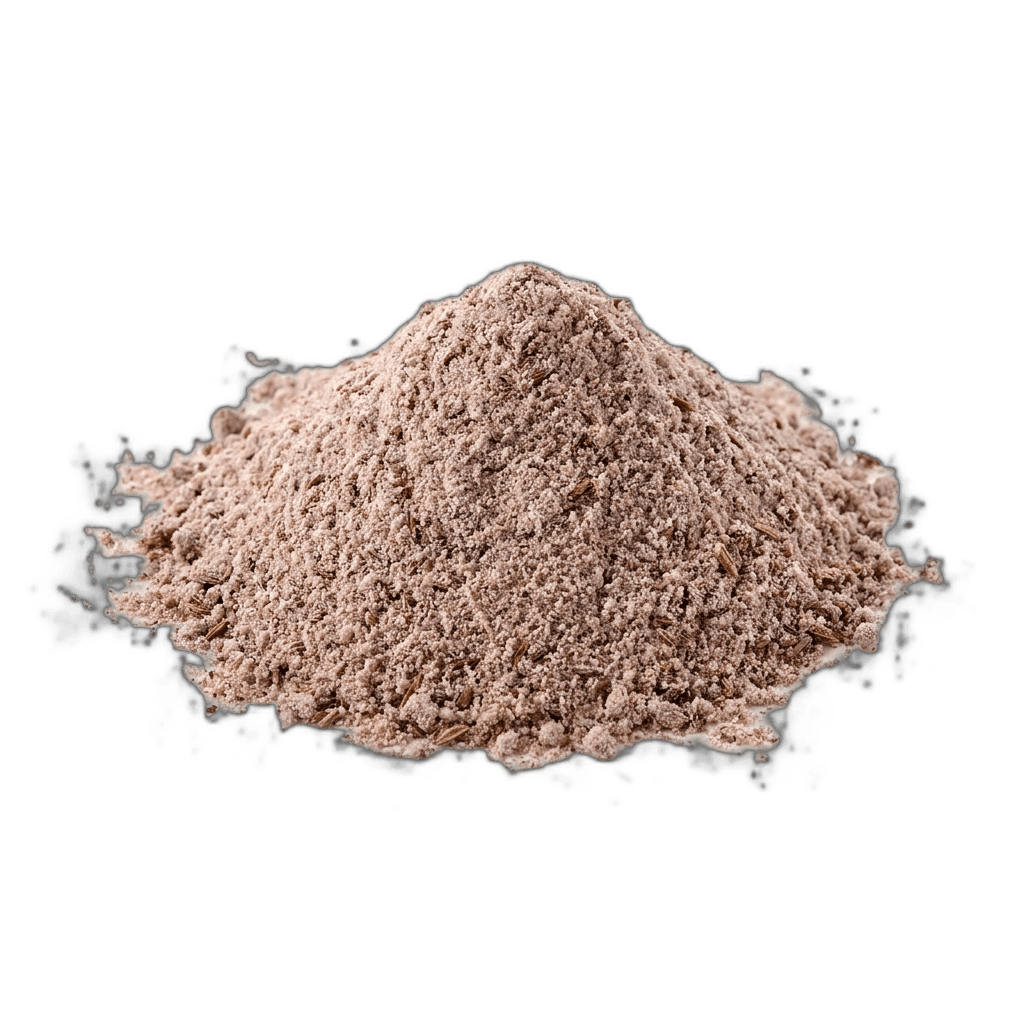
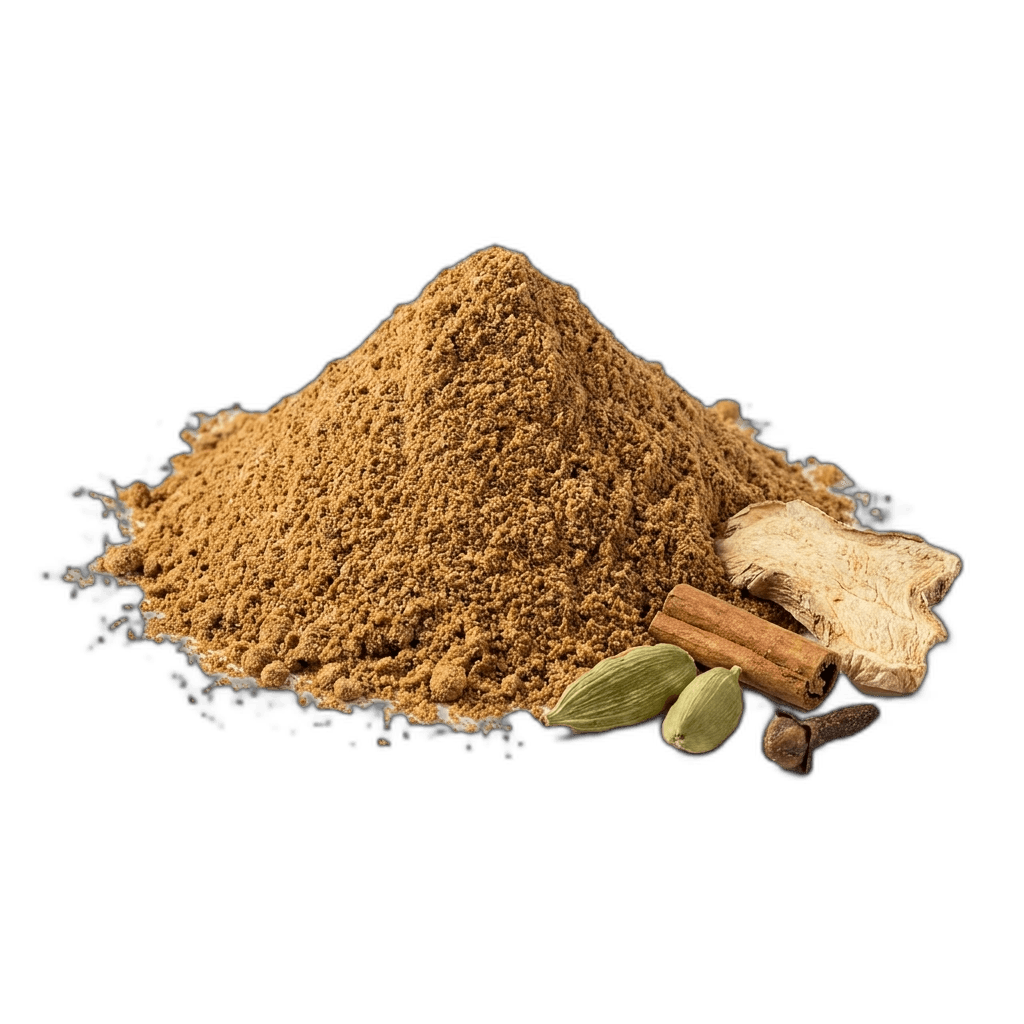
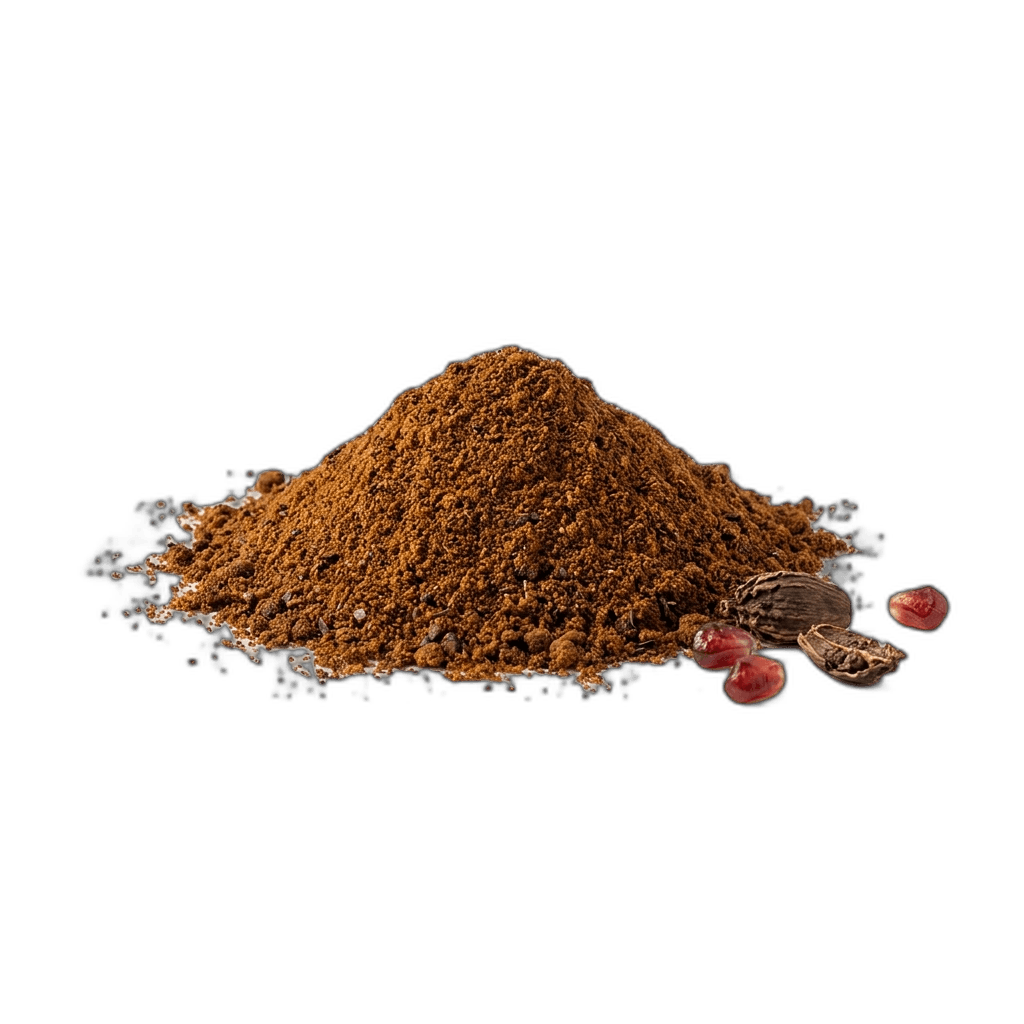
Biryani Masala
Biryani Masala
Un mélange façon hyderabadi tout en couches, bâti sur l'héritage des cuisines dum nizami, portant le shah jeera, la cardamome verte et noire, le macis, la cannelle, le clou de girofle et la note fumée du dagad phool. Chaud et aromatique avec une ossature de piment mesurée, il parfume le riz à grains longs et la viande sans les dominer. Faites-le revenir dans le ghee à l'étape du dressage en couches, ou incorporez-le aux marinades pour un véritable biryani dum.
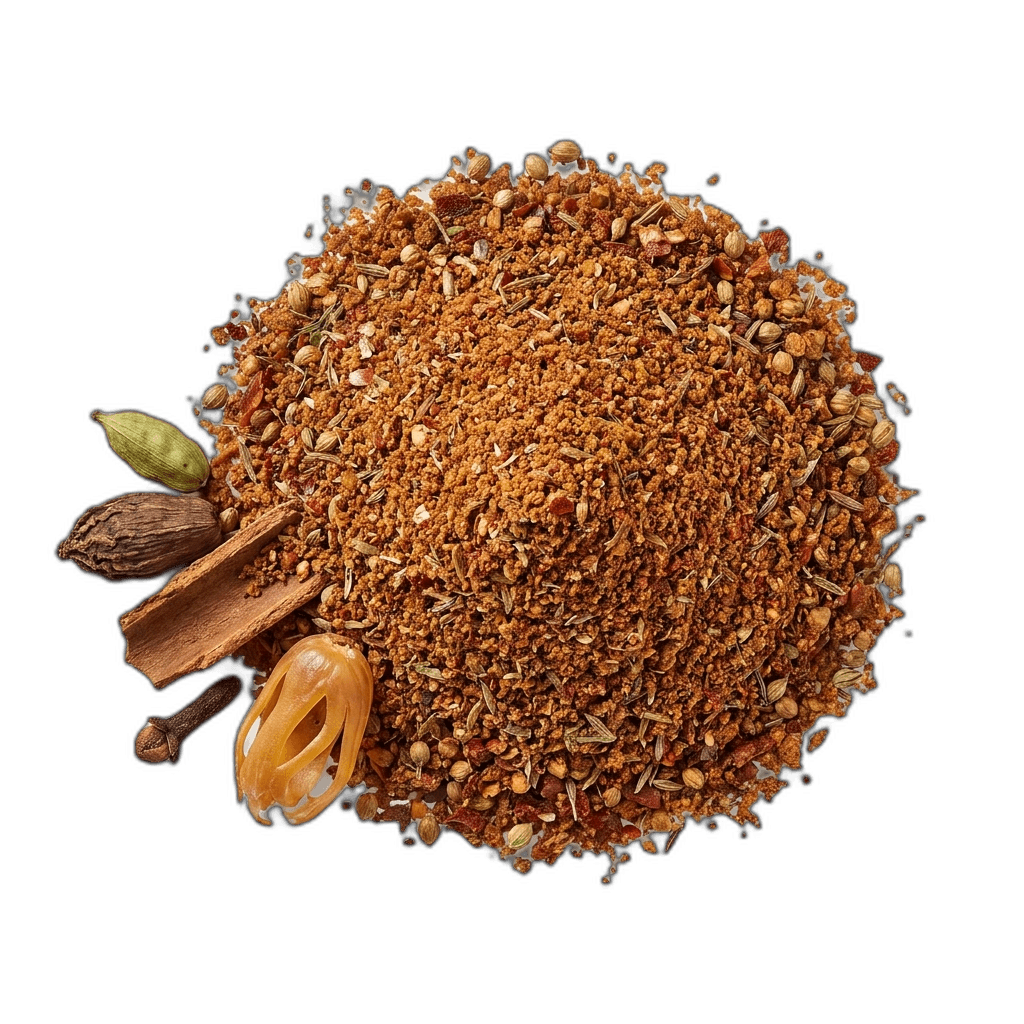
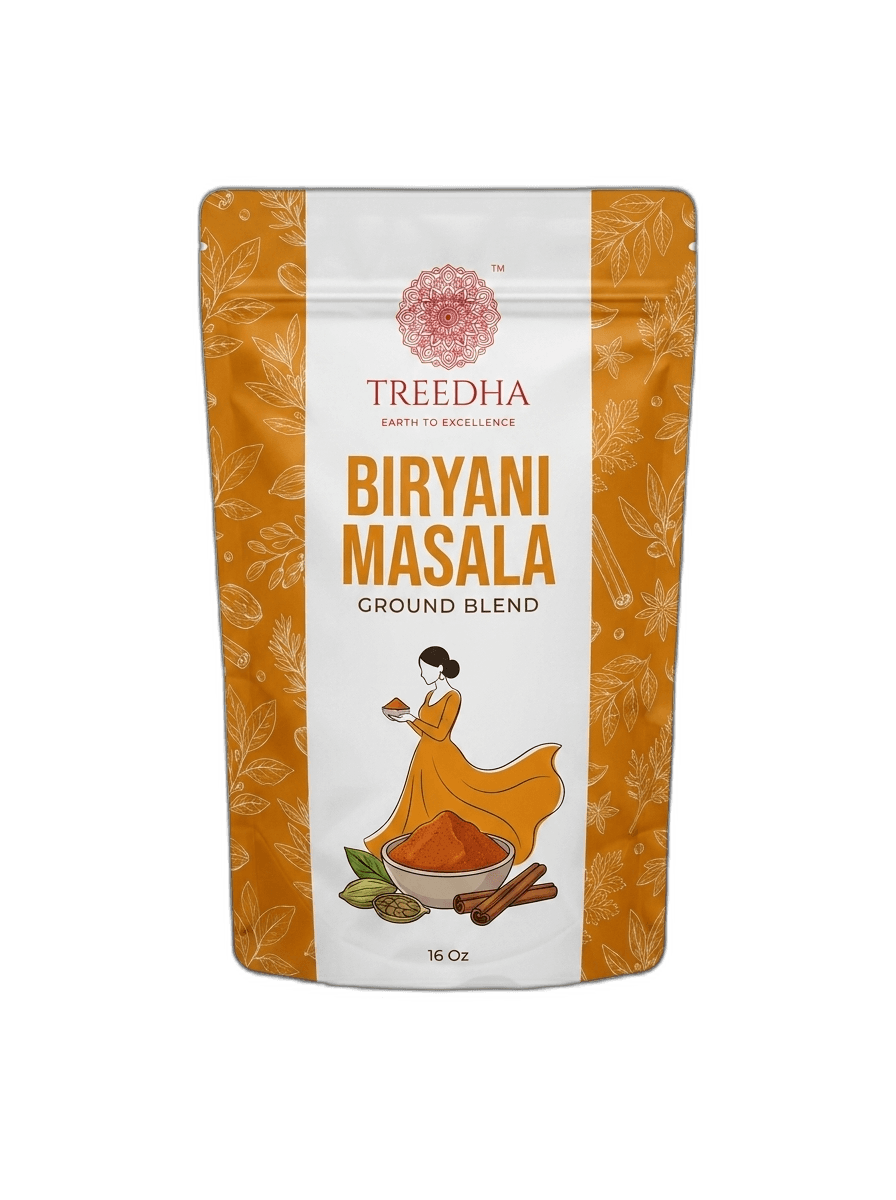
Scellé à pleine maturité, expédié avec sa provenance.
Conditionné dans des sachets refermables de qualité alimentaire qui préservent l'arôme et la couleur — chacun étiqueté avec son origine, son grade et son profil gustatif.
- Hyderabad, Telangana, Inde
- Mouture d'épices entières premium
- Poudre torréfiée à sec et moulue à la meule de pierre
- Shah jeera, macis et dagad phool
- Stérilisé à la vapeur · sans ETO · testé en laboratoire
- 18-24 mois
Également appelé · Hyderabadi Biryani Spice Blend · Dum Biryani Masala · Nizami Biryani Mix
Comment l'utiliser
Dressage en couches et cuisson dum du biryani de mouton, de poulet ou de légumes
Assaisonnement des marinades à base de yaourt pour viandes grillées
Pour relever les pilafs et les plats de riz tahari
Finition des kormas mijotés lentement et des sauces riches
Pour épicer les légumes rôtis et les pommes de terre façon dum
Biryani Masala is a premium, aromatic whole-spice blend, essential for authentic Indian biryani dishes. Sourced from Hyderabad, it features dry-roasted and stone-ground spices like shah jeera, mace, and dagad phool, offered steam-sterilised and ETO-free for global bulk buyers.
Sourcing & Origin
Treedha's Biryani Masala originates from Hyderabad, Telangana, India, a region historically celebrated for its distinctive culinary traditions and aromatic spices. Nestled at approximately 500 metres above sea level, this terroir contributes to the characteristic flavour profile of the blend's constituent spices.
Our sourcing ensures a direct link to the origin, allowing for stringent quality control from harvest. The specific blend is a testament to the region's culinary heritage, forming the base for renowned dishes like Hyderabadi Biryani, a key driver for demand among global importers seeking authentic Indian flavours.
Export Grades & Specifications
For wholesale and private-label buyers, our Biryani Masala is offered as a premium whole-spice grind, processed from low-flame roasted and stone-ground spices. This method preserves the volatile oils and ensures a rich, consistent aroma and flavour, critical for producing authentic Biryani Masala, Hyderabadi Biryani Spice Blend, or Dum Biryani Masala.
Key specifications include a maximum moisture content of 10% to prevent microbial growth and extend shelf life. Purity is paramount, with a nil tolerance for foreign matter, ensuring the blend consists solely of premium spice components. Volatile oil content, while proprietary for the blend, reflects the high quality of individual spices like black peppercorns (1-2.5%) and cinnamon (around 3%). We ensure a uniform fine powder granulation for consistent application and optimal flavour release. Microbiological parameters, including absence of Salmonella and E. coli in 25g, are strictly met through steam sterilisation, confirming a safe and high-quality product. Consistent natural colour and authentic aroma are verified through sensory evaluation.
| Specification | Premium Whole-Spice Grind |
|---|---|
| Origin | Hyderabad, Telangana, India |
| Process | Dry-roasted, stone-ground powder |
| Moisture Content |
≤ 10% | | Purity | 100% pure, nil foreign matter | | Granulation | Fine powder, uniform mesh size | | Sterilisation | Steam-sterilised, ETO-free | | Defining Notes | Shah jeera, mace, dagad phool | | Shelf Life | 18-24 months |
Quality, Safety & Compliance
Treedha is committed to supplying Biryani Masala, also known as Hyderabadi Biryani Spice Blend or Nizami Biryani Mix, that consistently meets stringent international food safety standards. Our product is steam-sterilised and guaranteed Ethylene Oxide (ETO)-free, aligning with the European Union's strict maximum residue limit (MRL) of 0.1 mg/kg (sum of ETO and 2-chloroethanol, expressed as ETO).
Comprehensive lab testing is conducted by NABL-accredited laboratories to ensure compliance with global regulatory limits. For the EU, this includes Aflatoxins (B1 limit of 5.0 µg/kg, total 10.0 µg/kg, as per Regulation (EU) No. 915/2023), Ochratoxin A (15 µg/kg for spice mixtures), and Pyrrolizidine Alkaloids (400 µg/kg for dried herbs). Pesticide MRLs adhere to Regulation (EC) No 396/2005, with a default MRL of 0.01 ppm for unauthorised pesticides. Salmonella must be completely absent. Sudan Dyes I, II, III, and IV are strictly prohibited. Heavy metal limits comply with Regulation (EU) 2021/1317 (now (EU) 2023/915), with specific maximum levels for lead in various spice types.
For the US market, our Biryani Masala complies with FDA action levels for total Aflatoxins (20 µg/kg). Pesticide MRLs meet EPA crop-specific requirements, and Salmonella carries a zero-tolerance policy. Sudan Dyes I-IV are also strictly prohibited. While no federal lead limits exist, we align with ASTA guidance levels (e.g., 0.9 ppm for seed spices) and avoid lead chromate adulteration. Essential documentation, including Phytosanitary Certificates, Certificates of Analysis (COA) from NABL/ISO 17025 accredited labs, and Certificates of Origin, accompanies every shipment to facilitate smooth customs clearance and ensure full traceability.
Global Demand & Target Markets
Global demand for Indian spice blends, including Biryani Masala (Hyderabadi Biryani Spice Blend, Dum Biryani Masala), is consistently strong, driven by several key factors. The expanding international preference for ethnic cuisines, particularly authentic Indian and South Asian flavours, positions Biryani Masala as a high-demand commodity. Biryani's consistent ranking as a top-ordered dish on global food delivery platforms underscores this trend.
A significant driver is the large and dispersed Indian and South Asian diaspora across key regions like the Middle East, North America, and Europe, creating sustained demand for traditional spice mixes in countries such as the United States, UAE, United Kingdom, Canada, and Malaysia. Furthermore, the increasing consumer preference for convenience and ready-to-use food products fuels the demand for pre-mixed spice blends. The food processing and HORECA (Hotels, Restaurants, Cafes) sectors also require bulk quantities of high-quality spice ingredients and blends for their expanding operations.
Logistics, HS Code & Packing
Biryani Masala is primarily classified under HS Code 0910.91.00 in India (ITC-HS) and 0910.91.0000 in the United States (HTS), specifically for "other spices; mixtures referred to in note 1(b) to chapter 9." This classification is appropriate for our premium whole-spice grind, which retains the essential character of spices.
Treedha offers Biryani Masala in various bulk packaging formats tailored to importer and distributor requirements. While specific pack sizes are discussed individually, options include robust multi-wall paper bags with inner liners, and HDPE drums, designed to preserve product integrity, aroma, and shelf life of 18-24 months under optimal storage conditions. Minimum Order Quantity (MOQ) is typically based on container loads to optimise shipping efficiency, though specific project requirements can be discussed. We operate on standard Incoterms, facilitating clear responsibilities for shipping and freight, ensuring seamless delivery to global destinations. Product integrity during transit is maintained through carefully selected packaging that protects against moisture, light, and physical damage.
- indianspices.com — indianspices.com
- indianexpress.com — indianexpress.com
- agriculture.institute — agriculture.institute
- ijirt.org — ijirt.org
- hndglobalexport.com — hndglobalexport.com
- exportindianews.com — exportindianews.com
Questions
- Le biryani masala est-il la même chose que le garam masala ?
- Ils se recoupent mais ne sont pas interchangeables. Le biryani masala porte des notes distinctives de shah jeera (carvi) et de dagad phool (fleur de pierre) qui construisent l'arôme caractéristique du plat, tandis que le garam masala est un mélange chaud polyvalent plus simple. Le biryani masala est conçu sur mesure pour le riz et la viande en couches.
- Quelle quantité dois-je utiliser pour un biryani ?
- À titre indicatif, une à une cuillère et demie à café pour 250 g de riz ou de viande, ajoutée pendant la marinade puis de nouveau à l'étape du dressage en couches. Commencez léger, goûtez et ajustez, car les mélanges fraîchement moulus sont plus puissants que les poudres de supermarché vieillies.
- Est-il très épicé ?
- Il porte une chaleur chaude et mesurée plutôt qu'une brûlure intense. Le piment reste derrière les épices aromatiques, de sorte qu'il parfume et assaisonne le plat sans le dominer. Ajoutez du piment vert frais séparément si vous préférez plus de feu.
- What is Biryani Masala and what are its main characteristics?
- Biryani Masala is a premium, aromatic Indian spice blend used to prepare traditional biryani dishes. Treedha's blend is a dry-roasted and stone-ground fine powder, originating from Hyderabad, featuring key notes of shah jeera, mace, and dagad phool, known for its consistent flavour and aroma.
- How does Treedha ensure the safety and quality of its Biryani Masala for export?
- Treedha's Biryani Masala is steam-sterilised and guaranteed ETO-free. We conduct rigorous lab testing through NABL-accredited facilities to ensure compliance with EU and US MRLs for aflatoxins, pesticide residues, heavy metals, and the absence of pathogens like *Salmonella* and prohibited substances like Sudan Dyes.
- What documentation does Treedha provide for international bulk shipments?
- For international bulk shipments, Treedha provides a comprehensive set of documents including a Phytosanitary Certificate, Certificate of Analysis (COA) from an NABL-accredited lab, Certificate of Origin, Commercial Invoice, Packing List, and Bill of Lading, ensuring full compliance and traceability.
- What are the common HS codes for importing Biryani Masala?
- Biryani Masala is primarily classified under HS Code 0910.91.00 in India (ITC-HS) and 0910.91.0000 in the United States (HTS), covering 'other spices; mixtures referred to in note 1(b) to chapter 9,' which is suitable for spice blends retaining their essential character.
- Which global markets have the highest demand for Biryani Masala?
- The highest demand for Biryani Masala, including Hyderabadi Biryani Spice Blend and Dum Biryani Masala, comes from countries with significant South Asian diaspora and a growing preference for ethnic cuisines, notably the United States, UAE, United Kingdom, Canada, and Malaysia.
- Does Treedha offer private-label options for Biryani Masala?
- Yes, Treedha offers private-label packaging and branding solutions for bulk buyers of Biryani Masala. We can accommodate specific requirements for packaging materials, sizes, and label designs to meet client needs and destination market regulations.