Black Rice
Chak-Hao
Le Chak-Hao est le riz noir aromatique protégé par IG du Manipur, cultivé dans les rizières de la vallée d'Imphal et prisé pour le kheer cérémoniel. Son son riche en anthocyanes lui confère une teinte violet profond et un parfum de noisette, presque floral, qui s'intensifie à la cuisson jusqu'à une texture tendre et légèrement collante. Servez-le en pilaf saisissant, en porridge nourrissant ou comme base spectaculaire d'un bol de céréales.
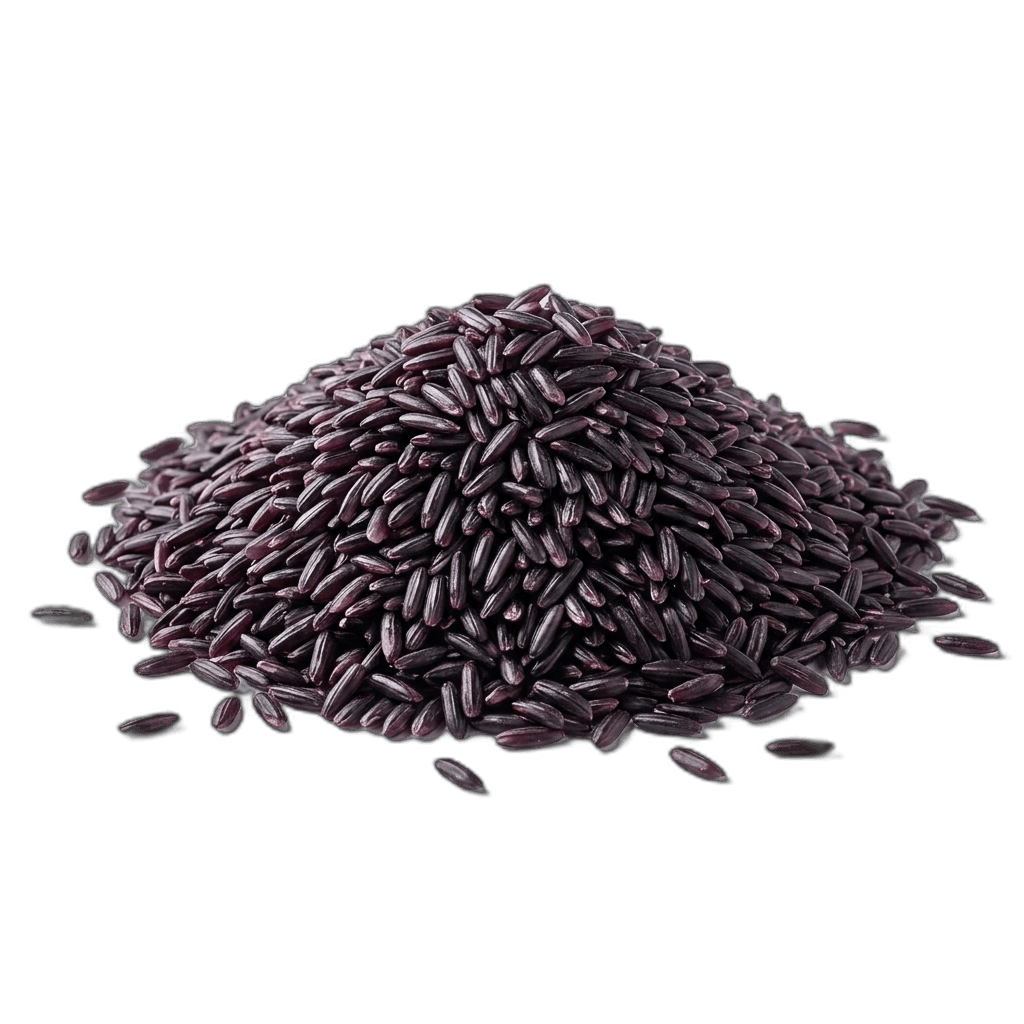
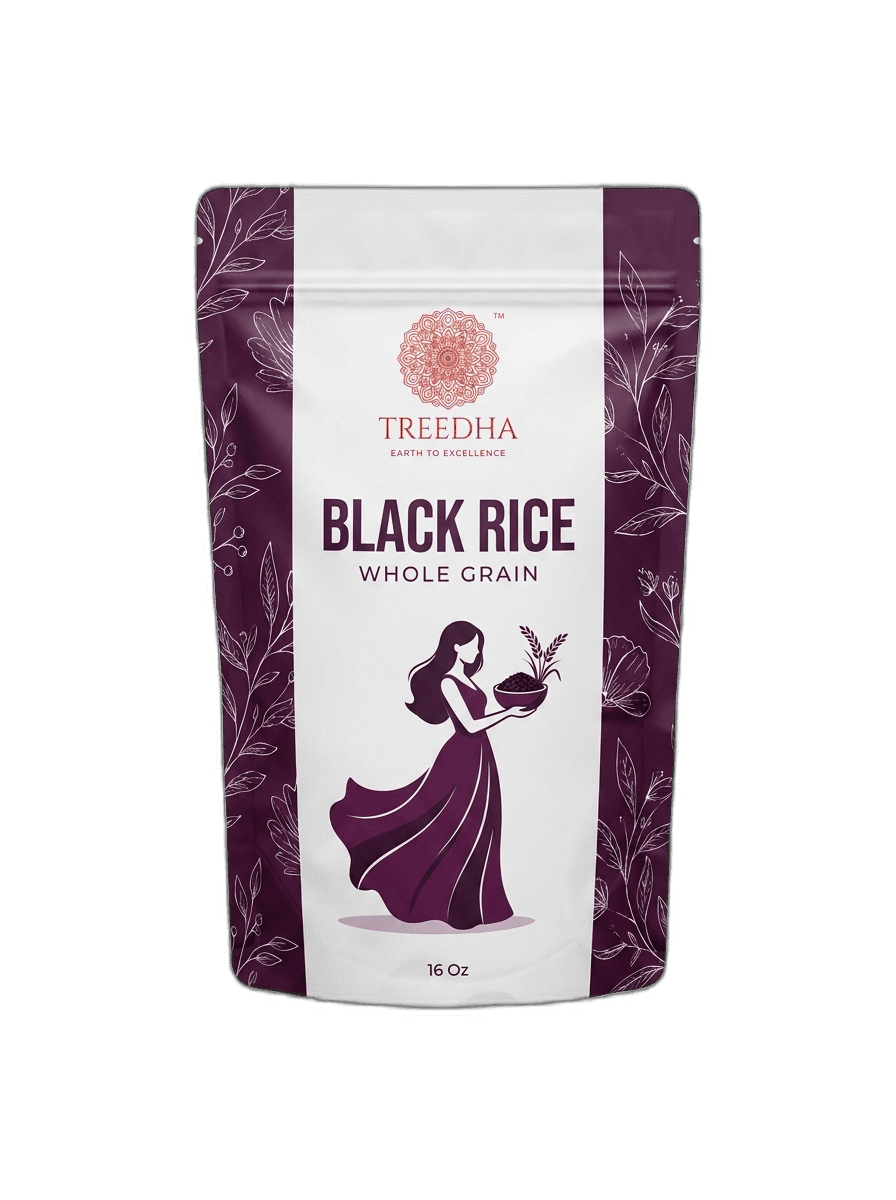
Scellé à pleine maturité, expédié avec sa provenance.
Conditionné dans des sachets refermables de qualité alimentaire qui préservent l'arôme et la couleur — chacun étiqueté avec son origine, son grade et son profil gustatif.
- Manipur, Inde
- Grain entier Chak-Hao labellisé IG
- Décortiqué, son conservé, séché au soleil
- 35-45 min (faire tremper pour assouplir)
- Testé en laboratoire MRL & aflatoxines · approvisionnement certifié
- 8-12 mois à température ambiante
Également appelé · Forbidden Rice · Riso Venere · Manipuri black rice
Comment l'utiliser
Kheer traditionnel au Chak-Hao et puddings au lait
Pilafs et biryanis d'un violet éclatant
Bols de grains entiers, salades et plats façon risotto
Porridge du petit-déjeuner au jaggery et à la noix de coco
Dressé aux côtés de fruits de mer pour le contraste de couleur
Black Rice (Chak-Hao) is a deeply pigmented, aromatic whole grain from Manipur, India, known for its distinct nutritional profile and culinary versatility. It is increasingly sought after by global importers and food brands as a premium 'superfood' ingredient.
Sourcing & Origin
Treedha sources premium GI-tagged Chak-Hao black rice directly from the fertile Imphal valley in Manipur, India. This heirloom variety, also known as Forbidden Rice or Manipuri black rice, thrives in specific sub-tropical conditions of Imphal East, Imphal West, Bishnupur, and Thoubal. The geographical indication (GI) tag ensures the rice's authenticity and adherence to traditional cultivation practices, offering bulk buyers a product with verified provenance and distinct varietal characteristics.
Our Chak-Hao is a single-harvest paddy, carefully dehusked to retain its nutrient-rich bran, then sun-dried as a whole grain. This traditional processing method preserves its deep black colour, aromatic qualities, and robust texture. Sourcing from this specific origin guarantees the unique attributes that distinguish Chak-Hao from generic black rice varieties on the international market.
Export Grades & Specifications
Treedha's Chak-Hao black rice meets stringent export specifications, ensuring a high-quality product for bulk buyers. Our offering is GI-tagged whole grain, characterised by its medium to long grain length and striking deep black colour that develops into a dark purple when cooked. We guarantee purity through rigorous lab testing and adherence to global food safety standards.
Our standard specifications for bulk supply are designed to meet diverse industry requirements. This includes a maximum moisture content of 12-14%, ensuring stability and shelf life, alongside a minimum purity of 99.9% to confirm the absence of foreign matter and stones. Broken grains are maintained at a maximum of 5%, customisable to importer needs, reflecting our commitment to quality. The rice is also assessed for chalky grains (max 7%), and free from damaged or discoloured grains.
Quality, Safety & Compliance
Treedha prioritises the highest standards of quality and food safety, ensuring our Chak-Hao black rice complies with stringent international regulations. Our products are steam-sterilised and guaranteed ethylene-oxide-free (ETO-free), addressing a critical concern for EU and US food imports. We conduct comprehensive lab testing to ensure compliance with maximum residue limits (MRLs) for pesticides and maintain aflatoxin levels well within EU and US thresholds.
Each consignment is accompanied by a Certificate of Analysis (COA) detailing purity, moisture, and contaminant testing results, along with a phytosanitary certificate from APEDA, mandated by bodies such as the USDA, to certify pest-free status. We also provide commercial invoices, packing lists, and certificates of origin, facilitating smooth customs clearance. Our robust quality control protocols mean all products are tested for Salmonella (absent per 25g) and harmful heavy metals, aligning with EU and USDA regulations for food products. Importers can be confident in receiving safe, compliant, and fully traceable products.
Global Demand & Target Markets
Global demand for black rice, including Chak-Hao, Forbidden Rice, and Riso Venere, is experiencing significant growth, driven by its recognition as a 'superfood' rich in anthocyanin antioxidants, fibre, and plant-based protein. Health-conscious consumers in developed markets are increasingly seeking nutrient-dense grains, fueling demand in the functional food and gourmet segments. Its culinary versatility in salads, bowls, and desserts further expands its appeal.
Major importing regions include Japan, the USA, Germany, France, the UK, Australia, South Korea, the UAE, and Singapore. Both North America and Europe show particularly strong demand for organic and antioxidant-rich grains. Treedha is well-positioned to serve these markets with our GI-tagged Chak-Hao, meeting the growing consumer preference for unique, healthy, and traceable ingredients.
Logistics, HS Code & Packing
For international trade, our black rice is primarily classified under the Harmonised System (HS) code 100630 (Semi-milled or wholly milled rice). APEDA is actively pursuing a dedicated HS code for GI-tagged varieties like Chak-Hao to further distinguish it in the global market. Treedha offers flexible packing solutions to suit bulk importer requirements, typically in robust export-grade bulk bags. While specific minimum order quantities (MOQs) are discussed directly with buyers to accommodate diverse needs, our approach is designed to support wholesale and private-label partners of varying scales.
We facilitate various Incoterms, including FOB and CIF, to provide seamless logistics from our origin in India to your designated port. Our efficient supply chain ensures timely delivery and consistency. Chak-Hao has an optimal shelf life of 8-12 months when stored in cool, dry conditions, making it suitable for international distribution.
- nikenterprise.com — nikenterprise.com
- researchgate.net — researchgate.net
- livemint.com — livemint.com
- introspectivemarketresearch.com — introspectivemarketresearch.com
- cabkointernational.com — cabkointernational.com
- congruencemarketinsights.com — congruencemarketinsights.com
Questions
- Le Chak-Hao est-il la même chose que le riz noir ou le riz interdit ?
- Oui. Chak-Hao est le nom manipuri du riz noir aromatique connu à l'international sous le nom de riz interdit et, en Italie, de riso venere. Notre grain est la variété protégée par IG de la vallée d'Imphal.
- Pourquoi devient-il violet à la cuisson ?
- La couleur provient des anthocyanes concentrées dans le son non poli. À mesure que le grain cuit, ces pigments se libèrent et le riz passe du noir à un violet profond et riche.
- Dois-je le faire tremper avant la cuisson ?
- Un trempage de 30 à 60 minutes raccourcit la cuisson et donne une texture plus régulière et tendre, mais vous pouvez le cuire sans trempage avec un peu plus d'eau et de temps.
- What is Chak-Hao black rice and where does it originate?
- Chak-Hao, also known as Manipuri black rice or Forbidden Rice, is a GI-tagged heirloom variety of black rice cultivated in the Imphal valley of Manipur, India. It is prized for its deep black colour, aromatic profile, and nutritional value.
- What are the primary health benefits associated with black rice?
- Black rice is considered a 'superfood' due to its high content of anthocyanin antioxidants, dietary fibre, iron, and plant-based protein. These components are beneficial for combating free radicals and supporting overall well-being.
- Does Treedha's black rice meet EU and US import regulations?
- Yes, Treedha's Chak-Hao black rice is steam-sterilised, ETO-free, and rigorously lab-tested to ensure compliance with EU and US maximum residue limits (MRLs) for pesticides, aflatoxins, and heavy metals. We provide all necessary documentation, including COAs and phytosanitary certificates.
- What is the HS code for bulk black rice exports from India?
- The primary Harmonised System (HS) code for black rice in international trade, including exports from India, is 100630 (Semi-milled or wholly milled rice). APEDA is working on dedicated codes for GI varieties.
- What packing options does Treedha offer for bulk black rice?
- Treedha primarily offers bulk black rice in robust export-grade bulk bags, suitable for wholesale and industrial clients. We discuss specific packing requirements, including private-label solutions, directly with our buyers.
- What is the typical shelf life of Chak-Hao black rice?
- When stored in cool, dry conditions away from direct sunlight and moisture, Treedha's Chak-Hao black rice has a shelf life of 8-12 months.