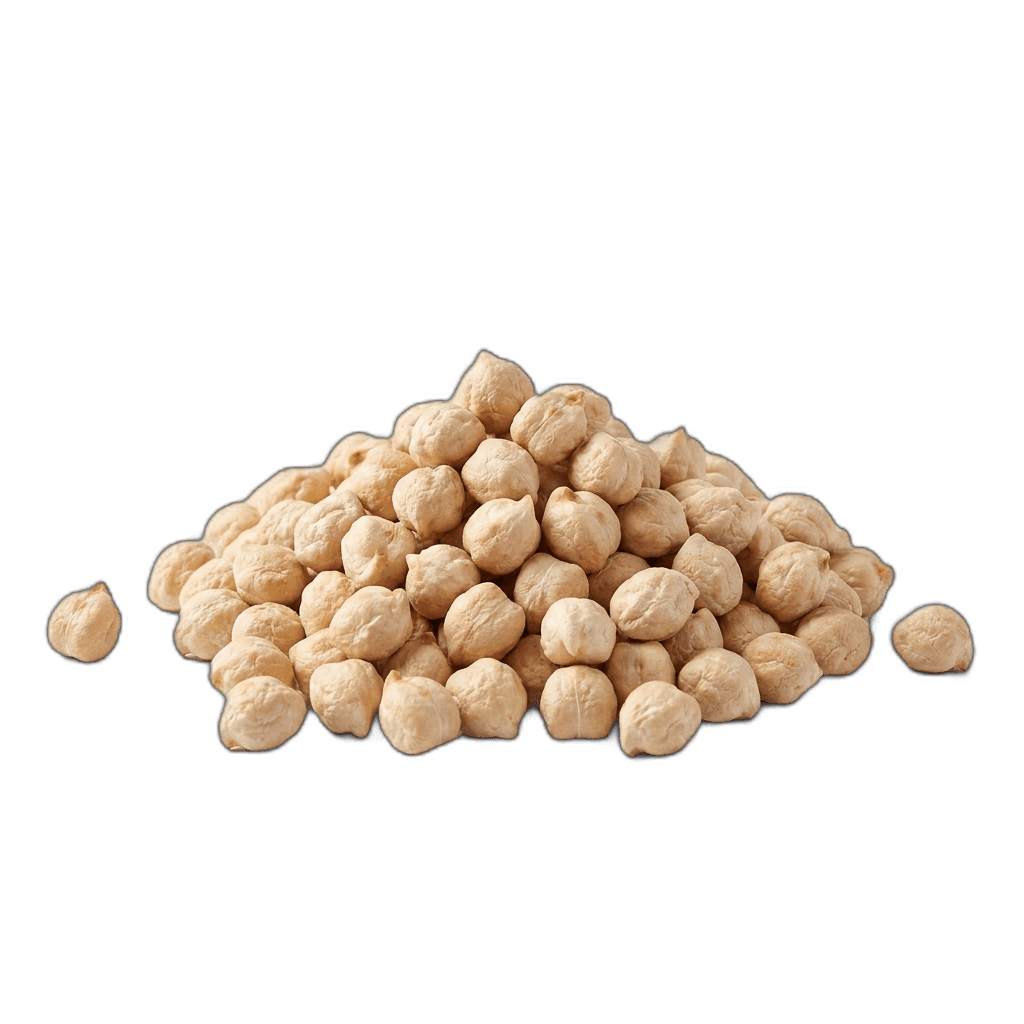
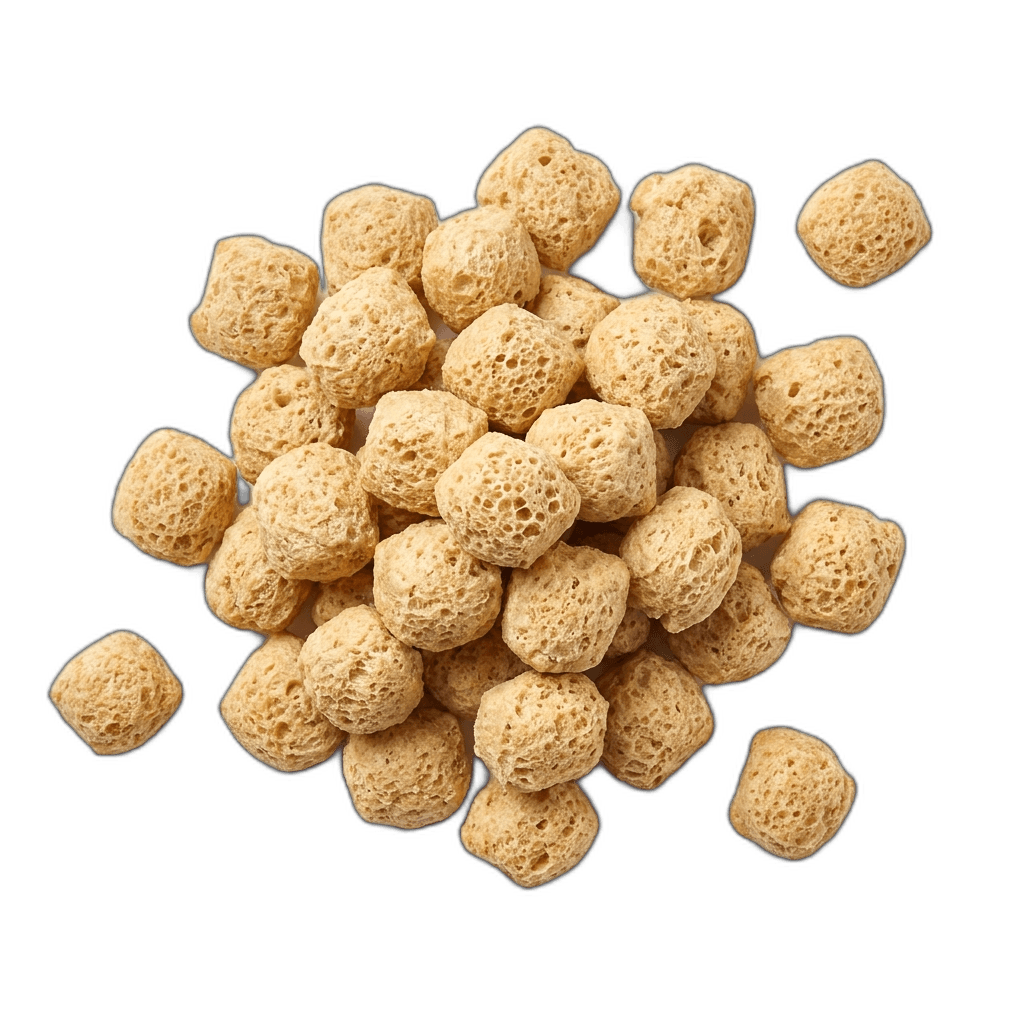
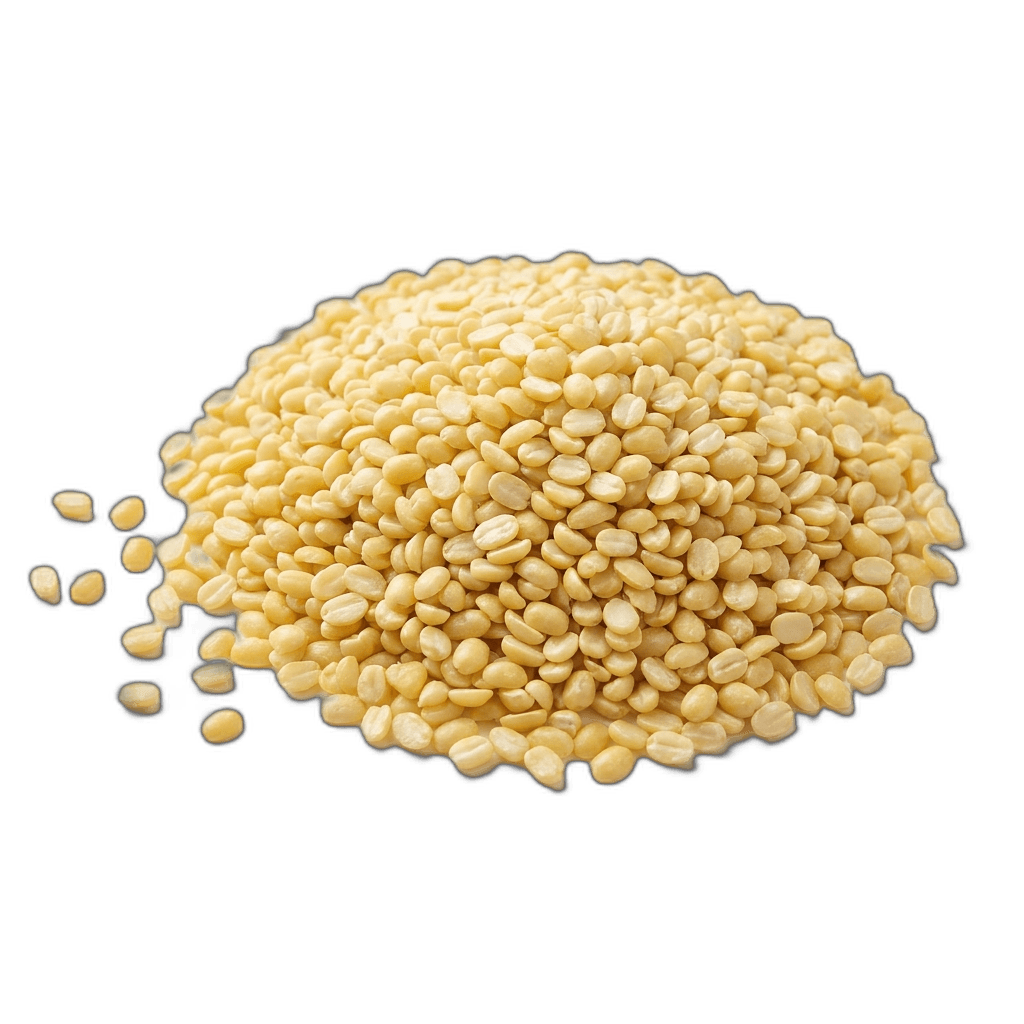
Split Chickpeas
Chana Dal
Gepelde en gespleten pitten van de kleine desi-kikkererwt, geteeld in de Malwa-gordel van Madhya Pradesh, India's gewaardeerde kikkererwtenland. Hoger in vezels en polyfenolen dan het grotere kabuli-type, kookt chana dal tot een malse, licht stevige beet met een zoete, nootachtige diepte. Laat sudderen tot dals en sundals, fruit het in Zuid-Indiase gerechten, of maal het tot goudgeel grammeel.
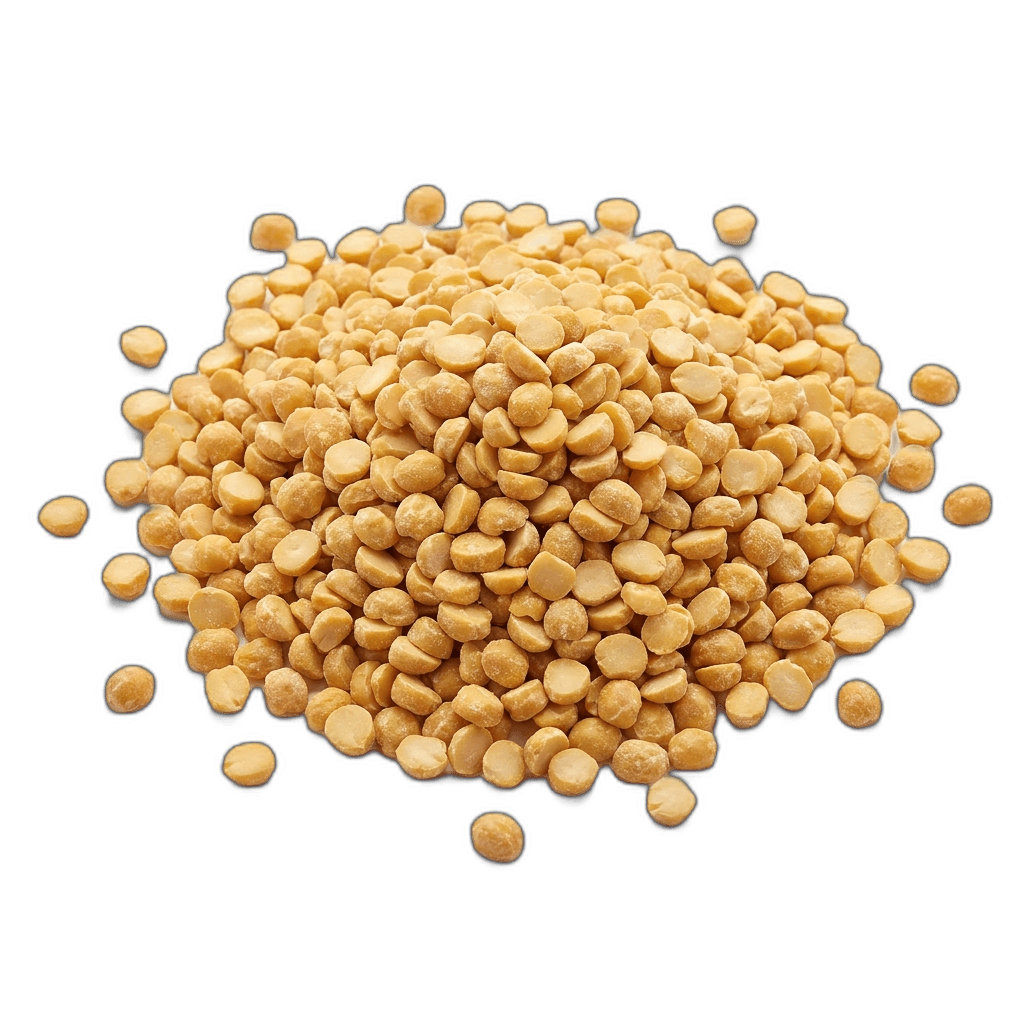
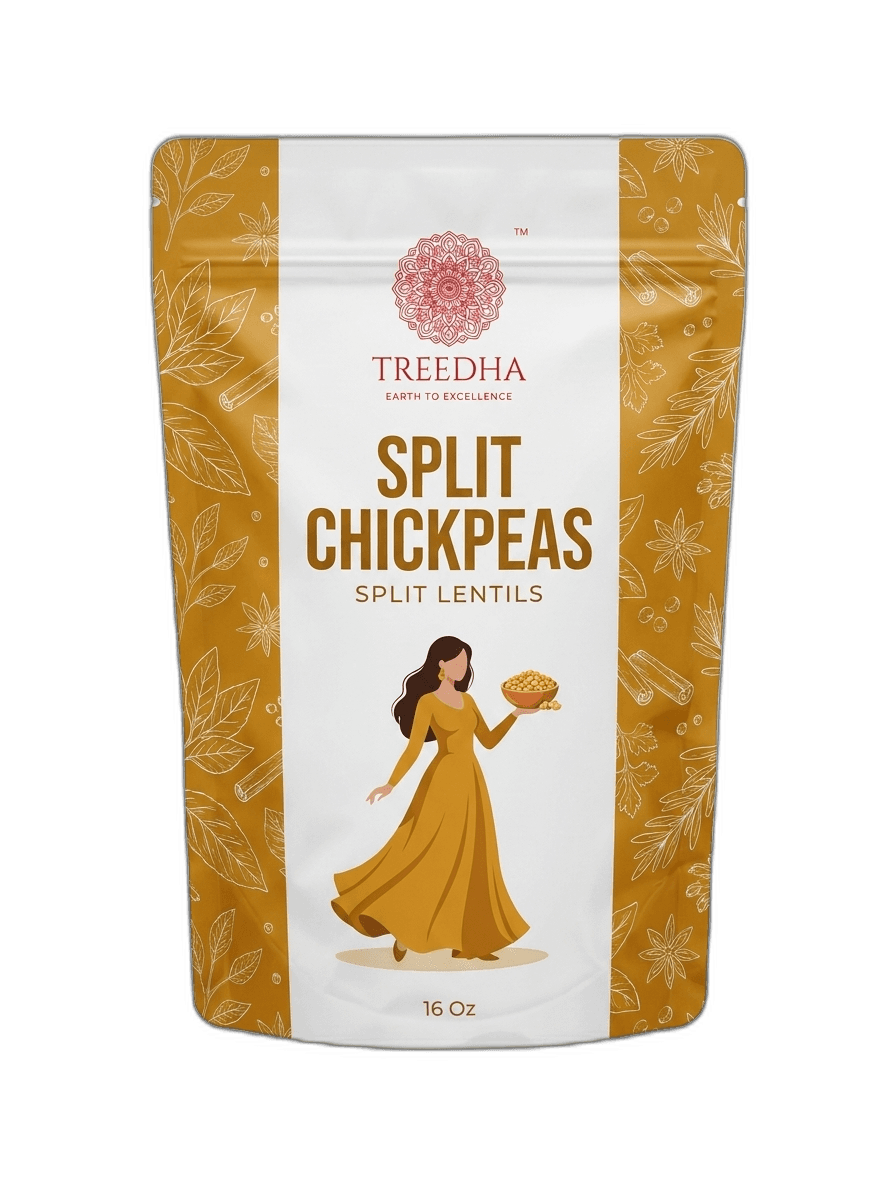
Op het hoogtepunt verzegeld, met herkomst verzonden.
Verpakt in hersluitbare zakjes van voedingskwaliteit die aroma en kleur insluiten — elk voorzien van herkomst, kwaliteitsklasse en smaakprofiel.
- Madhya Pradesh, India
- Gespleten, gepelde desi-kikkererwt
- Gepeld, gespleten, gepolijst
- Cicer arietinum (desi-type)
- Sortex-gereinigd, gescreend op fumigantresidu, laboratoriumgetest
- 18-24 maanden, verzegeld bij kamertemperatuur
Ook bekend als · Split Bengal Gram · Desi Chickpea Split · Cicer arietinum · Yellow Split Gram
Hoe je het gebruikt
Chana dal tadka en alledaagse dals
Zuid-Indiase sundal en kosambari
Malen tot besan (grammeel)
Fruiten en knapperige garnering voor dosa's
Vullingen, halwa en zoete puran poli
Split Chickpeas (Chana Dal) are dehusked and split desi chickpeas (*Cicer arietinum*), a foundational pulse in South Asian cuisine, valued globally for their versatility, nutritional profile, and role in plant-based diets.
Sourcing & Origin
Treedha sources Split Chickpeas (Chana Dal) directly from the fertile Malwa belt in Madhya Pradesh, India. This region is renowned for its optimal climate and soil conditions, which are ideal for cultivating the desi type of chickpea, yielding a superior raw material for splitting.
The specific origin ensures a consistent quality and flavour profile highly sought after by international buyers. Our direct sourcing approach provides full provenance and traceability, enabling bulk importers to confidently guarantee the origin of their supply.
Export Grades & Specifications
Treedha's Split Chickpeas (Chana Dal) are supplied as export-grade, machine-cleaned, dehusked, and water-polished desi chickpeas. This meticulous processing ensures uniformity and meets stringent international quality benchmarks.
Our specifications focus on critical parameters for bulk buyers, including optimal moisture content, high purity, and minimal defects, ensuring the product's integrity and shelf life. Each batch undergoes rigorous testing to confirm adherence to these standards, making it suitable for diverse food processing applications and private-label packaging.
| Parameter | Specification (Export Grade) |
|---|---|
| Product Name | Chana Dal (Split Chickpeas) |
| Botanical Name | Cicer arietinum (desi type) |
| Form | Dehusked, Split, Polished |
| Colour | Golden Yellow |
| Moisture Content | ≤ 10% Maximum |
| Purity | ≥ 99% (Triple Sortex-cleaned) |
| Damaged Kernels | 0.5% Maximum |
| Green Seeds | 0.1% Maximum |
| Protein Content | ~21% |
| Fat Content | ≤ 4.88% Maximum |
| Size | 4-6 mm |
| Processing | Machine Cleaned, Hand Sorted, Water-polished |
Quality, Safety & Compliance
Treedha prioritises the highest food safety standards, particularly for discerning markets in the EU and US. Our Split Chickpeas (Chana Dal) are steam-sterilised, guaranteeing an ethylene-oxide (ETO)-free product, in line with strict regulatory requirements where ETO is a restricted substance.
We conduct comprehensive lab testing to ensure compliance with international limits for harmful contaminants. This includes rigorous checks for total aflatoxins (e.g., ≤ 4 ppb for EU, ≤ 20 ppb for US), pesticide maximum residue levels (MRLs), and heavy metals (in accordance with EU Regulation (EU) 2023/915). Furthermore, our processes are designed to eliminate biological hazards like Salmonella, and we ensure the complete absence of Sudan dyes. All shipments are accompanied by a Certificate of Analysis (COA) and a Phytosanitary Certificate, and Treedha is APEDA-registered.
Global Demand & Target Markets
Global demand for Split Chickpeas (Chana Dal) is robust and diverse, driven by several key factors. The expanding South Asian diaspora in regions like North America, Europe (UK, Netherlands, Germany, France), and the Middle East (UAE, Saudi Arabia) consistently fuels demand for this staple pulse, integral to their culinary traditions.
Beyond diaspora markets, the increasing global preference for plant-based proteins and vegan diets has significantly boosted demand in developed countries. Additionally, the growing food processing industry worldwide seeks high-quality, ready-to-use pulses for ingredients in snacks, flour, and instant mixes. India, as a leading producer and exporter, offers competitive pricing and consistent quality, making Indian Chana Dal a preferred choice for importers in emerging markets in Southeast Asia (Bangladesh, Malaysia) and Africa.
Logistics, HS Code & Packing
The primary Harmonized System (HS) codes for Split Chickpeas (Chana Dal) typically fall under 07139090 or 07139010. These codes are essential for customs clearance and trade documentation, ensuring smooth international transit. Treedha facilitates all necessary export paperwork, including phytosanitary certificates and Certificates of Origin.
For bulk buyers, Treedha offers flexible packing solutions tailored to importer requirements, from robust industrial sacks to private-label ready formats. While specific minimum order quantities (MOQ) are discussed on a case-by-case basis to accommodate various buyer scales, our approach prioritises reliable, consistent supply chains. Standard Incoterms (e.g., FOB, CIF) are applied as per mutual agreement. With ambient sealed packaging, our Split Chickpeas maintain a shelf life of 18-24 months, assuring product freshness upon arrival.
- enterslice.com — enterslice.com
- vadindustries.com — vadindustries.com
- zauba.com — zauba.com
- retexport.com — retexport.com
- 3hatz.com — 3hatz.com
- wgcexports.com — wgcexports.com
Vragen
- Is chana dal hetzelfde als gespleten kikkererwten?
- Ja. Chana dal is de Indiase naam voor gespleten, gepelde Bengaalse gram — de kleine desi-kikkererwt gespleten in goudgele helften, internationaal verkocht als gespleten kikkererwten.
- Hoe verschilt chana dal van gewone kikkererwten?
- Chana dal komt van de kleinere desi-kikkererwt, die een donkerdere, dikkere schil heeft en meer vezels en polyfenolen dan de grotere bleke kabuli-kikkererwt die voor hummus wordt gebruikt.
- Kan ik er besan van maken?
- Ja. Chana dal is de bron van besan, oftewel grammeel; fijngemalen wordt het het goudgele meel dat wordt gebruikt voor pakora's, beslag en Indiase zoetigheden.
- What is Split Chickpeas (Chana Dal)?
- Split Chickpeas, also known as Chana Dal, Split Bengal Gram, Desi Chickpea Split, or Yellow Split Gram, are the dehusked and split kernels of *Cicer arietinum* (desi type) chickpeas, processed and polished for culinary use.
- Where does Treedha source its Chana Dal?
- Treedha sources its Split Chickpeas (Chana Dal) exclusively from the Malwa belt in Madhya Pradesh, India, a region celebrated for its ideal conditions for cultivating high-quality *desi* chickpeas.
- How does Treedha ensure the quality and safety of its Split Chickpeas for export?
- Treedha ensures quality and safety through steam sterilisation (making it ETO-free), triple Sortex cleaning, and rigorous lab testing for aflatoxins, MRLs, heavy metals, and pathogens like Salmonella, adhering to EU and US import limits. We provide COA and Phytosanitary Certificates.
- What packaging options are available for bulk orders of Split Bengal Gram?
- Treedha offers various bulk packaging options, including industrial-grade sacks, as well as private-label and custom branding solutions to meet the specific needs of importers and distributors.
- Which HS Code applies to Treedha's Split Chickpeas (Chana Dal)?
- The primary Harmonized System (HS) codes for Split Chickpeas (Chana Dal) commonly used in international trade are 07139090 or 07139010, which classify other dried leguminous vegetables, shelled, whether or not skinned or split.
- Does Treedha supply ETO-free Chana Dal?
- Yes, Treedha's Split Chickpeas (Chana Dal) are steam-sterilised during processing, ensuring a product that is entirely free from Ethylene Oxide (ETO), in compliance with international food safety standards.