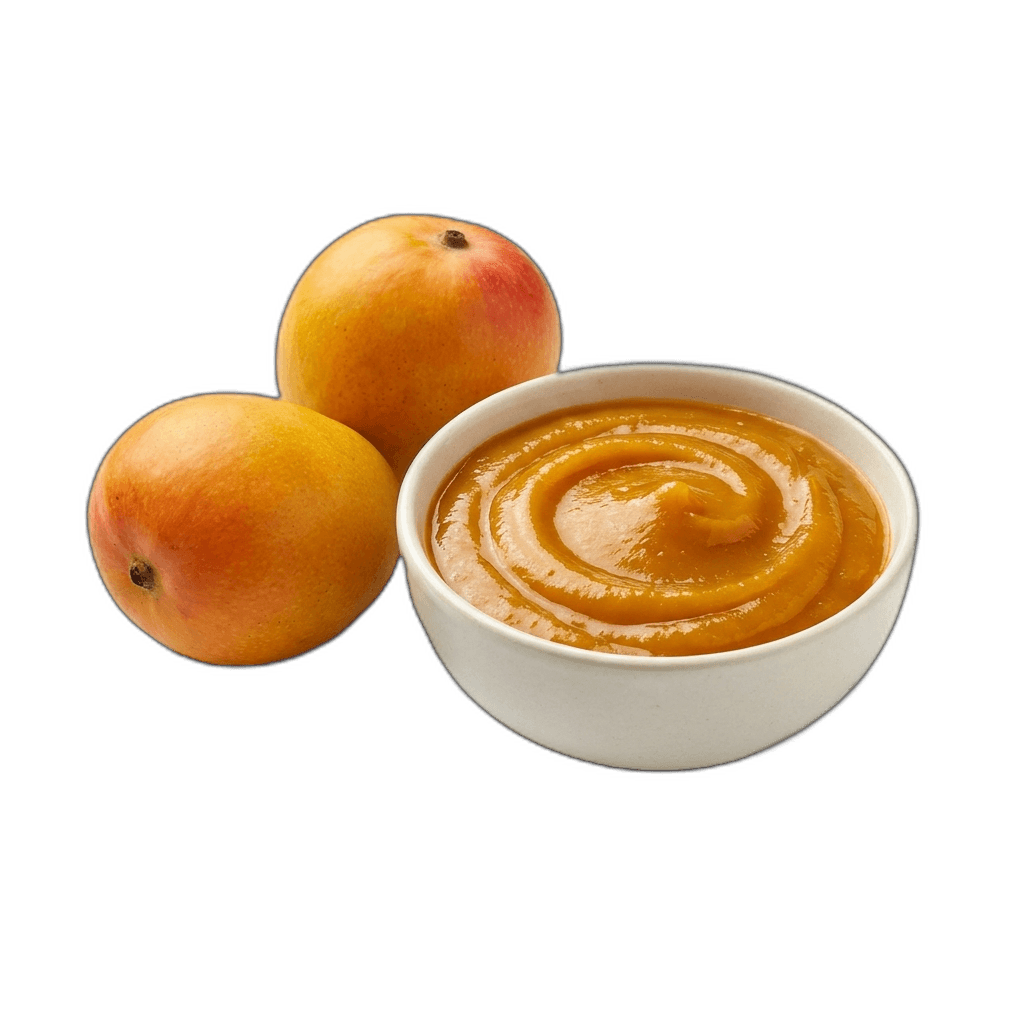
Alphonso Mango Pulp
Hapus Aam Ras
Wyciskany z oznaczonych GI mango Alphonso (Hapus) uprawianych w nadmorskim pasie Ratnagiri i Devgad w Konkanie w Maharasztrze, gdzie wulkaniczna, laterytowa gleba nadaje owocom szafranowy miąższ i upajający aromat. Pakowany aseptycznie, bez konserwantów, by zachować dojrzałą słodycz sezonu przez cały rok. Polewaj nim kulfi i naleśniki, miksuj do lassi, musu i lodów, albo nakładaj łyżką jako aamras z gorącymi puri.
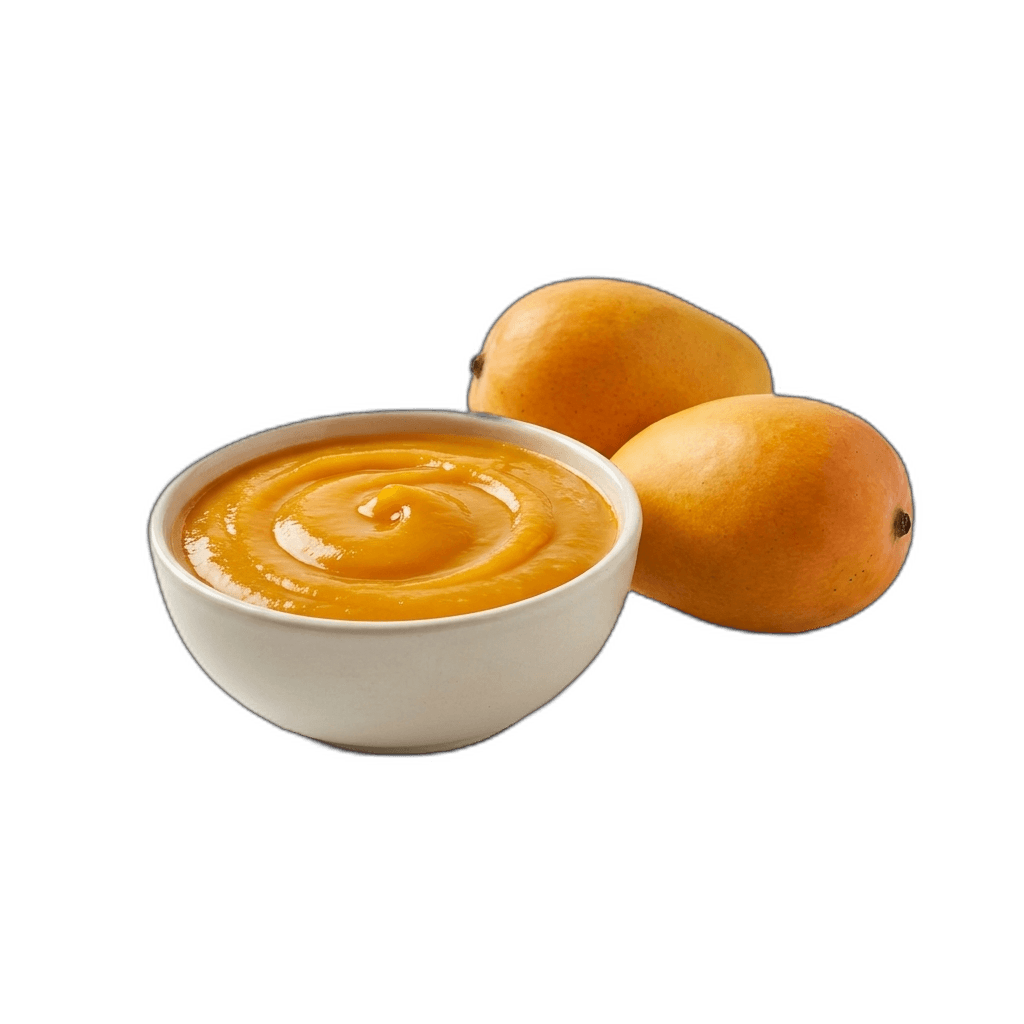
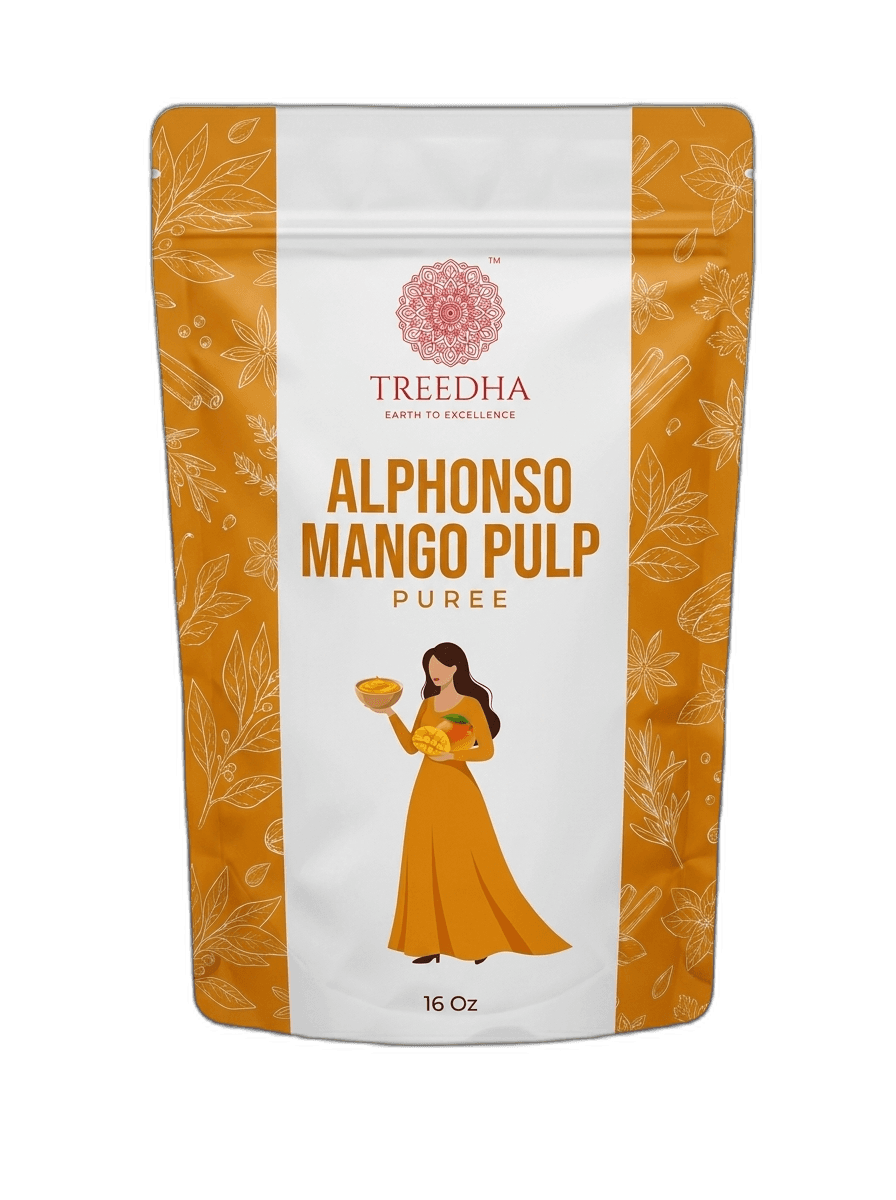
Pakowane w szczycie świeżości, wysyłane z pełnym pochodzeniem.
Pakowane w zamykane saszetki klasy spożywczej, które zatrzymują aromat i kolor — każda z oznaczeniem pochodzenia, klasy i profilu smakowego.
- Ratnagiri i Devgad, Maharasztra, Indie
- Oznaczone GI Alphonso (Hapus)
- Aseptyczny, bez konserwantów
- Gładki pulp o przedłużonej trwałości
- Bez sztucznych aromatów i barwników · badany laboratoryjnie
- 24 miesiące, temperatura otoczenia (nieotwarte)
Znane również jako · Hapus · Aamras · Mangue Alphonso · Mango Puree
Jak je stosować
Nakładany łyżką jako aamras z gorącymi puri
Miksowany do mango lassi, smoothie i koktajli mlecznych
Wkomponowany w mus, sernik i lody
Polewany na naleśniki, kulfi i gofry
Dodawany do koktajli, drinków bezalkoholowych i sorbetów
Alphonso Mango Pulp (Hapus Aam Ras) is a premium, smooth, shelf-stable fruit puree sourced from GI-tagged Alphonso mangoes in India. Aseptically processed without preservatives, it offers the distinctive sweet-rich flavour and deep golden-yellow colour highly prized by global food and beverage manufacturers.
Sourcing & Origin: Ratnagiri & Devgad Alphonso
Treedha sources its Alphonso Mango Pulp (Hapus Aam Ras) exclusively from the revered coastal lowland regions of Ratnagiri and Devgad in Maharashtra, India. These areas are globally recognised for cultivating the original GI-tagged Alphonso mango, which imparts an unparalleled flavour, aroma, and vibrant colour to the pulp. The distinct terroir of the Konkan region contributes to the mango's unique high Brix value and rich sweetness.
The specific origin is paramount for bulk buyers as it guarantees the authenticity and premium quality associated with true Alphonso. Sourcing directly from these regions ensures that the pulp embodies the characteristic floral notes and deep golden-yellow hue that global markets demand for high-end applications in beverages, dairy, and confectionery. Our commitment to single-origin sourcing provides full provenance and consistent quality year after year.
Export Grades & Specifications for Alphonso Mango Pulp
Alphonso Mango Pulp, also known as Hapus Aam Ras or Mangue Alphonso, is traded in bulk with precise specifications to meet the exacting standards of industrial buyers. Key parameters include Total Soluble Solids (°Brix), which typically ranges from 16–18° Brix (at 20°C), reflecting the mango's natural sweetness. Acidity, expressed as citric acid, is generally maintained between 0.5–0.8%, balancing the sweetness and contributing to the pulp's vibrant profile. The pH typically falls between 3.5–4.0, ensuring stability and shelf life.
Consistency is critical, measured by Bostwick at 8–12 cm/30 sec, indicating a smooth, uniform texture free from fibrous material. The pulp exhibits a characteristic bright golden-yellow or orange-yellow colour and a flavour and aroma true to ripe Alphonso mango, devoid of any off-notes. Treedha ensures strict adherence to these specifications, with a focus on purity, guaranteed by the absence of artificial flavours or colours and diligent lab-testing to confirm the absence of black or brown specks. Our processes yield a smooth, shelf-stable pulp with an impressive 24-month ambient shelf life when unopened.
| Specification | Range for Alphonso Mango Pulp |
|---|---|
| Total Soluble Solids (°Brix) | 16–18° Brix (at 20°C) |
| Acidity (% as Citric Acid) | 0.5–0.8% |
| pH (at 25°C) | 3.5–4.0 |
| Consistency (Bostwick @20°C) | 8–12 cm/30 sec |
| Appearance & Colour | Bright golden-yellow, smooth |
| Flavour & Aroma | Characteristic, sweet-rich |
| Black Specks / 10g | Nil |
| Brown Specks / 10g | NMT 10 |
Quality, Safety & Compliance: EU & US Standards
Compliance with stringent international food safety regulations is paramount for Alphonso Mango Pulp (Aamras) exported to the EU and US. Treedha guarantees that our pulp is Ethylene Oxide (ETO)-free; ETO is a Group 1 carcinogen strictly regulated in both markets, and its absence is verified through rigorous testing. We also ensure meticulous monitoring for aflatoxins and mycotoxins, adhering to the strict limits imposed by EU and FDA regulations to prevent contamination.
Pesticide Maximum Residue Limits (MRLs) are consistently met, with lab-testing confirming compliance with EU and US standards. For microbial safety, particularly for organic variants, Salmonella is absent per 25ml, indicating a zero-tolerance policy. Treedha also ensures the complete absence of Sudan Dyes (I, II, III, IV) and heavy metals such as cadmium, arsenic, and lead, which are strictly prohibited in food products due to their carcinogenic effects. Each shipment is accompanied by essential documentation, including a Certificate of Analysis (COA) confirming adherence to agreed specifications and a Phytosanitary Certificate where required, certifying freedom from pests and diseases, crucial for agricultural imports.
Global Demand & Target Markets for Alphonso Mango Pulp
The global demand for Alphonso Mango Pulp (Mangue Alphonso) is robust and expanding, driven by increasing consumer preference for natural fruit ingredients and exotic flavours in beverages, dairy, and confectionery. The United States leads as the largest import market for mango purees, while the Netherlands serves as a significant European hub for redistribution, with Germany, the UK, France, and Spain also being key importers. The Middle East, particularly the UAE, Saudi Arabia, and Kuwait, shows strong demand for Indian Alphonso pulp, consuming substantial annual volumes.
Beyond these established markets, Asia-Pacific countries like Uzbekistan and Malaysia are emerging as important destinations, diversifying their mango puree imports. Key export destinations for Indian Alphonso pulp in the coming years are projected to include Saudi Arabia, the USA, the UK, Germany, and Canada. This consistent demand is fuelled by the pulp's extensive use in juices, smoothies, yogurts, ice creams, bakery fillings, and even baby food, with the year-round availability of aseptically processed pulp from India further bolstering its appeal.
Logistics, HS Code & Packing
The appropriate Harmonized System (HS) code for Alphonso Mango Pulp in international trade is critical for customs clearance. While interpretations vary, commonly used HS codes include 2007.99 for mango puree/pulp, with more specific codes like 2007 91 00 (mango pulp) and 20079990 (frozen Alphonso mango pulp) also applicable depending on the specific product form and destination. For the EU, a broader code such as 20089948 may apply for prepared or preserved guavas, mangoes, and similar fruits in immediate packaging over 1kg. Buyers are advised to confirm the precise HS code with a local customs broker.
Treedha offers aseptic Alphonso Mango Pulp, which ensures a 24-month shelf life at ambient temperature when unopened. Our standard bulk packaging includes aseptic bags in drums, ideal for industrial scale usage, and smaller formats such as 3kg cans for varied operational needs. Our approach to Minimum Order Quantity (MOQ) is tailored to meet the specific needs of bulk importers and distributors, facilitating efficient trade. We operate on standard Incoterms, offering flexibility and clarity in shipping arrangements to global destinations.
- freightamigo.com — freightamigo.com
- botanikabharat.com — botanikabharat.com
- volza.com — volza.com
- mmafarms.com — mmafarms.com
- cbi.eu — cbi.eu
- brglobaltrade.com — brglobaltrade.com
Pytania
- Czy Hapus to to samo co mango Alphonso?
- Tak. Hapus to marathijska nazwa mango Alphonso. Oba terminy odnoszą się do tej samej chronionej GI odmiany uprawianej w pasie Konkanu w Maharasztrze.
- Czy pulp zawiera konserwanty lub dodany barwnik?
- Nie. Jest poddawany obróbce termicznej i zamykany aseptycznie w sterylnych puszkach, co naturalnie konserwuje owoc bez żadnych konserwantów, sztucznych aromatów ani barwników.
- Jak przechowywać go po otwarciu?
- Nieotwarte puszki zachowują trwałość do 24 miesięcy w temperaturze otoczenia. Po otwarciu przełóż do szczelnego pojemnika, schłodź i zużyj w ciągu kilku dni lub zamroź w porcjach.
- What is GI-tagged Alphonso Mango Pulp?
- GI-tagged Alphonso Mango Pulp originates from specific geographical regions in Maharashtra, India, like Ratnagiri and Devgad. The 'Geographical Indication' tag assures its authentic origin and adherence to superior quality, flavour, and aroma unique to this premium mango variety.
- Is Treedha's Alphonso Mango Pulp ETO-free and compliant with EU/US regulations?
- Yes, Treedha guarantees its Alphonso Mango Pulp is free from Ethylene Oxide (ETO). Our products are rigorously lab-tested and comply with stringent EU and US import regulations concerning ETO residues, aflatoxins, pesticide MRLs, Sudan dyes, and heavy metals.
- What are the typical specifications (Brix, acidity) for your bulk Alphonso Mango Pulp?
- Our Alphonso Mango Pulp typically features Total Soluble Solids (Brix) between 16–18° at 20°C and an acidity (as citric acid) ranging from 0.5–0.8%. The pH usually falls between 3.5–4.0, ensuring a balanced and authentic flavour profile.
- What packaging options are available for bulk orders of Alphonso Mango Pulp?
- For bulk orders, Treedha primarily offers aseptically processed Alphonso Mango Pulp in industrial packaging formats, including aseptic bags in drums. We also offer smaller options like 3kg cans, catering to diverse bulk buyer requirements.
- How does Treedha ensure traceability of its Alphonso Mango Pulp?
- Treedha maintains full provenance by sourcing Alphonso mangoes exclusively from GI-tagged farms in Ratnagiri and Devgad. Our robust internal systems track the product from farm to finished pulp, providing complete traceability for every bulk shipment.
- Which global markets are key for Alphonso Mango Pulp imports?
- The largest global importers include the United States, the Netherlands (as a European hub), Germany, the UK, France, Spain, and the Middle East (UAE, Saudi Arabia, Kuwait). Emerging markets in Asia-Pacific like Uzbekistan and Malaysia are also significant.