Tulsi Tea
Tulsi Chai
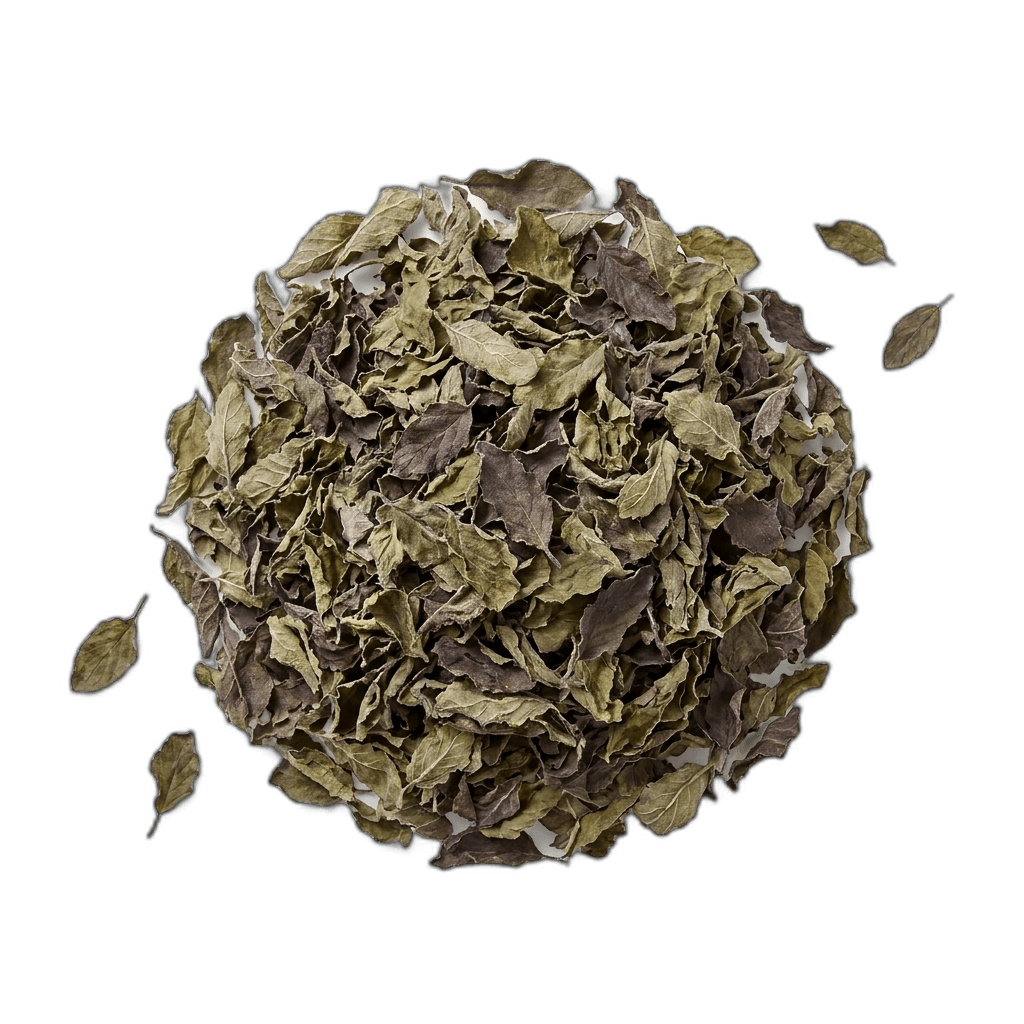
Uma infusão sem cafeína de manjericão sagrado Rama e Krishna, cultivado biologicamente na planície Indo-Gangética da Índia, onde o tulsi é venerado como a Rainha das Ervas há milénios. A folha inteira seca infusiona numa chávena clara e dourada, com um aroma quente de cravinho e menta e um final herbal limpo. Uma bebida adaptogénica do dia a dia — beba-a pura, adoce com mel ou combine com gengibre e erva-príncipe para um relaxamento serão reconfortante.
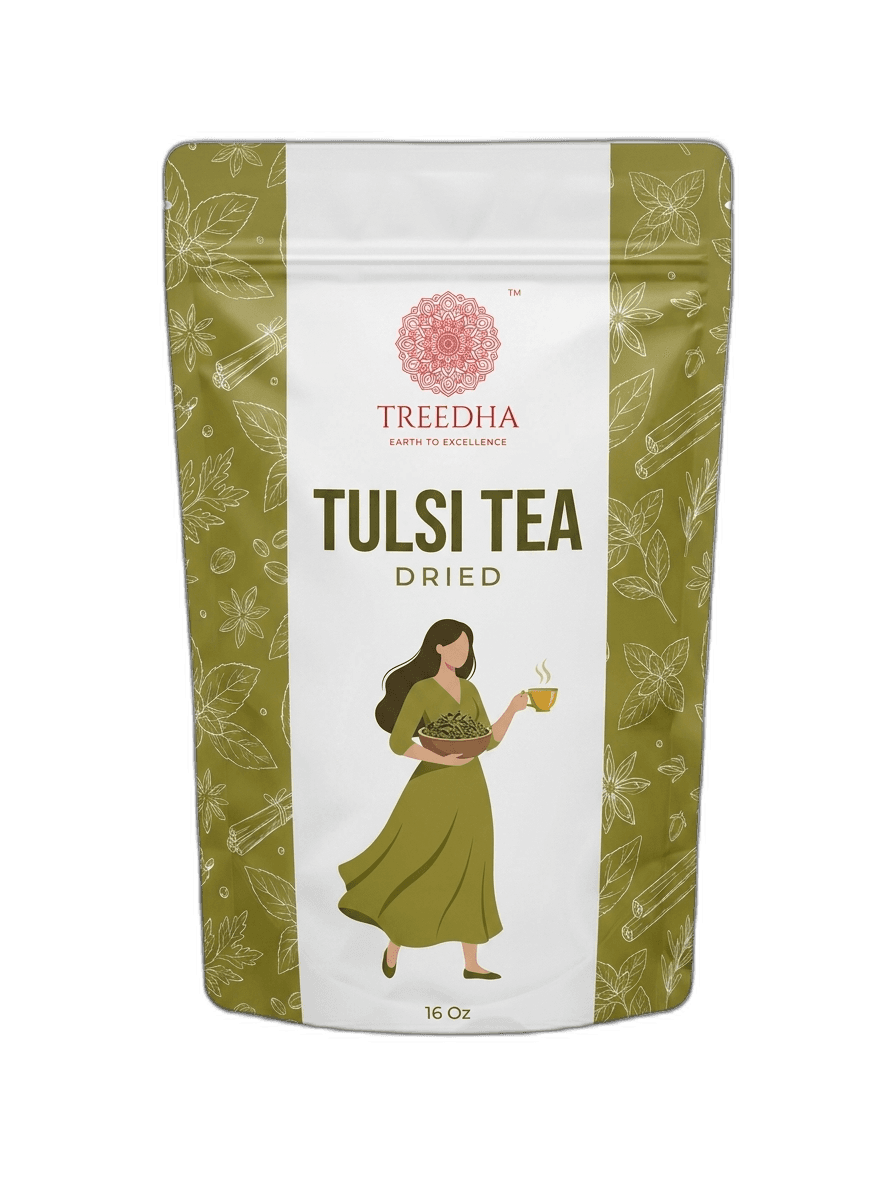
Selado no auge, expedido com proveniência.
Embalado em saquetas reutilizáveis, de qualidade alimentar, que preservam o aroma e a cor — cada uma identificada com a sua origem, grau e perfil de sabor.
- Índia - Planície Indo-Gangética
- Tulsi Rama e Krishna biológico de folha inteira
- Seco à sombra, cortado e peneirado
- Naturalmente sem cafeína
- Esterilizado a vapor, sem ETO, testado em laboratório
- 1-2 anos à temperatura ambiente, fechado
Também conhecido como · Holy Basil Tea · Sacred Basil Infusion · Tulasi · Ocimum tenuiflorum
Como utilizar
Uma infusão adaptogénica diária sem cafeína
Chá calmante para o serão com mel
Combinação com gengibre, erva-príncipe ou cardamomo
Chá de ervas gelado e infusões a frio
Inalação de vapor e bebidas de bem-estar
Tulsi Tea (Holy Basil Tea), also known as Sacred Basil Infusion or Tulasi (Ocimum tenuiflorum), is an aromatic, naturally caffeine-free herbal infusion from India, prized for its distinctive flavour and adaptogenic properties, increasingly sought by global importers for its wellness appeal.
Sourcing & Origin of Premium Tulsi Tea
Treedha's organic whole-leaf Tulsi, encompassing both Rama and Krishna varieties, is meticulously sourced from the fertile Indo-Gangetic Plain, specifically from regions within Uttar Pradesh and Madhya Pradesh, India. These areas, nestled at elevations of 100-300 metres, provide the ideal climatic conditions and rich alluvial soils for cultivating robust Holy Basil (Ocimum tenuiflorum) with its characteristic aroma and flavour profile. The indigenous origin in India is paramount for authentic Tulasi, ensuring genuine varietals and traditional cultivation practices.
Our harvest timing aligns with the peak maturity of the leaves, optimising the concentration of volatile oils and preserving the herb's natural vitality. This careful attention to origin-specific cultivation and harvesting ensures that the bulk Tulsi Chai we supply retains its superior quality, a critical factor for discerning importers and private-label buyers seeking consistent, high-standard Holy Basil Tea. The shade-drying and subsequent cut-and-sifted process further safeguards the leaf integrity and flavour.
Export Grades & Specifications for Holy Basil Tea
For bulk trade of organic whole-leaf Tulsi Tea (Holy Basil Tea), key specifications ensure consistent quality and meet importer expectations. Treedha supplies whole-leaf Rama & Krishna tulsi, shade-dried and then carefully cut and sifted to minimise dust and retain optimal leaf particle size for infusions. Critical parameters include volatile oil content, which dictates the aromatic potency; a high purity percentage, ensuring minimal foreign matter; and controlled moisture content to guarantee product stability and shelf life.
Our specifications also detail the natural, vibrant green to purplish-green colour indicative of freshness, and stringent microbial limits to ensure food safety. We adhere to these strict internal and international standards to provide a premium product for our global partners. Below is a general comparison of typical specifications for bulk Tulsi (Ocimum tenuiflorum) leaves, acknowledging that precise values can be customised to buyer requirements:
| Specification | Organic Whole-Leaf Rama & Krishna Tulsi (Cut & Sifted) |
|---|---|
| Purity | >99% |
| Moisture Content | <8-10% |
| Volatile Oil | 0.3% - 0.8% (typ. for dried basil varieties) |
| Granulation | Whole-leaf, cut & sifted (minimal fines) |
| Colour | Natural vibrant green (Rama) to purplish-green (Krishna) |
| Foreign Matter | <1% |
| Microbial Load | Free from pathogens (Salmonella, E. coli absent in 25g) |
Quality, Safety & Compliance: EU & US Standards
Import compliance for herbal infusions like Tulsi Tea (Holy Basil Tea) into the EU and US markets is rigorously enforced, with a primary focus on contaminant absence and comprehensive documentation. Treedha ensures that all our organic whole-leaf Tulasi is steam-sterilised and guaranteed Ethylene Oxide (ETO)-free. The EU maintains a strict zero-tolerance policy for ETO residues in food products, including herbs and spices, a standard to which Treedha fully adheres. While the US EPA has MRLs for ETO, the FDA often adopts a 'zero-tolerance' stance in practice.
We conduct thorough lab-testing to meet maximum residue limits (MRLs) for pesticides, heavy metals (e.g., lead, cadmium, arsenic, mercury), and mycotoxins, including aflatoxins. The EU sets strict limits, such as 5.0 µg/kg for Aflatoxin B1 and 10.0 µg/kg for total aflatoxins, while the US FDA has action levels of 20 µg/kg for total aflatoxins. Our processes also ensure the complete absence of pathogenic microorganisms like Salmonella, a critical requirement for both EU and US food safety regulations. Further, all products are screened to be free from illegal Sudan dyes.
Essential export documentation includes a Phytosanitary Certificate from India's NPPO, a detailed Certificate of Analysis (COA) from an accredited laboratory, and valid organic certification (NPOP compliant for India; specific to USDA NOP for US imports, as the recognition agreement ended in 2021, requiring certification by a USDA-accredited agent; and EU Organic recognition where applicable). These measures provide our buyers with absolute assurance of product integrity and compliance.
Global Demand & Target Markets for Tulasi
The global demand for Tulsi Tea (Holy Basil Tea) is experiencing robust growth, primarily driven by a worldwide surge in health and wellness consciousness. Consumers are increasingly seeking natural, organic, and functional beverages that offer perceived health benefits, such as stress relief, immune support, and adaptogenic properties. Tulasi (Ocimum tenuiflorum) has a long-standing reputation in Ayurvedic traditions as an adaptogen, which significantly contributes to its appeal in markets focused on natural health.
The largest importers of Tulsi and related herbal products from India include the United States and the United Arab Emirates, followed by significant markets in the United Kingdom, Germany, and Australia. North America (USA, Canada), Europe (Germany, UK, France), the Middle East (UAE, Saudi Arabia), and Southeast Asia are prominent export destinations. The preference for certified organic products, free from synthetic additives, further fuels the demand for organic Tulsi Chai, making it a premium segment within the functional beverage market. The distinctive herbal, slightly spicy, and mildly sweet flavour profile of Holy Basil Tea also enhances its desirability as an ingredient for various tea blends and ready-to-drink functional beverages.
Logistics, HS Code & Packing for Bulk Tulsi Tea
Efficient logistics and clear documentation are key for bulk exports of Tulsi Tea (Holy Basil Tea). For international trade, the primary Harmonized System (HS) codes for organic whole-leaf Tulsi Tea typically fall under 0902 (Tea, whether or not flavoured), particularly subheadings like 09021020 or 09024090, which address herbal spice teas. Alternatively, for dried Holy Basil leaves intended for broader herbal applications, 1211 (Plants and parts of plants... used primarily in perfumery, in pharmacy or for insecticidal, fungicidal or similar purposes) and its subheadings such as 1211.90.9240 or 12119099 are frequently applied. Treedha works closely with buyers to confirm the most appropriate HS classification for their specific import regulations.
Treedha offers flexible packing solutions for bulk shipments to meet diverse importer needs. Our standard pack formats include multi-wall paper bags and drums, designed to protect the integrity and freshness of the organic whole-leaf Tulasi during transit and storage. Specific net weights, such as 100g and 250g, are available within these bulk formats, accommodating private-label requirements. While specific minimum order quantities (MOQ) are discussed on a per-enquiry basis to align with buyer volume requirements and logistical efficiencies, Treedha is committed to supporting our partners’ supply needs. We operate on standard Incoterms, typically FOB or CIF, and detailed payment terms are agreed upon during the negotiation phase. The shade-dried and steam-sterilised process ensures a shelf life of 1-2 years under ambient, sealed conditions, providing ample time for distribution.
- marketintelo.com — marketintelo.com
- volza.com — volza.com
- zauba.com — zauba.com
- jimmyandsons.in — jimmyandsons.in
- virtuemarketresearch.com — virtuemarketresearch.com
- silverpottea.com — silverpottea.com
Questões
- O tulsi é o mesmo que manjericão sagrado?
- Sim. Tulsi é o nome indiano do manjericão sagrado (Ocimum tenuiflorum), uma erva aromática sagrada distinta do manjericão doce usado na cozinha. A nossa mistura usa os morfótipos Rama e Krishna tradicionalmente cultivados para infusões.
- O chá de tulsi contém cafeína?
- Não. O tulsi é uma infusão herbal sem cafeína, o que o torna bem adequado para beber ao serão e para qualquer pessoa que queira reduzir o consumo de cafeína.
- Como preparo o chá de tulsi?
- Faça a infusão de uma colher de chá de folha em água acabada de ferver durante cinco a sete minutos, depois coe. Aguenta bem uma segunda infusão e combina-se naturalmente com mel, gengibre ou limão.
- What varieties of Tulsi (Holy Basil) does Treedha supply?
- Treedha supplies premium organic whole-leaf Rama and Krishna Tulsi (Ocimum tenuiflorum) varieties, known for their distinct flavour profiles and aromatic qualities, sourced directly from the Indo-Gangetic Plain of India.
- How does Treedha ensure the safety and compliance of its Tulsi Tea for EU/US markets?
- Our Tulsi Tea is steam-sterilised and guaranteed ETO-free, lab-tested to ensure compliance with strict EU and US MRLs for pesticides, heavy metals, and mycotoxins (including aflatoxins), and confirmed free from pathogens like Salmonella and illegal Sudan dyes, as verified by accredited third-party labs.
- What quality specifications can I expect for bulk Tulsi Tea from Treedha?
- We ensure high purity (>99%), low moisture content (<8-10%), and an optimal volatile oil percentage, along with a consistent whole-leaf, cut-and-sifted granulation. Each batch includes a Certificate of Analysis (COA) detailing these specifications.
- What are the common HS Codes for importing Tulsi Tea (Holy Basil Tea)?
- Tulsi Tea typically falls under HS Code 0902 (Tea, whether or not flavoured), with specific subheadings for herbal teas. For dried Holy Basil leaves, HS Code 1211 (Plants and parts of plants used primarily in perfumery or pharmacy) may also apply, depending on the specific product and destination market.
- What documentation does Treedha provide for bulk Tulasi exports?
- We provide a comprehensive set of documents including a Commercial Invoice, Packing List, Bill of Lading/Airway Bill, Certificate of Origin, Phytosanitary Certificate, and a Certificate of Analysis (COA) from an accredited lab, alongside valid organic certification specific to the importing country's requirements.
- What is the shelf life of Treedha's organic whole-leaf Tulsi Tea?
- Our organic whole-leaf Tulsi Tea, shade-dried and steam-sterilised, has a shelf life of 1-2 years when stored under ambient, sealed conditions, ensuring long-term freshness and quality for our bulk buyers.