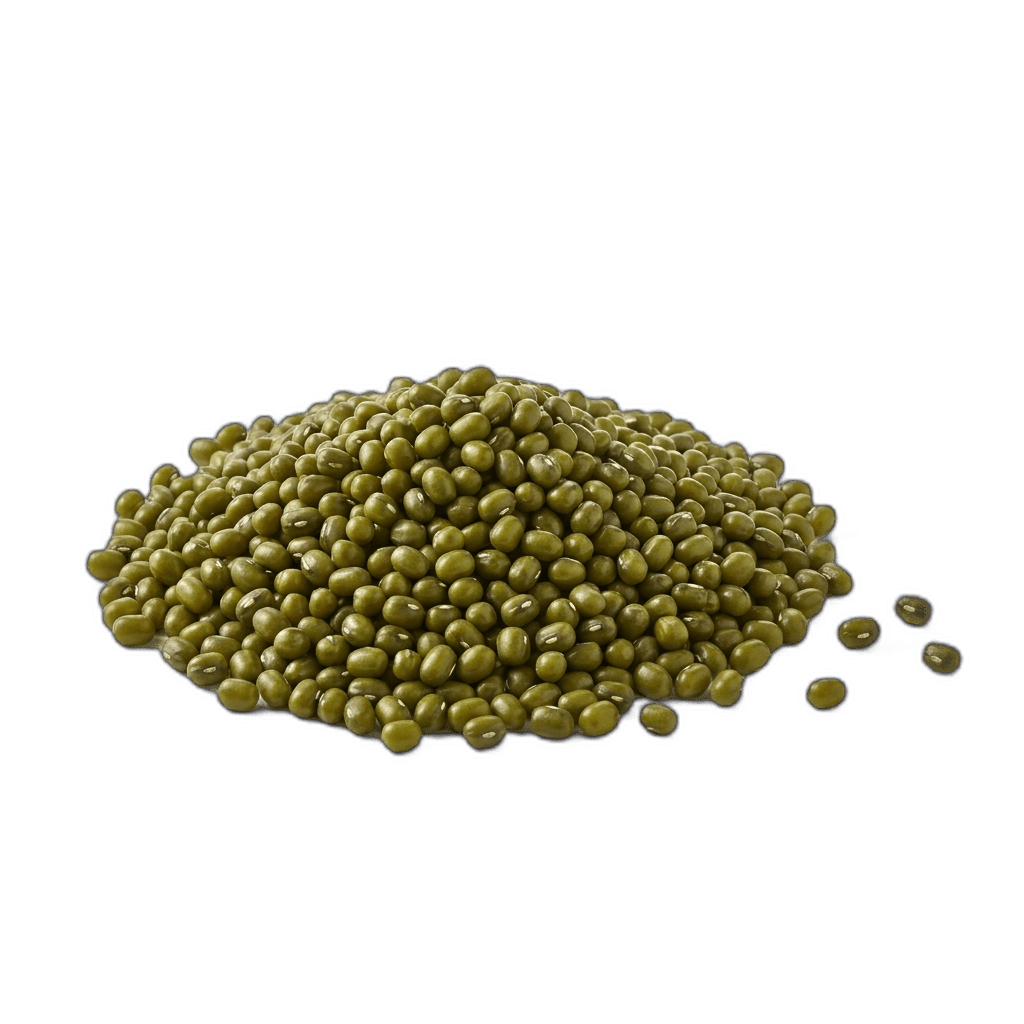
Whole Mung Beans
Sabut Moong
Feijões inteiros pequenos, verde-azeitona, cultivados na principal região de moong da Índia, onde o Rajastão lidera as colheitas de kharif e de verão, a par de Madhya Pradesh e Maharashtra. Naturalmente rápidos de demolhar e de germinar, cozinham até uma textura macia e amendoada. Coza-os inteiros em dal e khichdi, faça rebentos para saladas e salteados crocantes, ou moa-os em massas para fritos e panquecas.
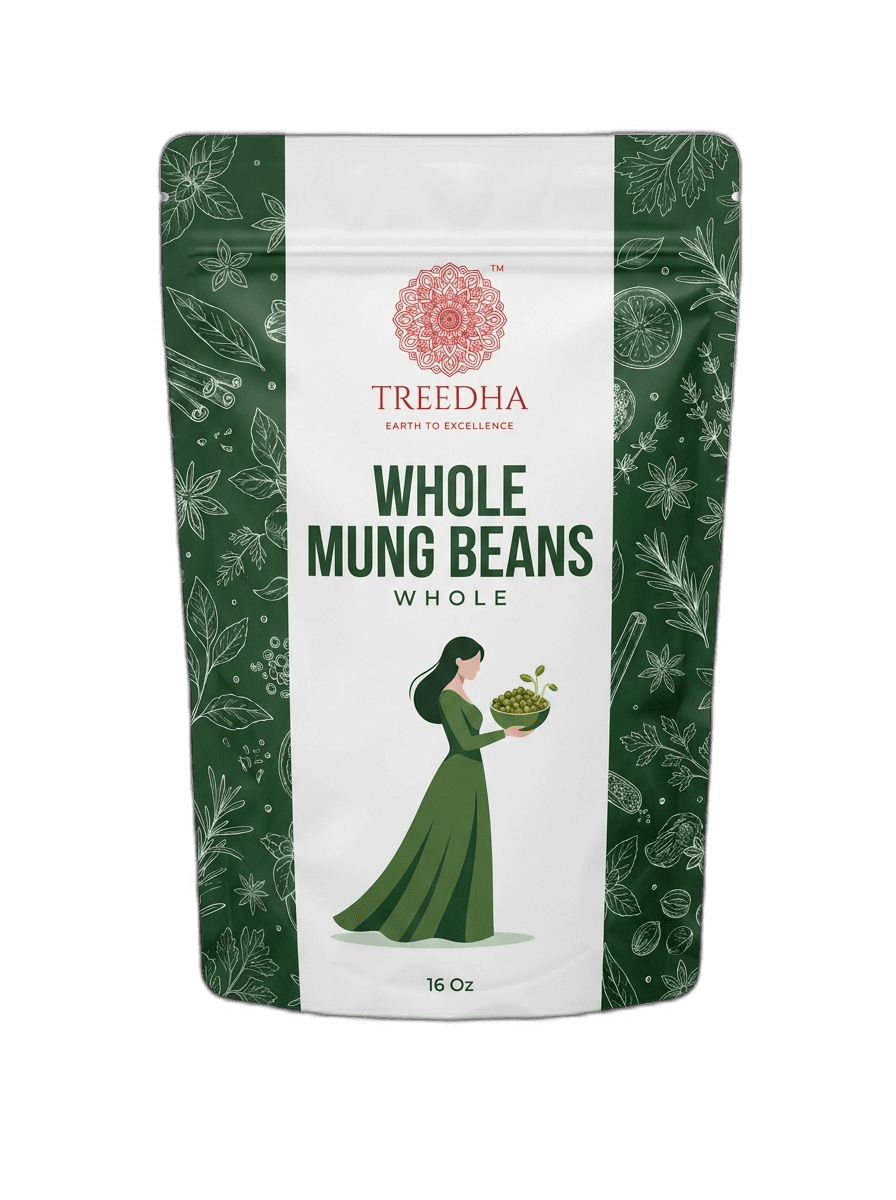
Selado no auge, expedido com proveniência.
Embalado em saquetas reutilizáveis, de qualidade alimentar, que preservam o aroma e a cor — cada uma identificada com a sua origem, grau e perfil de sabor.
- Índia
- Rajastão, Madhya Pradesh e Maharashtra
- Feijão-mungo verde inteiro, classificado por sortex
- Feijões secos inteiros
- Limpo à máquina · testado em laboratório a resíduos de pesticidas
- 24+ meses, à temperatura ambiente
Também conhecido como · Green Gram · Mung Sabut · Moong Dal Sabut · Vigna radiata
Como utilizar
Cozinhados inteiros em dal e khichdi
Germinados para saladas, chaat e salteados
Moídos em massas para cheela e fritos
Cozinhados em lume brando em sopas e guisados reconfortantes
Cozidos em taças vegetais ricas em proteína
Whole Mung Beans (Sabut Moong) is a versatile, high-protein legume, scientifically known as Vigna radiata. Sourced from key Indian agricultural regions, these green grams are valued globally for their nutritional profile and adaptability across diverse cuisines and food processing applications, particularly in plant-based diets.
Sourcing & Origin: India's Premier Mung Bean Regions
Treedha sources its Whole Mung Beans (Sabut Moong) from the fertile fields of Rajasthan, Madhya Pradesh, and Maharashtra, India. These regions are renowned for cultivating high-quality Green Gram, benefiting from optimal climatic conditions that contribute to the beans' desirable size, colour, and robust nutritional content. This geographical advantage ensures a consistent supply of premium raw material for our bulk clients.
The specific origin is crucial for importers, as it guarantees authenticity and adherence to traditional farming practices, which are often sought after in the global pulse market. Our direct engagement with these regions allows for stringent quality control from the earliest stages of cultivation, leading to a superior export-grade product.
Harvested and field-dried, our Vigna radiata undergoes initial mechanical cleaning at origin, preserving its natural integrity before further processing. This focus on provenance ensures that the distinct characteristics of Indian-grown Mung Sabut are maintained.
Export Grades & Specifications for Whole Mung Beans
Treedha supplies export-grade Whole Mung Beans (Green Gram) that are machine-cleaned and sortex-graded, meeting international buyer specifications. Our standard offers a high degree of purity and consistent quality, crucial for various industrial applications and consumer packaging.
Our specifications for Moong Dal Sabut typically include a minimum purity of 99.0%, with foreign material capped at 0.5% (max soil/stone content of 0.1%). Moisture content is maintained at a maximum of 12%, ensuring stability and extended shelf life. We also limit broken grains to 0.5% and insect damage to 0.2%, guaranteeing a clean and bright appearance for the beans.
For specific requirements, particularly for sprouting or premium applications, Treedha can provide Green Gram with enhanced specifications such as 99.7% purity and precise size grading, where 98% of beans fall within a 2mm range. Buyers can rely on our adherence to these detailed parameters for consistent bulk orders.
Quality, Safety & Compliance: EU & US Standards
Treedha is committed to stringent quality, safety, and compliance protocols for all Whole Mung Beans (Vigna radiata) exports to global markets, including the EU and US. Our products are guaranteed ethylene-oxide-free (ETO-free), a critical contaminant often scrutinised in food imports.
For the European Union, our Sabut Moong adheres to strict limits for aflatoxins, with total aflatoxins not exceeding 4 parts per billion (ppb), as per Commission Regulation (EC) No 1881/2006. We also comply with EU Maximum Residue Levels (MRLs) for pesticides, with a general default limit of 0.01 mg/kg for unlisted pesticides, and specific MRLs for those listed in the EU Pesticides Database. All shipments are accompanied by a mandatory Phytosanitary Certificate from India, a Certificate of Origin, and detailed Commercial Invoices and Packing Lists.
For the United States market, our Green Gram meets the total aflatoxin limit of 20 ppb for human consumption. While specific MRLs for all pesticides in mung beans are extensive, Treedha ensures that our products comply with US FDA standards. Comprehensive Certificates of Analysis (COA) are provided for each batch, verifying compliance with both destination-specific regulatory limits and agreed-upon product specifications.
Global Demand & Target Markets for Whole Mung Beans
The global demand for Whole Mung Beans (Green Gram) is robust and growing, driven primarily by the rising popularity of plant-based diets and increasing health and wellness awareness. Mung beans are prized for their high protein content (23–25%), fiber, antioxidants, and essential vitamins and minerals, making them a staple in healthy food products worldwide. This dietary shift positions Vigna radiata as a key ingredient for food manufacturers and distributors.
Major importing countries for Indian Mung Sabut include the USA (24%), Nepal (18%), the UK (18%), Canada (10%), Bangladesh (6%), Qatar (4%), the Netherlands (4%), Australia (2%), the UAE (2%), and Malaysia (2%), based on 2023-24 reports. China and Vietnam are also significant global importers of Urd/Mung/Black or Green Gram Beans Dried and Shelled. These diverse destinations underscore the broad appeal and versatility of this legume.
The expansion of food processing applications also fuels demand, with Moong Dal Sabut increasingly used in noodles, sprouts, snacks, confectionery, bakery items, and as a base for plant-based egg replacers and meat substitutes. The globalization of ethnic cuisines further broadens its market reach beyond traditional uses, establishing it as a dynamic commodity in international trade.
Logistics, HS Code & Packing for International Bulk Orders
For the international trade of Whole Mung Beans (Vigna radiata), the Harmonized System (HS) code 07133100 is commonly used, specifically identifying 'Beans of species Vigna radiata (L.) Wilczek (Mung beans)'. This code ensures clarity and efficiency in customs clearance for our bulk shipments.
Treedha offers flexible packaging solutions for our Green Gram, including bulk options suitable for various industrial and distribution needs. While specific pack sizes are discussed with each client, our standard offerings include various polypropylene bag sizes (e.g., 15kg, 25kg, 50kg) designed for secure transit and extended shelf life. All packaging ensures product integrity during international shipping.
Our minimum order quantity (MOQ) approach is designed to accommodate the needs of wholesale importers and distributors, with details provided upon inquiry. We operate on common Incoterms, facilitating smooth transactions from our port of loading in India. With a demonstrated shelf life of 24+ months under ambient storage, our Sabut Moong assures long-term viability for bulk purchasers.
- volza.com — volza.com
- tridge.com — tridge.com
- dakxinpath.com — dakxinpath.com
- zauba.com — zauba.com
- expertmarketresearch.com — expertmarketresearch.com
- oec.world — oec.world
Questões
- É o sabut moong o mesmo que feijão-mungo inteiro?
- Sim. O sabut moong, também chamado feijão-mungo verde, é o feijão-mungo inteiro, não partido, com a sua pele verde intacta, o mesmo feijão que mais tarde é partido e descascado para fazer moong dal.
- Os feijões-mungo inteiros precisam de demolha?
- Algumas horas de demolha aceleram a cozedura e melhoram a digestibilidade, embora também cozam a partir de secos com um pouco mais de tempo. Para germinar, demolhe de um dia para o outro, depois escorra e enxague diariamente.
- São bons para germinar?
- Sim. Os feijões-mungo inteiros são uma das leguminosas mais fáceis de germinar, produzindo rebentos crocantes e doces em dois a três dias à temperatura ambiente.
- What is the primary origin of Treedha's Whole Mung Beans (Sabut Moong)?
- Treedha's Whole Mung Beans (Sabut Moong) are primarily sourced from the key agricultural regions of Rajasthan, Madhya Pradesh, and Maharashtra in India, known for producing high-quality Green Gram.
- What are the key quality specifications for Treedha's export-grade Green Gram?
- Our export-grade Green Gram (Vigna radiata) maintains a minimum purity of 99.0%, a maximum moisture content of 12%, and very low foreign material (max 0.5%) and broken grains (max 0.5%), ensured by machine cleaning and sortex grading.
- How does Treedha ensure compliance with EU and US food safety standards for Mung Sabut?
- Treedha ensures compliance by providing ETO-free, lab-tested Mung Sabut that meets strict aflatoxin limits (e.g., 4 ppb for EU, 20 ppb for US) and pesticide MRLs. All shipments include a Phytosanitary Certificate and Certificate of Analysis (COA).
- What HS Code is typically used for exporting Whole Mung Beans (Moong Dal Sabut) from India?
- The primary Harmonized System (HS) code commonly used for the export of Whole Mung Beans (Moong Dal Sabut or Vigna radiata) from India is 07133100.
- Which global markets are the largest importers of Indian Green Gram?
- The largest importers of Indian Green Gram include the USA, Nepal, the UK, Canada, Bangladesh, Qatar, the Netherlands, Australia, the UAE, Malaysia, China, and Vietnam, reflecting broad global demand.
- Does Treedha offer private labelling services for bulk Whole Mung Beans?
- Yes, Treedha provides private labelling services for bulk Whole Mung Beans (Green Gram), allowing our clients to market the product under their own brand specifications.