Yellow Split Mung Dal
Dhuli Moong Dal
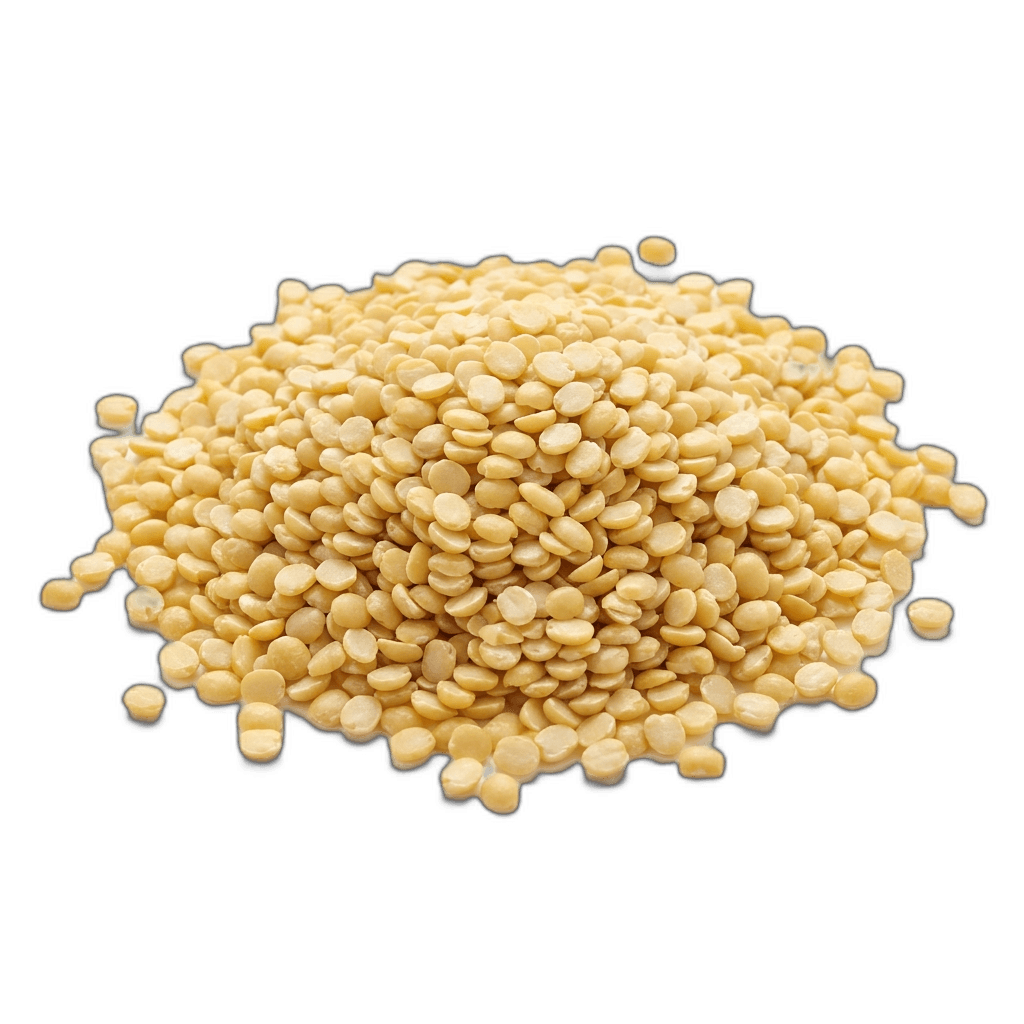
Hindistan'ın başlıca moong kuşağından gelen, içindeki yumuşak sarı özü ortaya çıkarmak için bölünüp kabuğu soyulmuş bütün maş fasulyeleri. Başlıca Rajasthan ve Madhya Pradesh'ten temin edilen bu yıkanmış dal, hızla pişerek pürüzsüz, doğal olarak tatlı bir lapaya dönüşür ve sindirimi son derece kolay olmasıyla ünlüdür. Günlük moong dal'ın, yatıştırıcı kitchari'nin ve Ayurvedik arınma diyetlerinin temeli olan bu dal, tuzlu hamurları ve helvayı da aynı şekilde yükseltir.
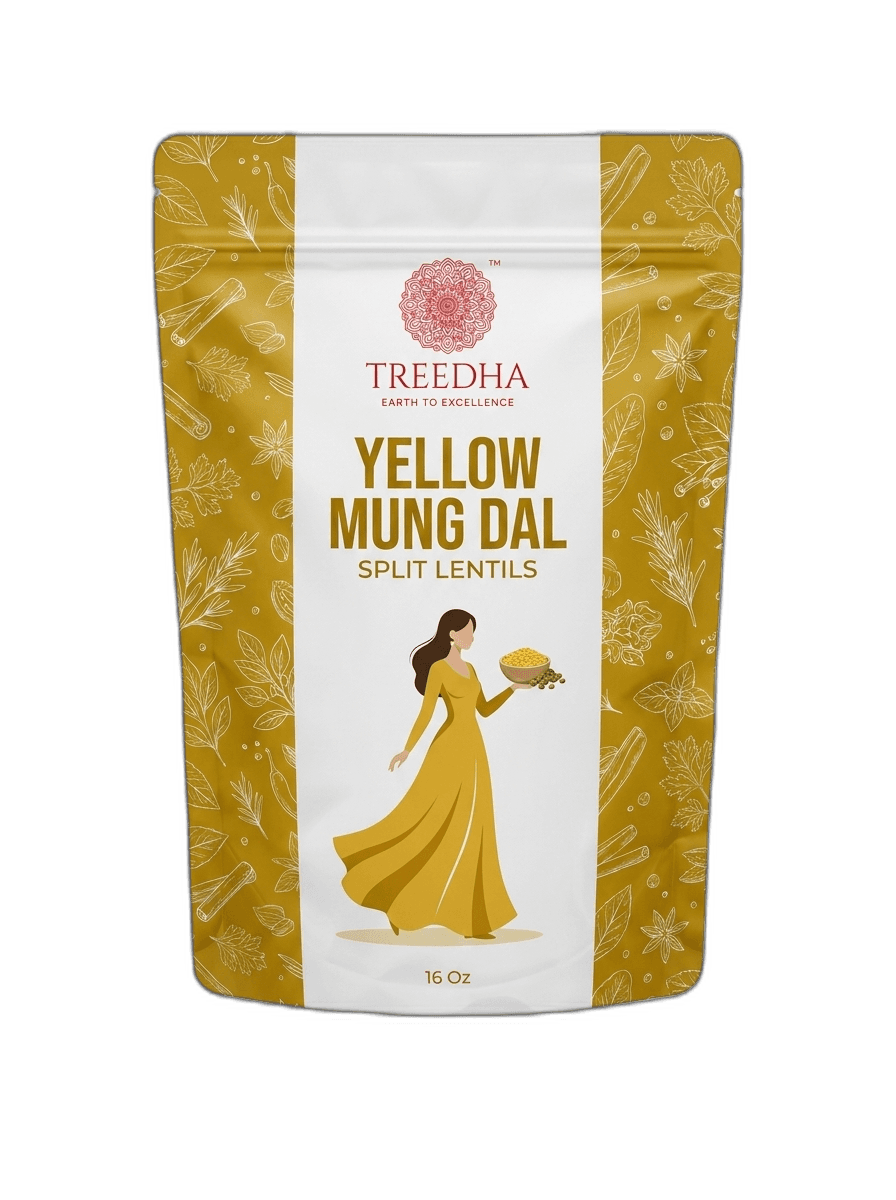
En taze haliyle mühürlenir, menşei ile gönderilir.
Aromayı ve rengi koruyan, yeniden kapatılabilir, gıdaya uygun poşetlerde paketlenir — her biri menşei, kalitesi ve tat profiliyle etiketlenir.
- Hindistan
- Rajasthan ve Madhya Pradesh
- Yıkanmış bölünmüş maş, sortex ile derecelendirilmiş
- Kabuğu soyulmuş, bölünmüş (dhuli) kuru mercimek
- Makineyle temizlenmiş · laboratuvarda test edilmiş
- 12+ ay, oda sıcaklığında
Diğer adıyla · Washed Split Mung · Moong Dal · Yellow Mung Dal · Skinned Split Green Gram
Nasıl kullanılır
Günlük sarı moong dal olarak pişirilir
Arınma diyetleri için pirinçle birlikte kitchari'ye kaynatılır
Cheela ve dosa için hamurlara öğütülür
Moong dal helvasına ve tatlılara katılır
Pürüzsüz, kolay sindirilen çorbalara karıştırılır
Yellow Split Mung Dal (Dhuli Moong Dal) is a dehusked and split pulse, celebrated for its digestibility and high protein content. Treedha offers export-grade, sortex-graded dal, ideal for global importers seeking reliable quality and full compliance with international food safety standards.
Sourcing & Origin
Treedha's Yellow Split Mung Dal, known as Dhuli Moong Dal or Washed Split Mung, originates from the prime pulse-growing regions of Rajasthan and Madhya Pradesh, India. These states are renowned for their fertile lands and ideal climatic conditions, which contribute to the superior quality and characteristic flavour profile of the Vigna radiata crop.
Our commitment to single-origin sourcing ensures traceability and consistent quality, vital for bulk buyers. The dal is harvested during its peak season, allowing for optimal nutritional value and processing characteristics, which translates to a more uniform end product for our international partners.
Export Grades & Specifications
Our Yellow Split Mung Dal is offered as export-grade washed split mung, which is polished and sortex-graded to meet stringent international standards. Key specifications include a bright golden yellow colour, essential for buyer acceptance, and a moisture content typically kept below 14% for extended shelf life and stability. Purity is maintained at ≥ 99%, with foreign matter limited to ≤ 0.5%.
We specify granulation, with options ranging from 2-4 mm diameter, and ensure minimal broken grains (≤ 3%) and damaged/discoloured grains (≤ 1%). High protein content, typically ≥ 24%, underscores its nutritional value. The processing involves rigorous machine cleaning, gravity separation, polishing, and Sortex optical sorting, guaranteeing uniformity and the absence of husks (≤ 2% Max) and other impurities.
| Specification | Standard |
|---|---|
| Appearance | Flat, smooth, split |
| Colour | Bright Golden Yellow |
| Moisture Content | ≤ 14% Max |
| Purity | ≥ 99% |
| Foreign Matter | ≤ 0.5% |
| Broken Grains | ≤ 3% |
| Damaged/Discoloured | ≤ 1% |
| Protein Content | ≥ 24% |
| Husk | ≤ 2% Max |
Quality, Safety & Compliance
Treedha prioritises food safety and compliance, ensuring our Yellow Split Mung Dal (Skinned Split Green Gram) meets rigorous international import regulations. Our product is steam-sterilised and guaranteed ethylene-oxide-free, addressing a critical concern frequently flagged by the EU's Rapid Alert System for Food and Feed (RASFF).
Lab-testing confirms compliance with EU and US limits for aflatoxins (typically ≤ 10 ppb), pesticide Maximum Residue Limits (MRLs), and heavy metals. We also ensure absence of Sudan dyes and control microbial loads, including Salmonella, as per international food safety standards. Each consignment is accompanied by a Phytosanitary Certificate from India's Plant Quarantine and Inspection Services, confirming it is free from pests and diseases. A third-party Certificate of Analysis (COA), from agencies like SGS or Intertek, is provided to verify product specifications at destination ports, alongside APEDA registration and an FSSAI license.
Global Demand & Target Markets
Global demand for Yellow Split Mung Dal (Moong Dal) is robust, driven by its high protein density, digestibility, and culinary versatility. The United States, Singapore, and Canada are prominent importing countries, collectively accounting for 50% of total Yellow Dal imports. The US alone leads with 26% of shipments, followed by Singapore at 14%, reflecting a consistent demand for this staple.
Beyond these, the Gulf Cooperation Council (GCC) and South Asia show strong institutional food service demand. Its perceived health benefits—such as cholesterol management, ease of digestion, and blood pressure regulation—also contribute to its increasing popularity among health-conscious consumers and food manufacturers worldwide.
Logistics, HS Code & Packing
The primary Harmonized System (HS) code for Yellow Split Mung Dal, specifically Vigna radiata, is 0713.31. For exports from India, the specific 8-digit HS code often used is 07133110. This code ensures accurate customs classification and smooth international trade.
Our Yellow Split Mung Dal is available in various bulk packing formats to suit importer requirements, including industry-standard PP bags for robust transit. While we offer common pack sizes like 500g, 1kg, and 2kg, our focus for B2B export is on larger wholesale quantities. Minimum Order Quantity (MOQ) is approached flexibly based on destination and order regularity, discussed directly with our sales team. We operate under standard Incoterms to facilitate clear responsibilities. With recommended ambient storage, the product maintains a shelf life of 12+ months.
- duqus.com — duqus.com
- freightamigo.com — freightamigo.com
- customsmobile.com — customsmobile.com
- credlix.com — credlix.com
- zauba.com — zauba.com
- volza.com — volza.com
Sorular
- Dhuli moong dal ile sarı bölünmüş maş dal aynı şey mi?
- Evet. Dhuli moong dal, bölünmüş ve yeşil kabuğu yıkanarak ayrılmış bütün yeşil maştır (dhuli, yıkanmış anlamına gelir) ve geriye moong dal olarak da bilinen altın sarısı bölünmüş mercimeği bırakır.
- Moong dal neden kolay sindirilir kabul edilir?
- Fasulyenin bölünüp kabuğunun soyulması lifli kabuğun çoğunu uzaklaştırır, böylece hızla pişerek yumuşak bir lapaya dönüşür ve mideyi hafif tutar. Kitchari ve nekahet dönemi yemekleri için klasik tercihtir.
- Sarı moong dal'ın ıslatılması gerekir mi?
- Islatma gerekmez; yaklaşık 20-25 dakikada pişer. Kısa bir 15 dakikalık ıslatma süreyi daha da kısaltır ve daha kremamsı bir doku verir.
- What is Yellow Split Mung Dal?
- Yellow Split Mung Dal, also known as Dhuli Moong Dal or Washed Split Mung, is a legume derived from green gram. The outer husk is removed, and the lentil is split, resulting in a bright yellow, highly digestible pulse widely used in global cuisine.
- Where does Treedha source its Yellow Split Mung Dal from?
- Treedha sources its premium Yellow Split Mung Dal from the fertile agricultural regions of Rajasthan and Madhya Pradesh in India, renowned for producing high-quality pulses.
- What quality specifications can I expect for bulk orders?
- Our Yellow Split Mung Dal is export-grade, machine-cleaned, polished, and sortex-graded. Key specifications include a bright golden yellow colour, ≤ 14% moisture content, ≥ 99% purity, and minimal foreign matter (≤ 0.5%). A detailed Certificate of Analysis (COA) is provided for each consignment.
- How does Treedha ensure compliance with international food safety standards?
- We ensure compliance through steam sterilisation, guaranteeing the product is ethylene-oxide-free, and conduct lab-testing for aflatoxins (≤ 10 ppb), MRLs, and heavy metals as per EU and US regulations. A Phytosanitary Certificate and third-party COA are provided with every shipment.
- What are the common packaging options and HS code for export?
- Our Yellow Split Mung Dal is typically supplied in bulk quantities in robust PP bags. The primary Harmonized System (HS) code for international trade is 0713.31, with 07133110 commonly used for exports from India.
- Which countries are the main importers of Yellow Split Mung Dal?
- The largest importing countries for Yellow Split Mung Dal include the United States, Singapore, and Canada, which collectively account for a significant portion of global shipments, along with growing demand from the GCC and China.