

Alphonso Mango Pulp
Aam Ras
Pulpa aterciopelada elaborada con Alphonso (Hapus) GI plenamente maduro de la costa del Konkan, de Ratnagiri y Devgad, y Kesar dorado de la región de Gir, en Gujarat. La fruta se lava, se tritura, se trata suavemente con calor y se sella en latas para conservar el sabor fragante y meloso de plena temporada. Viértela en lassi y aamras, incorpórala a helados y mousse, o úsala en pasteles y tartas de queso durante todo el año.
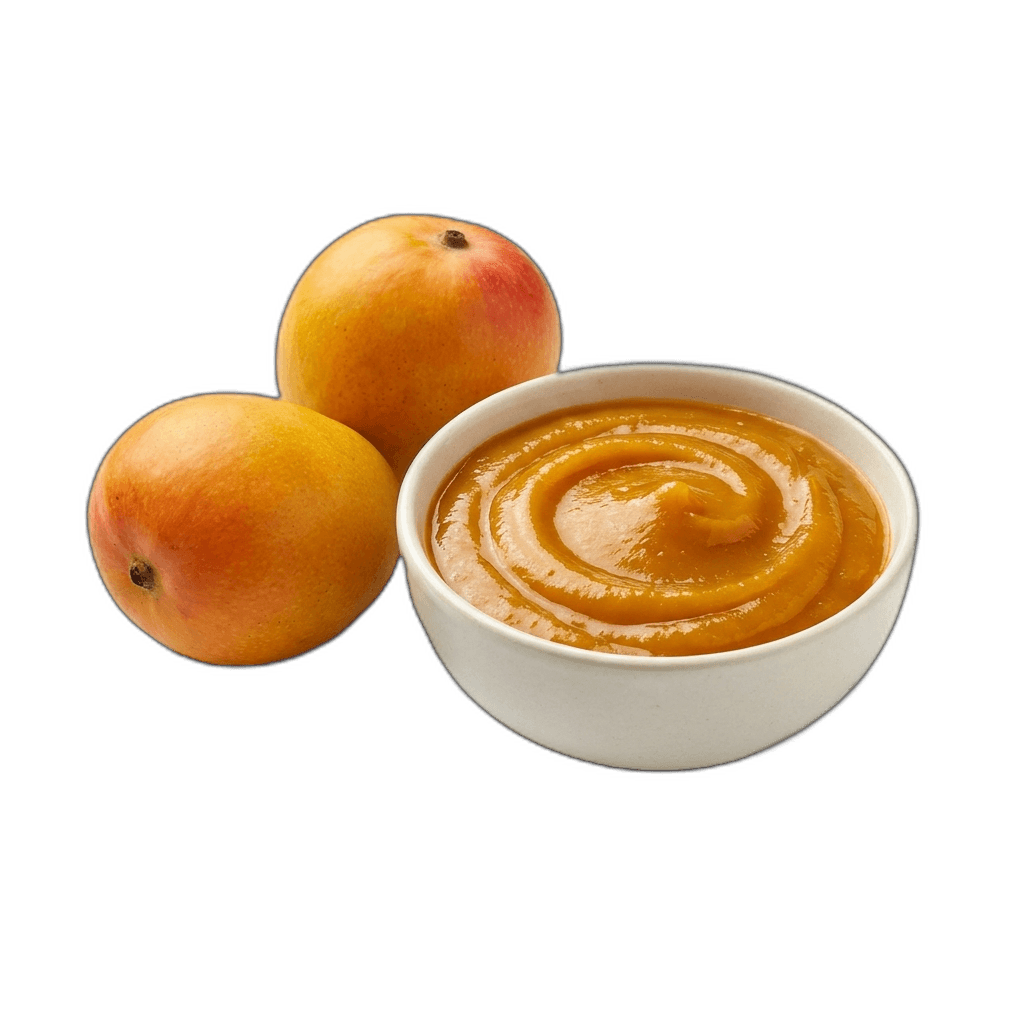
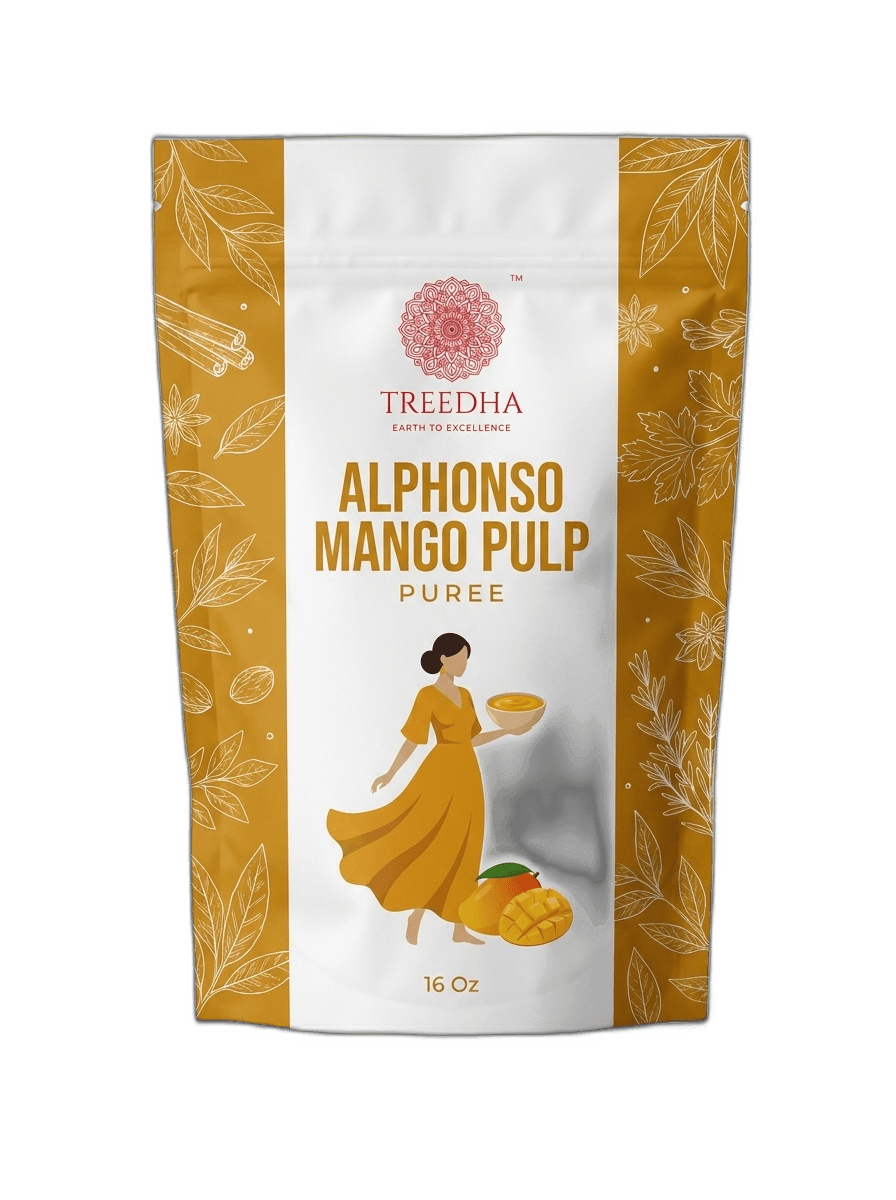
Envasado en su punto óptimo, enviado con su procedencia.
Envasado en bolsas resellables de grado alimentario que conservan el aroma y el color, cada una etiquetada con su origen, grado y perfil de sabor.
- India
- Ratnagiri y Devgad (Alphonso GI); Gir (Kesar)
- Pulpa monovarietal de Alphonso o Kesar
- Procesada térmicamente, sellada en lata
- Natural o ligeramente endulzada · sin color ni aroma artificiales
- 18-24 meses, a temperatura ambiente (sin abrir)
También conocido como · Hapus Mango Pulp · Kesar Mango Pulp · Mango Puree · Pulpe de Mangue
Cómo utilizarlo
Vertida en lassi de mango y aamras
Incorporada a helado, kulfi y mousse
Horneada en pasteles de mango y tartas de queso
Batida en smoothies y batidos
Servida sobre postres y boles de desayuno
Alphonso Mango Pulp (Aam Ras) is a thermally processed, can-sealed puree of ripe Alphonso or Kesar mangoes, predominantly sourced from India's Ratnagiri, Devgad, and Gir regions. It is valued in bulk trade for its distinctive sweet flavour, vibrant colour, and consistent quality, serving diverse food and beverage applications globally.
Sourcing & Origin
Treedha's Alphonso Mango Pulp, also known as Hapus Mango Pulp or Aam Ras, originates from the prime mango-growing regions of India: Ratnagiri and Devgad in Maharashtra, and Gir in Gujarat. These areas are globally renowned for cultivating the Alphonso and Kesar mango varieties, which are prized for their exceptional sweetness, vibrant colour, and distinct aroma.
The seasonal harvest ensures that only perfectly ripe, hand-picked fruit is selected for pulping. This focus on specific geographical indications (GI) like Ratnagiri Alphonso and Gir Kesar is critical for bulk buyers, as it guarantees a consistent flavour profile and quality that stands apart from generic mango purees, delivering authentic taste directly tied to its rich Indian provenance.
Export Grades & Specifications
Alphonso Mango Pulp for bulk export is typically graded based on its Total Soluble Solids (°Brix), acidity, and sensory characteristics. Treedha offers single-variety Alphonso or Kesar pulp, available as natural or lightly sweetened. Our pulp maintains a bright golden-yellow appearance, a smooth consistency, and the characteristic prominent aroma and sweet, rich flavour of ripe Alphonso mangoes.
Key specifications for our natural Alphonso Mango Pulp include a °Brix range of 16–20 at 20°C, with acidity between 0.50–0.80% as anhydrous citric acid. The pH typically falls between 3.5 to 4.0, and the Brix/acid ratio is maintained from 18 to 32, ensuring a balanced taste profile. Consistency is measured at 8–12 cm/30 sec (at 20°C), verifying appropriate flow. Strict microbiological limits ensure safety, with Total Plate Count, Yeast & Mould, E-Coli, and Coliform Count all targeted as absent, and Salmonella confirmed as absent per 25ml, meeting stringent international trade requirements.
| Specification | Alphonso Mango Pulp (Natural) |
|---|---|
| °Brix (at 20°C) | 16-20° |
| Acidity (% as Anhydrous Citric Acid) | 0.50 - 0.80% |
| pH | 3.5 - 4.0 |
| Brix/Acid Ratio | 18 - 32 |
| Consistency (Bostwick, cm/30 sec at 20°C) | 8 - 12 |
| Appearance | Bright golden-yellow, smooth |
| Flavour & Aroma | Characteristic, sweet, ripe Alphonso |
| Microbiological | Absent for TPC, Yeast & Mould, E-Coli, Coliform, Salmonella (per 25ml) |
Quality, Safety & Compliance
Ensuring the highest standards of quality and compliance is paramount for Treedha's Alphonso Mango Pulp (Pulpe de Mangue) destined for international markets. Our processing includes steam sterilisation to guarantee product safety and purity. We adhere to a strict ethylene-oxide-free (ETO-free) policy, although ETO is less commonly associated with fruit pulps, it underscores our commitment to clean processing.
All batches are lab-tested to meet stringent EU and US import limits, with a focus on Maximum Residue Limits (MRLs) for pesticides, heavy metals, and microbiological contaminants like Salmonella, which must be absent per 25ml. While specific aflatoxin limits for mango pulp are not universally established, our general food safety protocols ensure harmful contaminants are excluded. We also guarantee the absence of banned Sudan dyes, critical for EU compliance. Comprehensive documentation, including Phytosanitary Certificates, Certificates of Analysis (COA) from NABL or FSSAI-approved labs, and evidence of HACCP/ISO 22000 certifications, accompanies every shipment, fulfilling both EU and US FDA (Food Safety Modernization Act - FSMA) requirements for Foreign Supplier Verification Programs (FSVP).
Global Demand & Target Markets
Alphonso Mango Pulp (Hapus Mango Pulp) experiences robust global demand, driven by consumer preferences for natural, clean-label, and fruit-flavoured ingredients. India is a leading exporter, supplying a significant portion of the world's bulk mango pulp. The United States is a primary import market, with strong demand from beverage, infant food, and tropical juice brands requiring year-round, aseptic supply.
Other major importing regions include Saudi Arabia and the UAE, crucial for juice and nectar manufacturers. European markets, such as the UK, Netherlands, and Germany, show increasing interest in organic mango puree for private label programs and use in dairy and ready-to-drink beverages. Emerging markets like Uzbekistan, Malaysia, China, and Vietnam are also demonstrating accelerated growth in demand for packaged and aseptic mango pulp, fuelled by the expansion of the foodservice sector and diverse applications in smoothies, ice creams, yoghurts, and confections.
Logistics, HS Code & Packing
The Harmonised System (HS) codes for Alphonso Mango Pulp (Mango Puree) can vary, with common classifications including 2007.99 (for fruit purees obtained by cooking, whether or not sweetened), 2008 (for aseptic single-strength pulp and other prepared fruits), and occasionally 0804.50.40. Treedha recommends confirming the precise HS code with an importing country's customs broker prior to shipment to ensure seamless clearance.
Our Alphonso Mango Pulp is thermally processed and typically supplied in can-sealed formats (450g, 850g) with a shelf life of 18-24 months at ambient temperature (unopened). For bulk buyers, Treedha provides a transparent minimum order quantity (MOQ) approach, tailored to meet specific importer and distributor requirements without disclosing specific numbers here. We offer flexible incoterms (e.g., FOB, CIF) to suit varying logistics needs, ensuring efficient and reliable delivery from India to global destinations.
- freightamigo.com — freightamigo.com
- tridge.com — tridge.com
- volza.com — volza.com
- mmafarms.com — mmafarms.com
- clearcust.com — clearcust.com
- zauba.com — zauba.com
Preguntas
- ¿Es el aam ras lo mismo que la pulpa de mango?
- Sí. Aam ras es el nombre indio de la pulpa de mango, el puré espeso y suave de mango maduro. La nuestra se elabora con fruta Alphonso (Hapus) GI y Kesar de Gir.
- ¿Cuál es la diferencia entre la pulpa de Alphonso y la de Kesar?
- El Alphonso de la costa del Konkan es intensamente fragante, con una pulpa rica de color azafrán, mientras que el Kesar de Gir es más vivo y suave, con un dulzor ligeramente ácido que se tritura de maravilla para bebidas.
- ¿La pulpa está endulzada?
- Ofrecemos pulpa tanto natural como ligeramente endulzada; el estado del azúcar añadido se declara siempre en la etiqueta para que puedas elegir la versión adecuada para tu receta.
- What is Alphonso Mango Pulp?
- Alphonso Mango Pulp, also known as Aam Ras or Hapus Mango Pulp, is a puree made from ripe Alphonso or Kesar mangoes, typically from India. It is thermally processed and can-sealed, offering a consistent, sweet, and aromatic mango product for bulk use.
- Where does Treedha source its Alphonso Mango Pulp?
- Treedha sources its Alphonso Mango Pulp from the renowned growing regions of Ratnagiri and Devgad in Maharashtra, and Gir in Gujarat, India, ensuring authentic single-variety Alphonso or Kesar mango pulp.
- Is Treedha's Alphonso Mango Pulp compliant with EU and US import standards?
- Yes, Treedha's Alphonso Mango Pulp is steam-sterilised, ETO-free, and rigorously lab-tested to meet strict EU and US import limits for MRLs, heavy metals, and microbiological contaminants like Salmonella, with comprehensive COAs provided.
- What are the typical specifications for bulk Alphonso Mango Pulp?
- Typical specifications for natural Alphonso Mango Pulp include 16-20° Brix, 0.50-0.80% acidity (as anhydrous citric acid), a pH of 3.5-4.0, and a smooth consistency, all meeting stringent quality and safety parameters.
- What export documentation does Treedha provide for Alphonso Mango Pulp?
- Treedha provides essential export documentation including Phytosanitary Certificates, Certificates of Analysis (COA) from NABL/FSSAI-approved labs, Certificate of Origin, Commercial Invoice, Packing List, and Bill of Lading, supporting compliance for global markets.
- What are the common packaging and shelf-life details for this product?
- Alphonso Mango Pulp is supplied in can-sealed formats (450g, 850g) with an unopened shelf life of 18-24 months at ambient temperatures. Bulk packaging options are available, tailored to specific importer requirements.
Más de Despensa y aceites
Todos los productos →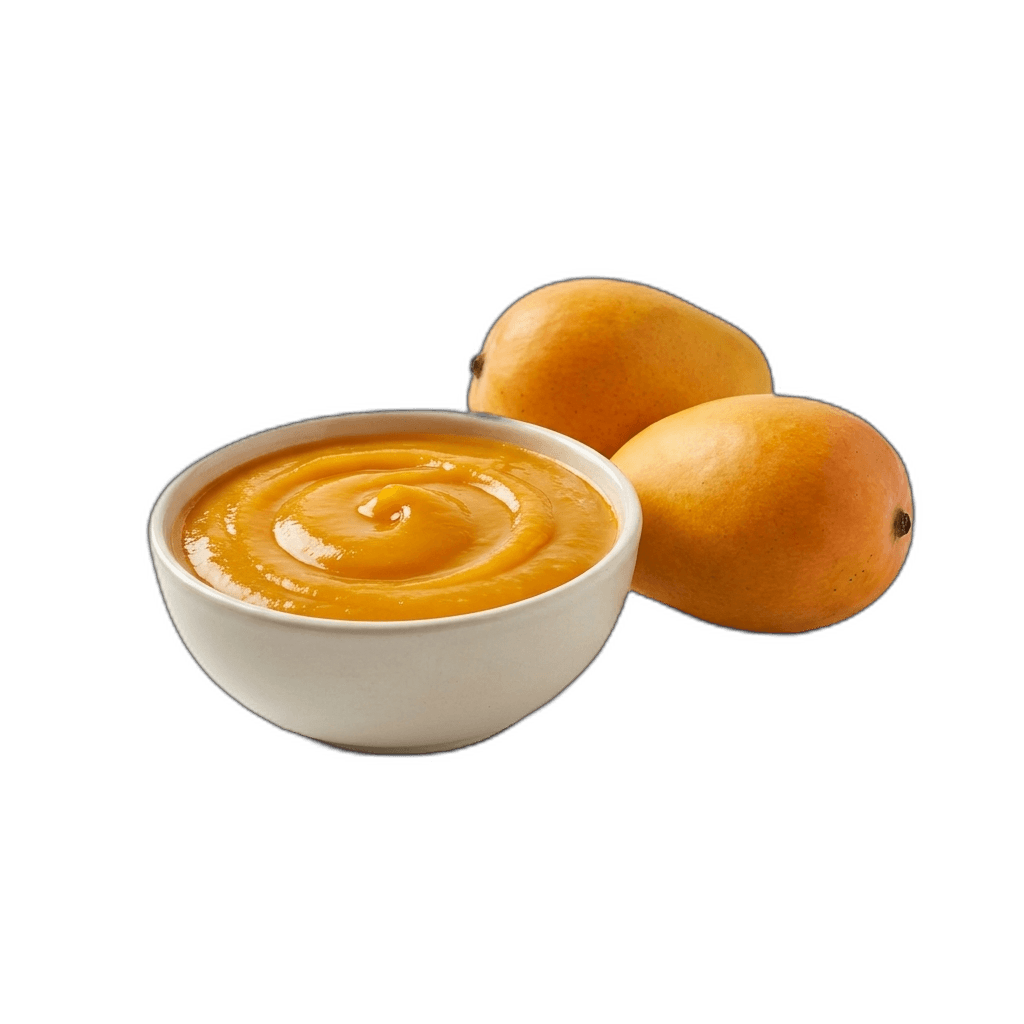
Alphonso Mango Pulp
Hapus Aam Ras
El Rey de los Mangos, sellado en el punto álgido de la temporada del Konkan.

Black Seed Oil
Kalonji Ka Tel
La esencia oscura y picante de la semilla de nigella, prensada en frío.
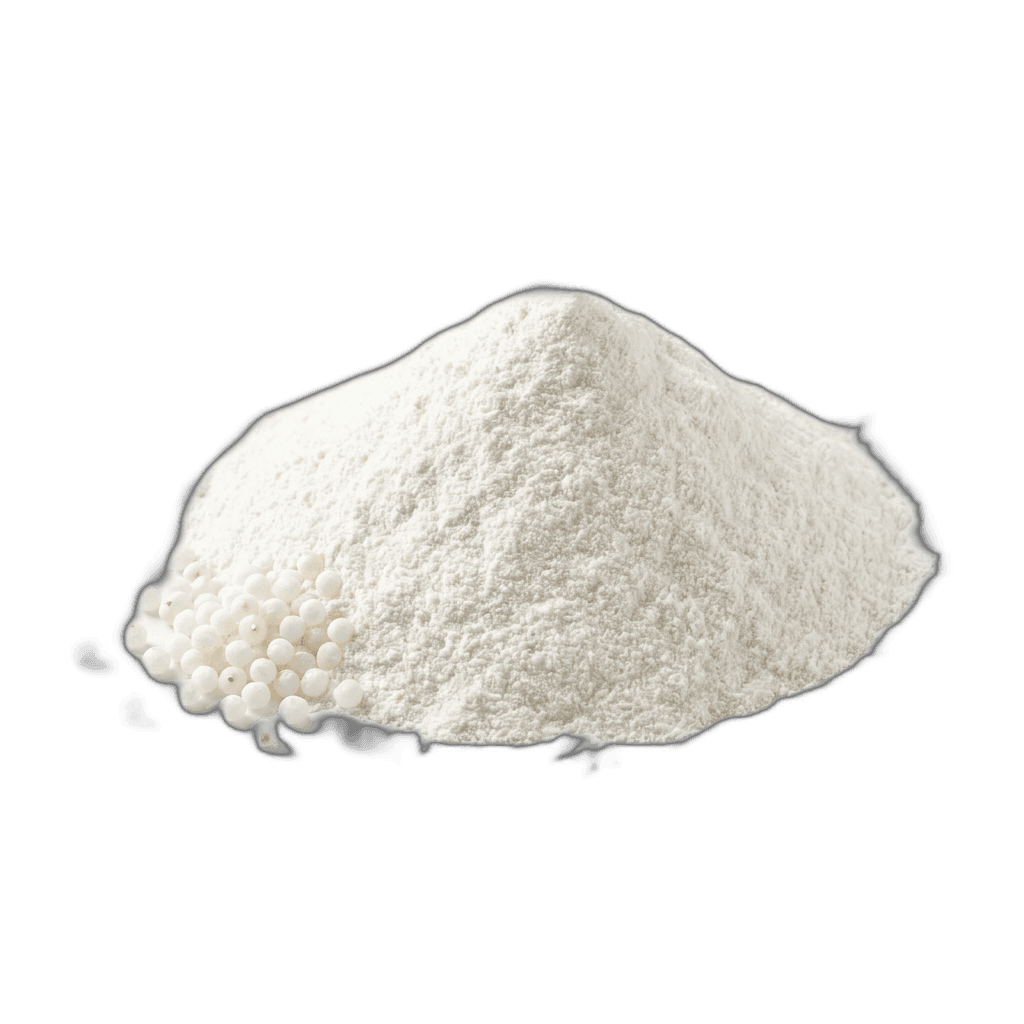
Cassava & Tapioca Flour
Kappa / Sabudana (Mogo)
Repostería sin cereales, al estilo del sur de India.