Coconut Sugar
Nariyal Cheeni
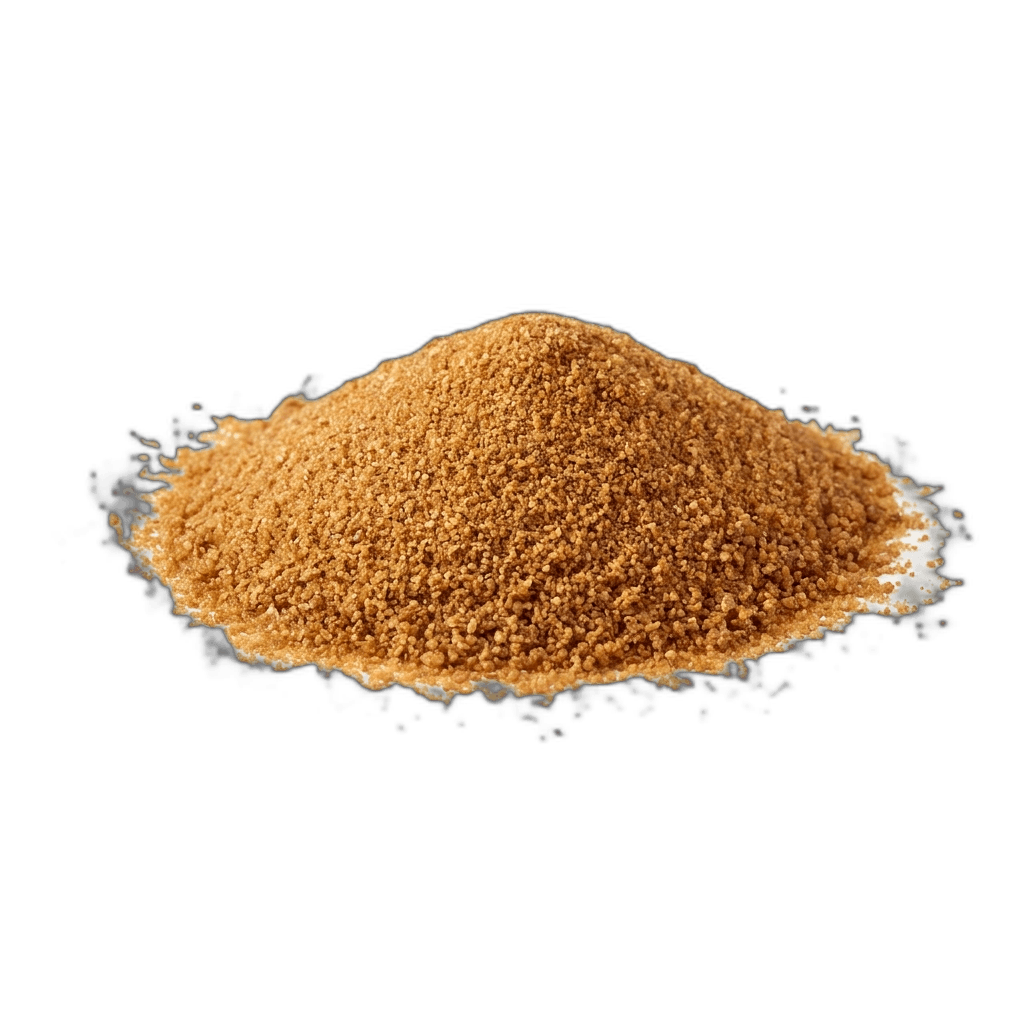
Tiré de la sève de fleur des cocotiers de la ceinture de Pollachi et Anaimalai au Tamil Nadu, au pied des Ghats occidentaux, notre sucre de coco est simplement réduit à feu doux jusqu'à cristallisation. Le résultat est un sucre non raffiné, brun doré, aux notes profondes de caramel et de butterscotch et au profil glycémique bas. Substituez-le cuillère pour cuillère au sucre de canne dans les pâtisseries, le café, les vinaigrettes et les boissons chaudes.

Scellé à pleine maturité, expédié avec sa provenance.
Conditionné dans des sachets refermables de qualité alimentaire qui préservent l'arôme et la couleur — chacun étiqueté avec son origine, son grade et son profil gustatif.
- Inde
- Pollachi-Anaimalai, Tamil Nadu
- Granulé fin, non raffiné
- Bas IG (~35)
- 100 % sève de coco · sans mélange de canne
- 24 mois à température ambiante, scellé
Également appelé · Coconut Palm Sugar · Coco Sap Sugar · Gula Kelapa
Comment l'utiliser
Remplacement un pour un du sucre de canne dans gâteaux, biscuits et granola
Incorporé au café, au chai et aux boissons chaudes
Fouetté dans les vinaigrettes et les marinades pour une profondeur caramélisée
Saupoudré sur le porridge, le yaourt et les fruits
Mijoté dans les sauces, les glaçages et les chutneys
Coconut Sugar (Nariyal Cheeni) is a natural, unrefined sweetener derived from the hand-tapped sap of coconut blossoms. Treedha supplies fine granule, single-origin Coco Sap Sugar from Pollachi-Anaimalai, Tamil Nadu, known for its low glycaemic index and caramel notes, ideal for bulk global trade.
Sourcing & Origin
Treedha's Coconut Sugar, known as Nariyal Cheeni, originates exclusively from the Pollachi-Anaimalai region of Tamil Nadu, India, cultivated at elevations between 300-450 metres. This specific agro-climatic zone is ideal for coconut cultivation, contributing to the distinct quality of the sap.
The process begins with hand-tapping the coconut blossom sap, which is then kettle-reduced and crystallised. This method ensures a single-origin product, free from cane sugar blends, critical for buyers seeking genuine provenance and consistent flavour profiles. The unrefined nature of our fine granule Coconut Palm Sugar preserves its natural nutrients and characteristic mild caramel notes.
Export Grades & Specifications
Our Coconut Sugar (Nariyal Cheeni) is offered as a pure, single-origin sap with a fine granule texture. This grade is highly sought after in bulk trade for its consistent quality and versatility in various applications. Key specifications are meticulously maintained to meet international buyer expectations.
Purity is paramount, with Treedha guaranteeing 100% coconut sap, rigorously tested to confirm no adulteration with cheaper cane sugar. Moisture content is precisely controlled to a maximum of 2%, ensuring optimal shelf life and preventing clumping during transit and storage. The fine granule form is achieved through controlled crystallisation, typically passing through a 30-40 mesh for uniform particle size, which is critical for food manufacturing applications.
| Specification | Treedha Grade: Pure Single-Origin Sap · Fine Granule |
|---|---|
| Origin | Pollachi-Anaimalai, Tamil Nadu, India |
| Form | Fine Granule, Unrefined |
| Purity | 100% Coconut Sap, No Cane Blend |
| Moisture Content | Max. 2% |
| Granulation | 30-40 Mesh (approx.) |
| Colour | Uniform Golden to Light Brown |
| Taste/Aroma | Mild Caramel/Earthy Notes, Free from Burnt Odour |
| Glycaemic Index | Low GI (~35) |
| Shelf Life | 24 months ambient, sealed |
Quality, Safety & Compliance
Compliance with stringent international food safety regulations is a cornerstone of Treedha’s operations for Coconut Sugar (Nariyal Cheeni). Our products are guaranteed ethylene-oxide-free, a critical requirement for exports to the EU where any detectable levels are typically rejected.
We adhere to the strict Maximum Residue Levels (MRLs) for pesticides as mandated by the EU (EC Regulation 396/2005) and FDA. For coconuts, an MRL of 0.05 mg/kg for certain pesticides is observed. Furthermore, our Coconut Palm Sugar undergoes comprehensive testing for mycotoxins, including aflatoxins, and heavy metals, complying with EU Regulation 1881/2006. Microbiological criteria, including tests for Salmonella and E. coli, are performed according to EC Regulation 2073/2005, with results provided on a batch-specific Certificate of Analysis (COA). Facilities are typically HACCP, ISO, and FSSC 22000 certified, with products available as USDA Organic and EU Organic certified upon request. FDA registration is maintained for exports to the United States.
Global Demand & Target Markets
Global demand for Coconut Sugar (Nariyal Cheeni) continues to expand, driven by evolving consumer preferences for natural and healthier alternatives to refined sugars. The low glycaemic index of approximately 35 positions Coco Sap Sugar as a preferred choice for health-conscious consumers and food manufacturers alike. The market for clean-label and organic ingredients further bolsters this trend; over 60% of new natural sweetener products in Europe in 2023 featured Coconut Sugar.
Major importing regions include North America, particularly the United States, which exhibits strong growth due to increasing snack consumption and demand for organic foods. Europe is another significant growth market, propelled by rigorous certification requirements and clean-label preferences. Asia-Pacific countries like Japan and South Korea also show rising domestic demand. Coconut Palm Sugar is increasingly integrated into bakery, confectionery, beverages, and functional foods due to its distinct flavour and versatility.
Logistics, HS Code & Packing
The primary Harmonized System (HS) code for Coconut Sugar in international trade is 170290, specifically 1702.90.9090 for exports to the United States. This classification facilitates smooth customs clearance for bulk shipments globally.
Treedha offers flexible bulk packing solutions for Coconut Sugar (Nariyal Cheeni) to accommodate various importer and distributor needs. Standard pack formats include 25 kg bags and larger totes, designed to maintain product integrity and extend the 24-month shelf life under ambient, sealed conditions. While minimum order quantities are determined on a case-by-case basis, Treedha is equipped to scale production to meet large-volume orders.
We facilitate international shipping under common Incoterms such as FOB and CIF. Each shipment is accompanied by essential documentation, including a Phytosanitary Certificate, batch-specific Certificate of Analysis (COA), and relevant organic certifications (e.g., USDA Organic, EU Organic) to ensure full compliance with destination market regulations.
- tridge.com — tridge.com
- deepbeez.com — deepbeez.com
- customs.go.jp — customs.go.jp
- customsmobile.com — customsmobile.com
- dripcapital.com — dripcapital.com
- marketgrowthreports.com — marketgrowthreports.com
Questions
- Le nariyal cheeni est-il la même chose que le sucre de coco ?
- Oui. Nariyal cheeni est le nom indien du sucre de coco, aussi vendu sous le nom de sucre de palme de coco. Il est fait à partir de la sève réduite de la fleur de cocotier, et non de la chair de la noix de coco, ni de la canne.
- Le sucre de coco a-t-il un goût de noix de coco ?
- Non, il n'a pas de goût de noix de coco. La sève caramélise pendant la réduction, donnant des notes chaleureuses de butterscotch et de caramel plus proches d'un sucre roux moelleux, ce qui le rend adapté aux pâtisseries sucrées comme aux glaçages salés.
- A-t-il vraiment un IG plus bas que le sucre ordinaire ?
- Le sucre de coco présente un index glycémique d'environ 35, inférieur à celui du sucre de canne blanc, autour de 60-65, car il est digéré plus lentement. Il reste un sucre, mieux vaut donc l'utiliser avec discernement plutôt que de le considérer comme un édulcorant libre.
- What is the primary origin of Treedha's Coconut Sugar?
- Treedha's Coconut Sugar (Nariyal Cheeni) is sourced exclusively from the Pollachi-Anaimalai region of Tamil Nadu, India, ensuring a single-origin product with full traceability.
- What makes Treedha's Coconut Sugar 'pure'?
- Our Coconut Sugar is 100% pure coconut sap, meticulously processed without any additives, artificial colours, or cane sugar blends. Purity is verified through rigorous lab testing, including Carbon Stable Isotope Analysis (SIRA).
- Is Treedha's Coconut Sugar compliant with EU and US import regulations?
- Yes, our Coconut Sugar (Nariyal Cheeni) is ETO-free and lab-tested to comply with EU and US limits for MRLs, heavy metals, and microbiological parameters, supported by comprehensive Certificates of Analysis and relevant certifications.
- What is the typical shelf life of Treedha's bulk Coconut Sugar?
- Treedha's bulk Coconut Sugar (Gula Kelapa) has a shelf life of 24 months when stored under ambient, sealed conditions, thanks to its carefully controlled moisture content of maximum 2%.
- What are the common bulk packing options available?
- Treedha offers Coconut Palm Sugar in bulk formats, including standard 25 kg bags and larger totes, designed for secure and efficient international shipping and storage.
- What is the HS Code for Coconut Sugar?
- The primary Harmonized System (HS) code for Coconut Sugar (Nariyal Cheeni) in international trade is 170290. For exports to the United States, the specific subheading 1702.90.9090 is applicable.