Black Salt
Kala Namak
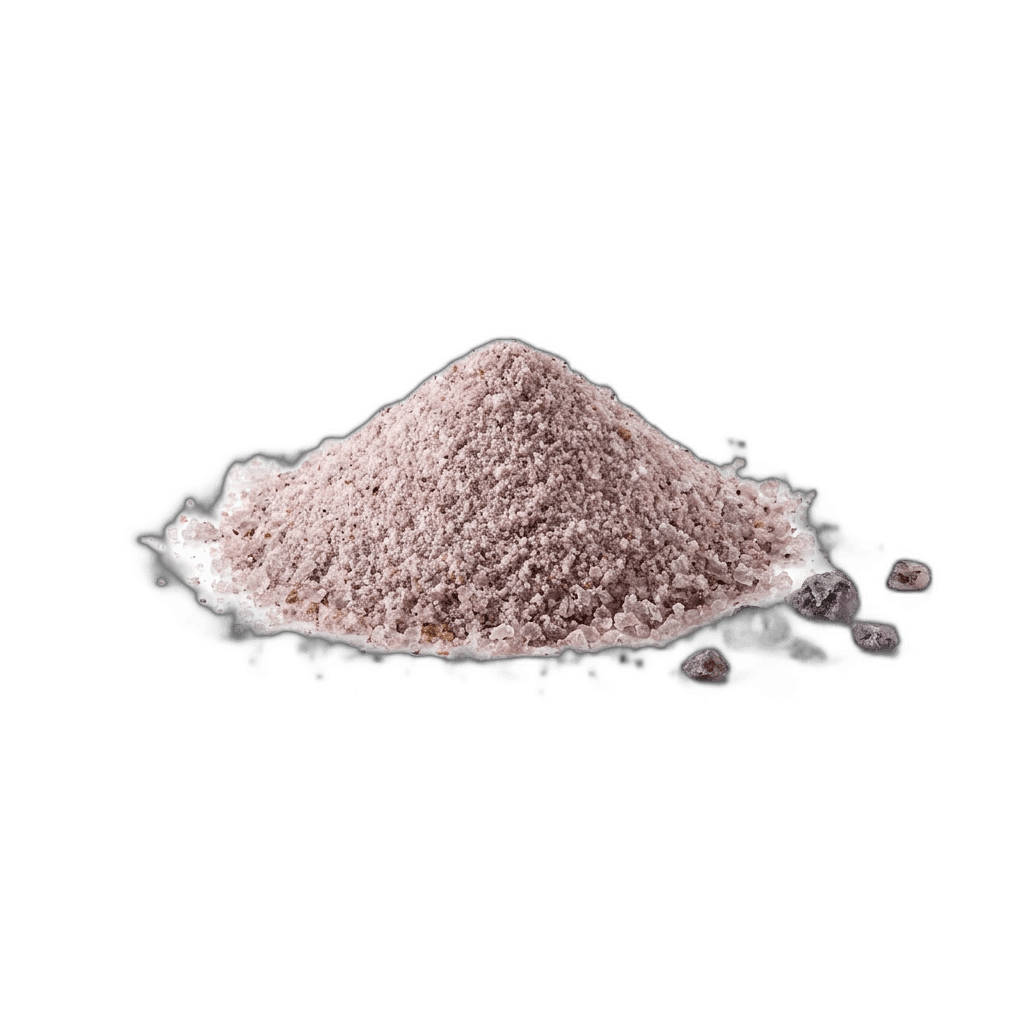
Gemaakt van steenzout gewonnen rond de Himalaya-gebergten en Noord-Indiase zoutmeren, en vervolgens ovengebrand met houtskool en Ayurvedische botanicals zoals harad en amla tot het zijn kenmerkende hartige, zwavelachtige aroma aanneemt. Gemalen uit roze-grijze kristallen levert het een umami, 'eiachtige' toon die gewaardeerd wordt in plantaardige keuken. Strooi het over chaat en fruit, kruid tofu scrambles en veganistische eigerechten, of maak raitas en zomerse verfrissingen af.
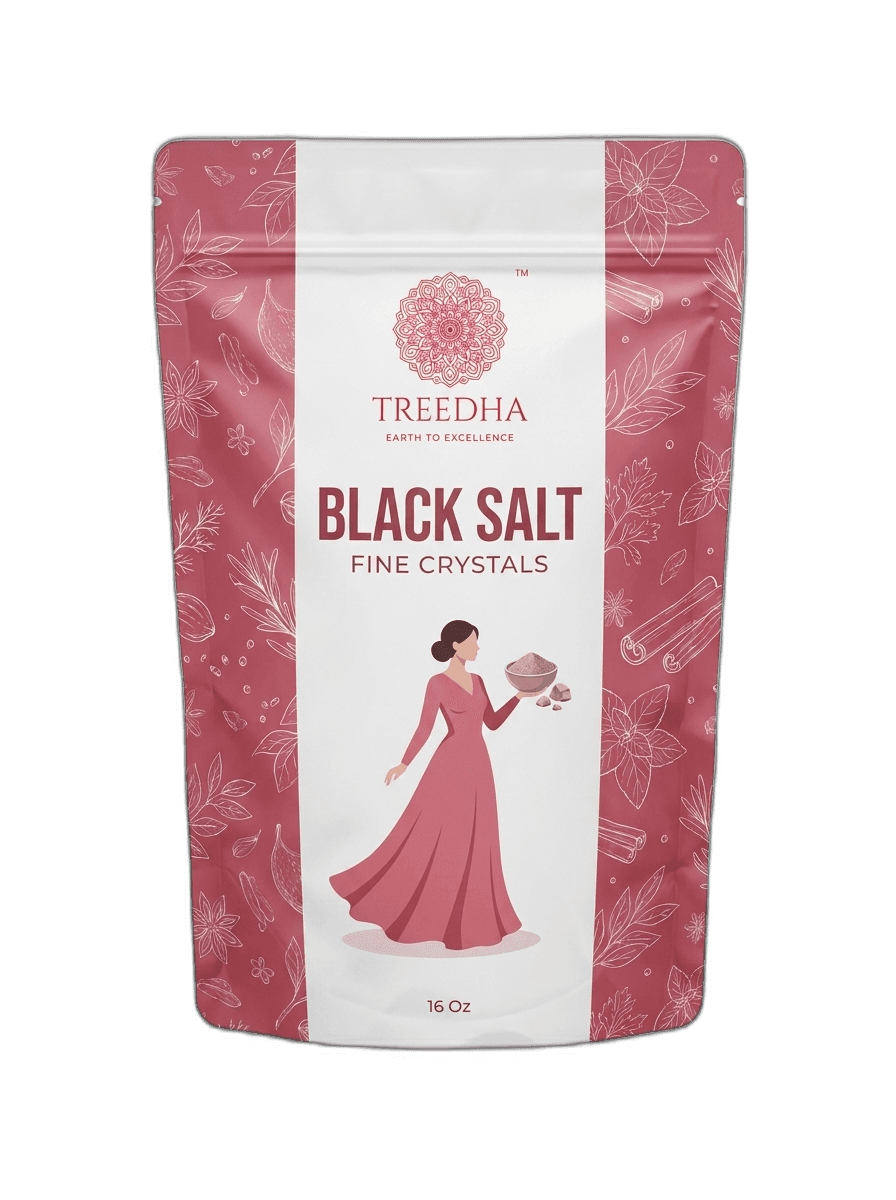
Op het hoogtepunt verzegeld, met herkomst verzonden.
Verpakt in hersluitbare zakjes van voedingskwaliteit die aroma en kleur insluiten — elk voorzien van herkomst, kwaliteitsklasse en smaakprofiel.
- Noord-Indiase zoutgordel, India
- Ovengebrande culinaire kwaliteit
- Houtskool- & kruidenovenbranding, vervolgens gemalen
- Fijn poeder / fijne granule
- Geen toevoegingen of antiklontermiddelen · laboratoriumgetest
- Onbeperkt, kamertemperatuur (droog bewaren)
Ook bekend als · Sanchal · Himalayan Black Salt · Sulemani Namak · Sel Noir
Hoe je het gebruikt
Op smaak brengen van tofu scrambles en veganistische eigerechten
Gestrooid over chaat, fruit en salades
Afmaken van raitas, chutneys en dips
Op de rand van jaljeera, aam panna en zomerse verfrissingen
Gestrooid op geroosterde makhana en snacks
Black Salt (Kala Namak) is a distinctively kiln-fired culinary salt from India, prized for its sulfuric, umami flavour. Offered in fine and granular forms, it is a staple in South Asian cuisine and a critical ingredient for vegan food applications globally.
Sourcing & Origin
Treedha's Black Salt, known as Kala Namak or Sanchal, is sourced from the ancient salt-producing regions of North India, specifically the lowland salt flats around Sambhar and Didwana in Rajasthan. This region is renowned for its traditional methods of crafting this unique specialty salt. The process involves kiln-firing rock salt with charcoal and a blend of indigenous herbs, which imparts its signature pungent aroma and distinct reddish-brown to purple-black hue in crystal form.
The unique geological composition of the salt beds and the time-honoured firing process are critical for developing Kala Namak's characteristic sulfurous compounds, including hydrogen sulfide and iron sulfide, which give it an 'egg-like' taste essential for specific culinary applications. For bulk buyers, this specific origin and traditional processing guarantee the authentic flavour profile sought in the global market, ensuring consistency in quality and culinary performance.
Export Grades & Specifications
Treedha offers kiln-fired culinary grade Black Salt, also known as Kala Namak, in both fine powder and fine granule formats to meet diverse bulk buyer requirements. The defining quality indicator for genuine Black Salt is its distinctive, pungent sulfurous aroma, a direct result of its traditional processing.
Our specifications ensure a high-purity product, primarily consisting of sodium chloride (NaCl), free from additives or anti-caking agents, and lab-tested for consistency. Moisture content is strictly controlled to below 1.5% to prevent caking and preserve the unique aroma and indefinite shelf life when stored dry. The typical colour of the milled powder ranges from pinkish-grey to light pink or purple, reflecting the presence of natural iron sulfides.
Quality, Safety & Compliance
Treedha prioritises stringent quality and safety protocols for all Black Salt (Kala Namak) exports, adhering to international food safety standards. Our facilities are registered with the U.S. FDA, and we provide comprehensive documentation including a batch-specific Certificate of Analysis (COA), Certificate of Origin, and Phytosanitary Certificate for every shipment.
For the European Union, Treedha guarantees Black Salt is Ethylene Oxide (ETO)-free, with residue levels at the limit of quantification (LOQ), in full compliance with EU regulations. We also ensure strict adherence to MRLs for pesticides, and critically, guarantee the complete absence of Salmonella and prohibited Sudan dyes. Heavy metal limits, particularly for lead, are met as per EU Regulation 2021/1317. For the US market, our Black Salt complies with FDA requirements, including a zero-tolerance policy for Salmonella and Sudan dyes, and adherence to specified limits for aflatoxins (20 ppb) and pesticide MRLs. Our Foreign Supplier Verification Program (FSVP) documentation is available to US importers, demonstrating our commitment to US food safety standards.
Global Demand & Target Markets
Global demand for Black Salt (Kala Namak / Sanchal) is driven by its unique culinary properties and increasing exposure in international markets. The United States is a significant importer, alongside countries like Singapore and Uganda, reflecting a growing appreciation for specialty ingredients.
The primary demand drivers include its essential role in South Asian cuisine, where it is a key condiment in dishes such as chaats, chutneys, and raitas, and a crucial ingredient in spice blends like chaat masala. Furthermore, its distinctive sulfurous, egg-like flavour makes it highly sought after by the vegan food industry for plant-based egg substitutes. The broader specialty and gourmet food market also contributes to demand, as consumers and chefs seek unique flavours and natural ingredients, often associating Black Salt with traditional Ayurvedic practices for its purported digestive benefits.
Logistics, HS Code & Packing
Black Salt (Kala Namak) for export from India is primarily classified under Harmonized System (HS) Code 25010090 (OTHER SALTS), specifically for Black Salt and Kala Namak, or sometimes 25010020 (ROCK SALT). Treedha manages all export logistics, including adherence to chosen Incoterms (e.g., FOB, CIF).
We offer bulk packaging solutions tailored for international shipping, typically in 25 kg multiwall kraft paper sacks or PP bags, designed to protect the product's integrity and aroma. For fine powders, moisture barriers are incorporated to prevent caking. While we do not state product counts, our Minimum Order Quantity (MOQ) approach for bulk exports supports efficient container loading, with better pricing often available for Full Container Loads. Our Black Salt boasts an indefinite shelf life when stored in dry, ambient conditions.
- intracen.org — intracen.org
- ibef.org — ibef.org
- indianspices.com — indianspices.com
- tnau.ac.in — tnau.ac.in
- wikipedia.org — wikipedia.org
- ijirt.org — ijirt.org
Vragen
- Is Kala Namak hetzelfde als zwart zout?
- Ja. Kala Namak betekent letterlijk 'zwart zout' in het Hindi. Het is het ovengebrande, zwavelachtige Indiase steenzout, ook verkocht als sanchal of Himalaya zwart zout.
- Waarom ruikt zwart zout naar ei?
- Tijdens de ovenbranding wordt het natuurlijke sulfaat van het zout omgezet in zwavelverbindingen, wat het een hartig, eiachtig aroma geeft. Dit maakt het een favoriet om eismaak na te bootsen in veganistische keuken.
- Is het echt zwart?
- De hele kristallen zijn roze-grijs tot donker bruinzwart. Eenmaal gemalen lijkt het poeder doorgaans roze, wat normaal is en een teken van het echte product.
- What is Black Salt (Kala Namak) and where does Treedha source it?
- Black Salt, known as Kala Namak or Sanchal, is a specialty kiln-fired salt from North India, primarily sourced from the Sambhar and Didwana regions of Rajasthan. Its unique processing with charcoal and herbs gives it a distinctive sulfuric, egg-like flavour and aroma.
- What grades of Black Salt are available for bulk export?
- Treedha supplies culinary grade Black Salt in fine powder and fine granule forms. Our product is lab-tested for purity, with specific attention to moisture content to ensure free-flowing consistency and optimal aroma preservation for our bulk buyers.
- How does Treedha ensure compliance with EU and US import regulations for Black Salt?
- We ensure strict compliance by providing ETO-free, lab-tested Black Salt that meets EU and US MRLs for pesticides, aflatoxins, and heavy metals, and is guaranteed free from Salmonella and Sudan dyes. All shipments include a COA, Certificate of Origin, and Phytosanitary Certificate, with US FDA registration and FSVP documentation available.
- What is the HS Code for Black Salt (Kala Namak) when importing from India?
- Black Salt (Kala Namak) is typically classified under Harmonized System (HS) Code 25010090, which covers 'OTHER SALTS' specifically including this commodity. Occasionally, 25010020 ('ROCK SALT') may also be used depending on the form.
- What are the typical packaging options and shelf life for bulk Black Salt?
- Our bulk Black Salt is commonly supplied in 25 kg multiwall kraft paper sacks or PP bags, with moisture barriers for fine powders. When stored in dry, ambient conditions, Black Salt has an indefinite shelf life due to its stable mineral composition.
- Why is the characteristic aroma important for Black Salt quality?
- The pungent, sulfuric aroma is the most crucial quality indicator for authentic Black Salt (Kala Namak), distinguishing it from common salts. It is formed during the traditional kiln-firing process and is essential for its unique culinary applications, particularly in South Asian cuisine and vegan substitutes.